
Limpet Coil Jacketed Vessel
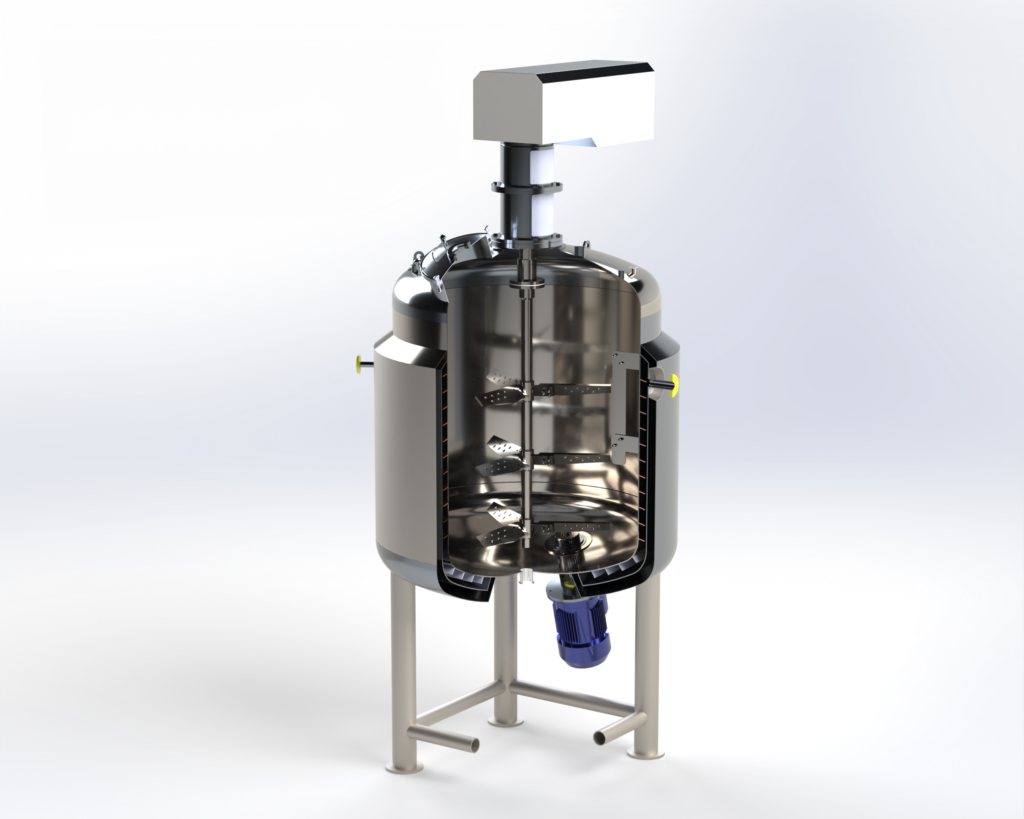
A limpet coil jacketed vessel uses an external helical half-round or full-round pipe coil welded directly to the vessel outer wall, carrying heating or cooling media. Capable of operating at higher pressures than standard annular jackets, it is suited to high-pressure steam systems, thermal oil circuits, and applications requiring robust resistance to repeated thermal cycling across a wide temperature range.
![{"capture_mode":"AutoModule","faces":[]}](https://jbmprispac.com/wp-content/uploads/2026/07/IMG_20210211_184230_1-1024x768.jpg)
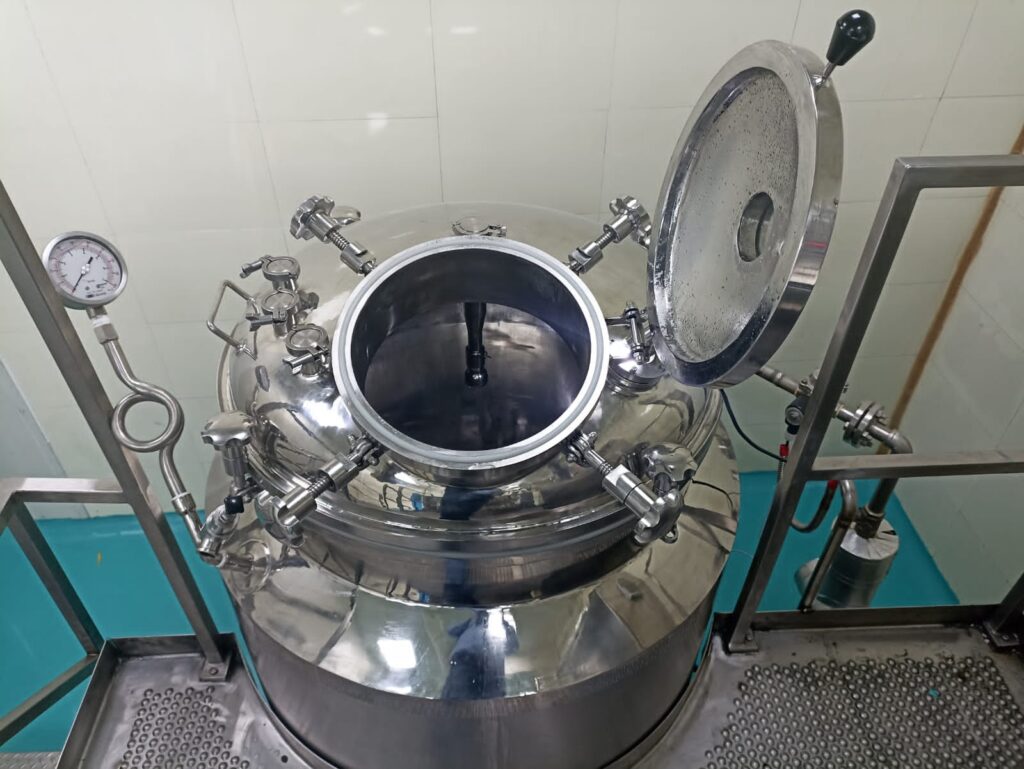
Heating or cooling media flows through the continuous external coil in a helical path along the vessel wall. The coil maintains intimate contact with the vessel outer surface, conducting heat through the wall into the process fluid. Coil pitch, diameter, and number of turns are engineered to deliver the required heat transfer duty. Counter-current media flow improves temperature distribution uniformity along the vessel height.
Challenges
Lower Heat Transfer Area Per Unit Vessel Height Compared to Half-Pipe
A single helical coil row covers only a portion of the vessel outer wall area per unit height, providing less total heat transfer surface than a half-pipe jacket of equivalent vessel size, limiting maximum heat duty.
External Heat Loss Without Insulation
The exposed external coil surface loses heat to the surrounding atmosphere during heating operation, reducing thermal efficiency and increasing energy consumption unless the coil and vessel exterior are fully insulated and clad.
Thermal Cycling Fatigue at Coil-to-Wall Weld Joints
Repeated heating and cooling cycles generate differential thermal expansion between the coil and vessel wall, placing cyclic stress on the fillet welds at coil attachment points and increasing the risk of weld fatigue cracking over time.
Incomplete Thermal Coverage of Conical or Dished Base
The helical coil pitch and geometry make it difficult to maintain consistent coil coverage on conical or dished vessel base sections, leaving areas of reduced heat transfer at the vessel base.
Coil-to-Wall Gap Trapping Contamination
The external gap between the coil outer surface and vessel wall can accumulate process spillage, cleaning fluid residue, or environmental contamination, which is a concern in food-grade and pharmaceutical outdoor or partially enclosed installations.
Solutions
- Double-Coil Configuration for Higher Heat Duty: Installing inner and outer coil rows on the vessel wall doubles the effective heat transfer area and provides a redundant thermal circuit, allowing the vessel to meet higher heat duty requirements without increasing vessel diameter.
- Full External Mineral Wool Insulation with Stainless Steel Cladding: Applying full insulation and cladding over the coil and vessel exterior minimises heat loss to atmosphere during operation, improving thermal efficiency and reducing energy consumption throughout the heating cycle.
- Full-Penetration Weld at Coil-to-Wall Attachment: Specifying continuous full-penetration TIG welding at all coil attachment points rather than intermittent fillet welds eliminates stress concentration at the weld root, reducing the risk of fatigue cracking under repeated thermal cycling.
- Separate Dimple Jacket on Conical or Dished Base: Supplementing the limpet coil with a dimple plate jacket on the conical or dished base section ensures complete thermal coverage of the vessel base, eliminating the cold zone that the helical coil geometry cannot reach.
- Hydraulic Pressure Test Before Commissioning: Pressure testing the coil circuit to a defined multiple of the maximum allowable working pressure before dispatch validates weld integrity and confirms media containment capability prior to installation.
Applications
- High-Pressure Chemical Polymerisation and Resin Synthesis: Temperature management of exothermic polymerisation reactions using high-pressure steam or thermal oil media, where the limpet coil pressure rating exceeds the capability of standard annular jackets.
- Pharmaceutical High-Temperature API Synthesis: Heating of pharmaceutical reaction vessels to elevated temperatures using high-pressure steam or thermal oil in GMP-rated reactors where conventional jacket pressure ratings are insufficient.
- Food and Beverage High-Temperature Cooking and Sterilisation: Controlled heating of food products to sterilisation and high-temperature cooking temperatures using steam media in limpet coil vessels rated for the required operating pressure.
- Thermal Oil Heated Wax and High-Melting-Point Material Processing: Maintaining process temperature in vessels handling waxes, bitumen, and other high-melting-point specialty materials where thermal oil circuits operating above standard jacket pressure limits are required.
- Dairy UHT Processing Support: High-temperature heating of dairy streams in vessels requiring media pressures above those achievable with standard annular jacket construction during UHT pasteurisation processes.
Models & Capacities
2B — Limpet Coil Jacketed Vessel (JV-LC) — 100 L to 10,000 L — −20 to 250°C — Up to 15 bar — U 300–1,400 W/m²·K — Steam / HW / Thermal Oil | ||||||||||
Model | Capacity [L] | Coil Pressure [bar] | Motor [kW] | Op. Temp [°C] | Media Type | U [W/m²·K] | Coil Area [m²] | Vessel H × Ø [mm] | Overall H [mm] | Weight [kg] |
JV-LC-100 | 100 | Up to 15 | 0.75 – 1.5 | −20 to 250 | Steam / HW / Oil | 300 – 1,200 | 0.3 | Ø500 × 620 | 1,900 | 160 |
JV-LC-300 | 300 | Up to 15 | 1.5 – 3.0 | −20 to 250 | Steam / HW / Oil | 350 – 1,300 | 0.8 | Ø700 × 950 | 2,500 | 320 |
JV-LC-500 | 500 | Up to 15 | 2.2 – 4.0 | −20 to 250 | Steam / HW / Oil | 350 – 1,350 | 1.2 | Ø850 × 1,100 | 3,000 | 500 |
JV-LC-1000 | 1,000 | Up to 15 | 4.0 – 7.5 | −20 to 250 | Steam / HW / Oil | 400 – 1,400 | 2.0 | Ø1,100 × 1,250 | 3,600 | 850 |
JV-LC-5000 | 5,000 | Up to 15 | 11 – 22 | −20 to 250 | Steam / HW / Oil | 350 – 1,300 | 8.0 | Ø2,000 × 1,900 | 5,500 | 3,200 |
JV-LC-10000 | 10,000 | Up to 15 | 22 – 45 | −20 to 250 | Steam / HW / Oil | 300 – 1,200 | 14 | Ø2,600 × 2,600 | 7,200 | 6,500 |