
Magnetic Agitator
A magnetic agitator is a seal-less mixing system transmitting torque from an external drive to an internal impeller through magnetic coupling across the vessel wall, eliminating shaft seals and ensuring zero leakage. Used in sterile pharmaceutical, biotechnology, and hazardous chemical processing where hermetic vessel integrity, GMP compliance, and absolute containment are required and mechanical seal leakage cannot be tolerated.
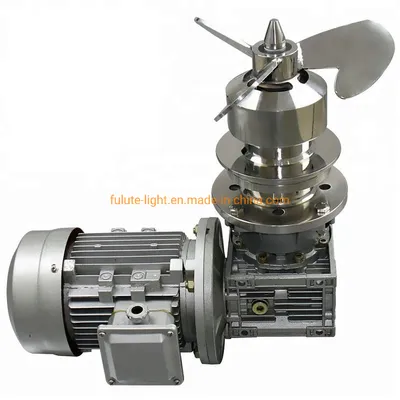
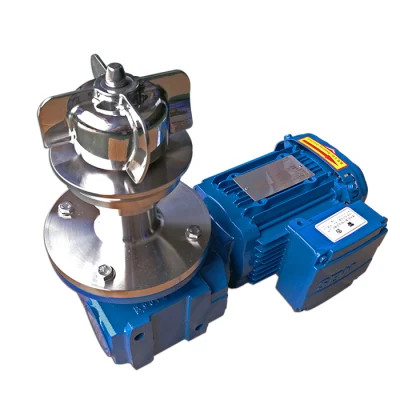
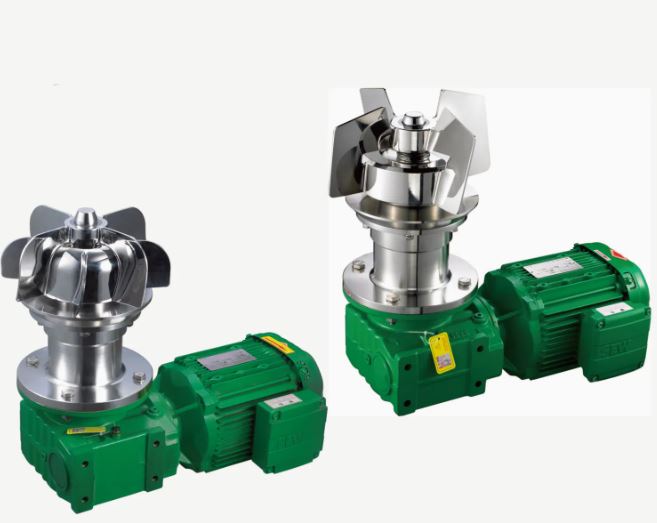
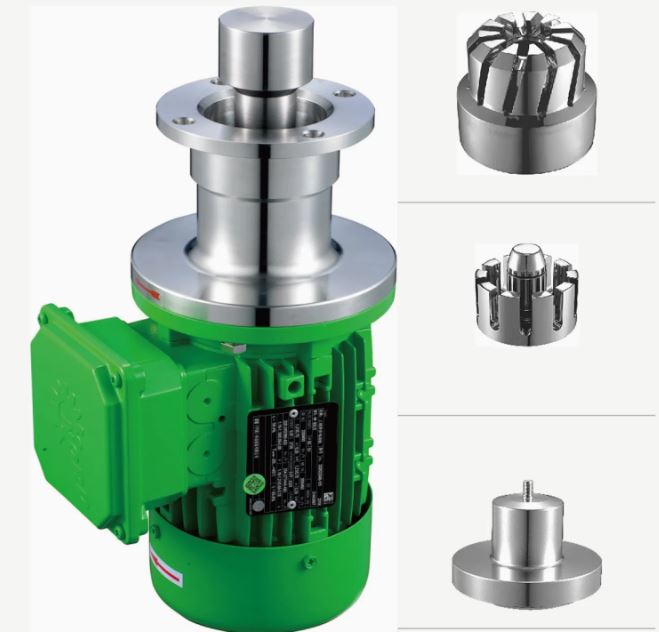
A magnetic agitator is a seal-less mixing system transmitting torque from an external drive to an internal impeller through magnetic coupling across the vessel wall, eliminating shaft seals and ensuring zero leakage. Used in sterile pharmaceutical, biotechnology, and hazardous chemical processing where hermetic vessel integrity, GMP compliance, and absolute containment are required and mechanical seal leakage cannot be tolerated.
Challenges
Limited Torque Transmission Capacity
The torque that can be transmitted through the magnetic coupling is fundamentally limited by magnet size, grade, and the gap distance across the vessel wall. This restricts the practical viscosity range and vessel scale compared to mechanically sealed agitator designs.
Magnet Temperature Limitation
Standard neodymium magnets lose magnetic strength progressively above approximately 80°C, making them unsuitable for processes involving steam sterilisation or high-temperature processing without upgrading to higher-temperature magnet grades.
Decoupling Risk at Overload
If process torque demand exceeds the magnetic coupling limit, the inner and outer magnet assemblies suddenly decouple, causing immediate complete loss of agitation without warning, which can be critical in time-sensitive biological or reactive processes.
Higher Capital Cost Than Mechanically Sealed Designs
The precision magnet assemblies, containment shell, and compatible vessel construction carry a significant cost premium over equivalent mechanically sealed agitators, requiring justification based on genuine containment necessity.
Scale-Up Torque Limitation
As vessel size increases, the torque required to agitate the larger batch volume can exceed the practical limit of magnetic coupling technology, making magnetic agitators increasingly difficult to justify at very large production scales.
Solutions
- Samarium-Cobalt Magnets for High-Temperature Applications: Specifying samarium-cobalt magnet assemblies rated to approximately 250°C allows the magnetic agitator to withstand steam-in-place sterilisation cycles and elevated processing temperatures without loss of coupling torque or magnet degradation.
- Torque Monitoring via Drive Current Sensing: Monitoring drive motor current continuously provides an indirect real-time indication of coupling load, allowing the control system to automatically reduce agitator speed before the decoupling torque limit is reached during process viscosity excursions.
- Bottom-Entry Configuration for Improved Coupling Efficiency: Selecting a bottom-entry magnetic agitator configuration minimises the magnetic gap distance across the vessel base, improving torque transmission efficiency compared to side-entry or top-entry designs with longer coupling gaps.
- Silicon Carbide Hydrodynamic Bearings: Specifying silicon carbide bearings for the internal impeller shaft assembly provides wear-resistant support that maintains precise impeller alignment throughout extended operation in aggressive process fluids without requiring lubrication or periodic replacement.
- Application-Based Specification: Reserving magnetic agitator specification for applications where containment of sterile, toxic, or highly potent materials genuinely cannot be achieved with a validated mechanical seal, ensuring the capital cost premium is justified by process and regulatory requirements.
Applications
- Sterile Parenteral and Vaccine Manufacturing: Mixing of sterile injectable formulations, parenteral solutions, and vaccine bulks in hermetically sealed vessels where zero particulate contamination from seal wear and absolute sterility assurance are regulatory requirements.
- Bioreactor and Cell Culture Vessel Agitation: Agitation of mammalian cell cultures, microbial fermentations, and high-value recombinant protein production systems in sealed bioreactor vessels where contamination from mechanical seal leakage would result in complete batch loss.
- Highly Potent and Cytotoxic API Processing: Mixing of highly potent active pharmaceutical ingredients and cytotoxic compounds in hermetically sealed vessels where zero seal leakage is required for operator protection and containment regulatory compliance.
- Hazardous and Toxic Chemical Processing: Agitation of toxic, reactive, or environmentally hazardous chemical systems in sealed vessels where secondary hermetic containment is required to prevent release of hazardous material to the working environment.
- High-Purity Food and Allergen-Sensitive Processing: Mixing in food-grade vessels where mechanical seal contamination of allergen-sensitive or high-purity products is unacceptable and seal-free operation supports product safety and quality assurance requirements.
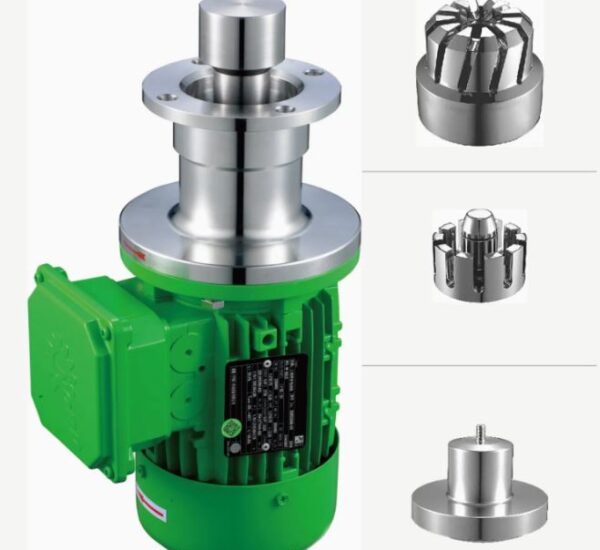
Product Catalogue & Technical Datasheet
Model | Scale / Entry | Tank Cap. (L) | Motor (kW) | Speed (RPM) | Viscosity Max (cP) | Op. Press. (bar) | Op. Temp (C) | km (m/s) | U (W/m2K) | Configuration |
|---|---|---|---|---|---|---|---|---|---|---|
Mag-LAB-1 | Lab / Top | 1-20 | 0.04-0.18 | 200-1,800 VFD | 1,000 | Vac to 6 | 0-120 | 10^-5-10^-3 | 100-800 | Single impeller |
Mag-LAB-50 | Lab / Bottom | 20-100 | 0.09-0.37 | 200-1,500 VFD | 2,000 | Vac to 10 | 0-150 | 10^-5-10^-3 | 100-900 | Single impeller |
Mag-T50 | Pilot / Top | 50-500 | 0.18-0.75 | 200-1,500 VFD | 300 | Vac to 10 | 0-120 | 10^-5-10^-3 | 100-800 | Single impeller |
Mag-T150 | Pilot / Top | 500-3,000 | 0.75-3.0 | 150-1,200 VFD | 800 | Vac to 10 | 0-135 | 10^-5-10^-3 | 100-900 | Single / Double |
Mag-B100 | Pilot / Bot. | 100-1,500 | 0.37-2.2 | 250-1,800 VFD | 500 | Vac to 10 | 0-135 | 10^-5-10^-3 | 100-900 | Single impeller |
Mag-B500 | Prod / Bot. | 2,000-10,000 | 1.5-7.5 | 150-1,200 VFD | 1,500 | Vac to 10 | 0-150 | 10^-5-10^-3 | 100-1,000 | Multi-impeller |
Mag-S200 | Prod / Side | 1,000-8,000 | 1.1-5.5 | 200-1,000 VFD | 1,000 | Vac to 10 | 0-120 | 10^-5-10^-3 | 100-900 | Single impeller |
Mag-M300 | Prod / Multi | 3,000-20,000 | 3.0-15.0 | 100-800 VFD | 3,000 | Vac to 10 | 0-150 | 10^-5-10^-3 | 100-1,000 | 2-4 impellers |
Mag-HP | Large / Any | 5,000-50,000 | 7.5-37.0 | 80-600 VFD | 5,000 | Vac to 10 | 0-150 | 10^-5-10^-3 | 100-1,000 | Custom multi |
Models & Capacities
Model | Configuration | Scale | Vessel Vol [L] | Speed [RPM] | Max Torque [N·m] | Motor Power [kW] | Power Density [kW/m³] | Pressure Rating [bar] | Temp Range [°C] | Magnet Grade | Viscosity Max [cP] | U [W/m²·K] | km [m/s] | Re (max) |
Bottom-Entry Configuration — 0.05 L to 50,000 L — Maximum Coupling Efficiency; Standard Pharmaceutical & Chemical Production | ||||||||||||||
MAG-BE-LAB-0.5 | Bottom-Entry | Lab | 0.05 – 0.5 | 100 – 1,800 | 0.05 – 0.5 | 0.005 – 0.05 | 0.5 – 3.0 | −1 to 6 | −20 to 80 | NdFeB | 2,000 | 200 – 600 | 1×10⁻⁵ – 5×10⁻⁴ | > 1,000 |
MAG-BE-LAB-5 | Bottom-Entry | Lab | 0.5 – 5 | 100 – 1,800 | 0.10 – 1.0 | 0.01 – 0.15 | 0.5 – 3.0 | −1 to 6 | −20 to 80 | NdFeB | 3,000 | 200 – 700 | 2×10⁻⁵ – 6×10⁻⁴ | > 2,000 |
MAG-BE-PIL-20 | Bottom-Entry | Pilot | 5 – 20 | 100 – 1,200 | 0.20 – 2.0 | 0.03 – 0.40 | 0.3 – 2.5 | −1 to 6 | −20 to 80 | NdFeB | 5,000 | 200 – 800 | 3×10⁻⁵ – 7×10⁻⁴ | > 5,000 |
MAG-BE-PIL-100 | Bottom-Entry | Pilot | 20 – 100 | 100 – 800 | 0.50 – 5.0 | 0.10 – 1.0 | 0.3 – 2.0 | −1 to 6 | −20 to 80 | NdFeB | 5,000 | 250 – 800 | 3×10⁻⁵ – 8×10⁻⁴ | > 8,000 |
MAG-BE-PIL-500 | Bottom-Entry | Pilot | 100 – 500 | 80 – 600 | 1.0 – 10 | 0.30 – 3.0 | 0.3 – 2.0 | −1 to 6 | −20 to 150 | SmCo | 8,000 | 280 – 900 | 5×10⁻⁵ – 1×10⁻³ | > 10,000 |
MAG-BE-P-2000 | Bottom-Entry | Production | 500 – 2,000 | 50 – 400 | 5 – 30 | 1.0 – 8.0 | 0.2 – 1.5 | −1 to 10 | −20 to 150 | SmCo | 8,000 | 300 – 900 | 5×10⁻⁵ – 1×10⁻³ | > 15,000 |
MAG-BE-P-10000 | Bottom-Entry | Production | 2,000 – 10,000 | 50 – 300 | 15 – 80 | 3.0 – 20 | 0.2 – 1.0 | −1 to 10 | −20 to 250 | SmCo | 10,000 | 300 – 1,000 | 5×10⁻⁵ – 1×10⁻³ | > 20,000 |
MAG-BE-LP-50000 | Bottom-Entry | Large Prod | 10,000 – 50,000 | 50 – 200 | 50 – 200 | 10 – 60 | 0.2 – 0.8 | −1 to 10 | −20 to 250 | SmCo | 10,000 | 350 – 1,000 | 5×10⁻⁵ – 1×10⁻³ | > 30,000 |
Top-Entry Configuration — 0.5 L to 5,000 L — Flexible Vessel Integration; Preferred for Retrofit and Complex Vessel Geometries | ||||||||||||||
MAG-TE-LAB-5 | Top-Entry | Lab | 0.5 – 5 | 100 – 1,800 | 0.10 – 1.0 | 0.01 – 0.15 | 0.5 – 3.0 | −1 to 6 | −20 to 80 | NdFeB | 2,000 | 150 – 600 | 1×10⁻⁵ – 5×10⁻⁴ | > 2,000 |
MAG-TE-PIL-100 | Top-Entry | Pilot | 20 – 100 | 100 – 800 | 0.50 – 5.0 | 0.10 – 1.0 | 0.3 – 2.0 | −1 to 6 | −20 to 150 | SmCo | 5,000 | 200 – 800 | 2×10⁻⁵ – 8×10⁻⁴ | > 8,000 |
MAG-TE-PIL-500 | Top-Entry | Pilot | 100 – 500 | 80 – 600 | 1.0 – 10 | 0.30 – 3.0 | 0.3 – 2.0 | −1 to 6 | −20 to 150 | SmCo | 5,000 | 250 – 850 | 3×10⁻⁵ – 9×10⁻⁴ | > 10,000 |
MAG-TE-P-5000 | Top-Entry | Production | 500 – 5,000 | 50 – 400 | 5 – 40 | 1.0 – 10 | 0.2 – 1.5 | −1 to 10 | −20 to 250 | SmCo | 8,000 | 300 – 1,000 | 5×10⁻⁵ – 1×10⁻³ | > 15,000 |
Single-Use / Bioreactor Configuration — 0.1 L to 2,000 L — Disposable Bag / Vessel; Zero Cross-Contamination; Cell Culture & Biologics | ||||||||||||||
MAG-SU-LAB-2 | Single-Use | Lab | 0.1 – 2 | 50 – 1,500 | 0.02 – 0.5 | 0.002 – 0.05 | 0.2 – 2.0 | 0 to 3 | 4 to 37 | NdFeB | 200 | 100 – 400 | 1×10⁻⁵ – 3×10⁻⁴ | > 500 |
MAG-SU-PIL-50 | Single-Use | Pilot | 2 – 50 | 50 – 800 | 0.10 – 2.0 | 0.01 – 0.30 | 0.2 – 1.5 | 0 to 3 | 4 to 37 | NdFeB | 500 | 100 – 500 | 2×10⁻⁵ – 5×10⁻⁴ | > 2,000 |
MAG-SU-PIL-500 | Single-Use | Pilot | 50 – 500 | 30 – 500 | 0.50 – 8.0 | 0.05 – 1.0 | 0.2 – 1.2 | 0 to 2 | 4 to 37 | NdFeB | 500 | 100 – 500 | 2×10⁻⁵ – 5×10⁻⁴ | > 5,000 |
MAG-SU-P-2000 | Single-Use | Production | 500 – 2,000 | 20 – 300 | 2.0 – 20 | 0.50 – 5.0 | 0.2 – 1.0 | 0 to 2 | 4 to 37 | NdFeB | 500 | 100 – 500 | 2×10⁻⁵ – 5×10⁻⁴ | > 10,000 |