
Conventional Jacketed Vessel
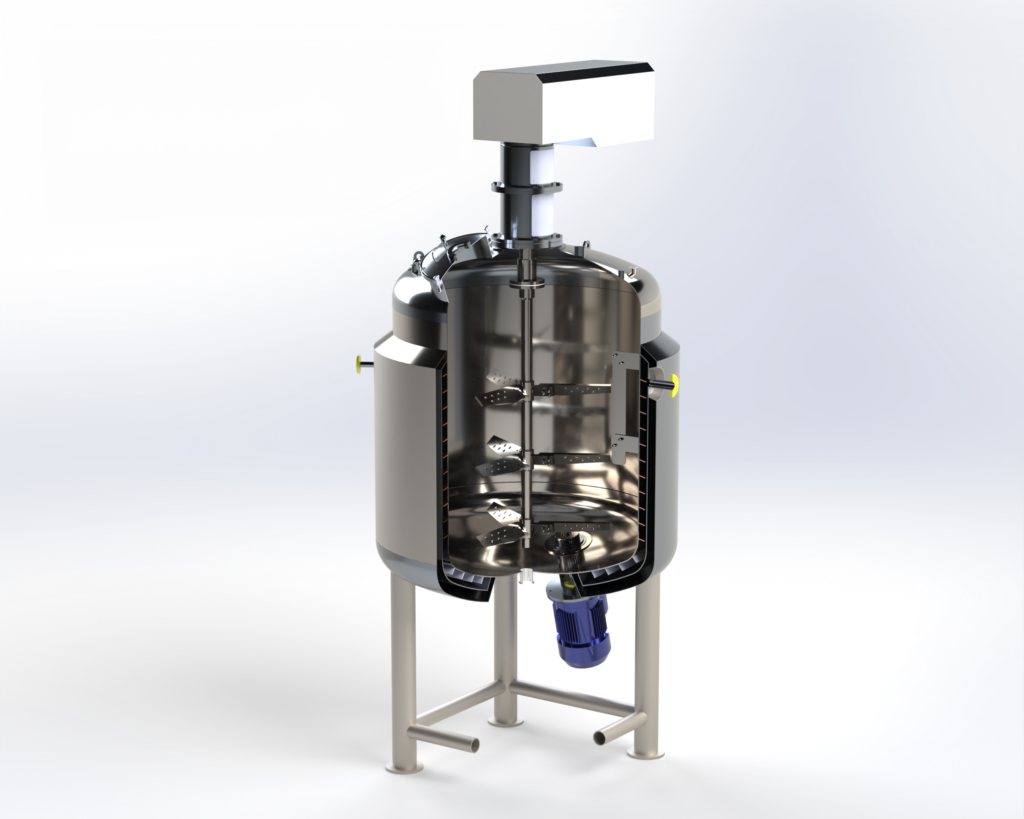
A conventional jacketed vessel is a cylindrical process tank surrounded by a full-annular outer jacket circulating heating or cooling media to control batch temperature. Operating across a wide temperature range with steam, hot water, chilled water, or thermal oil as the heat transfer medium, it is the standard configuration for temperature-controlled batch processing in pharmaceutical, food, cosmetic, and chemical manufacturing.
![{"capture_mode":"AutoModule","faces":[]}](https://jbmprispac.com/wp-content/uploads/2026/07/IMG_20210211_184230_1-1024x768.jpg)
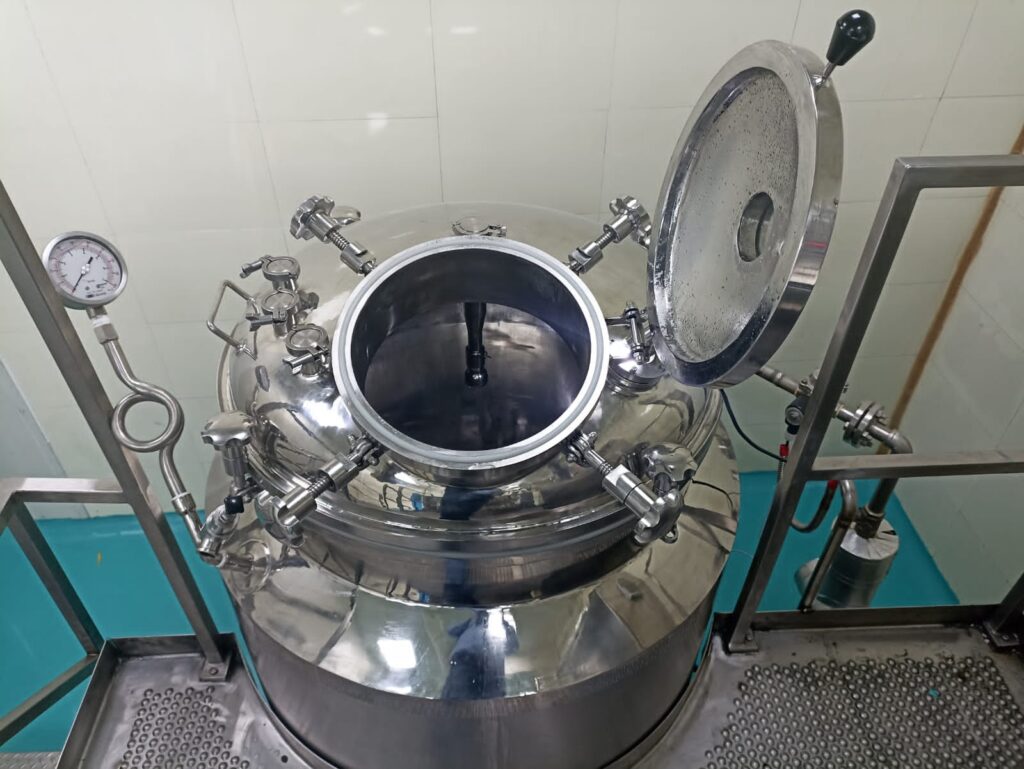
A conventional jacketed vessel is a cylindrical process tank surrounded by a full-annular outer jacket circulating heating or cooling media to control batch temperature. Operating across a wide temperature range with steam, hot water, chilled water, or thermal oil as the heat transfer medium, it is the standard configuration for temperature-controlled batch processing in pharmaceutical, food, cosmetic, and chemical manufacturing.
Challenges
Uneven Temperature Distribution Across the Batch
Poor agitation or inadequate agitator selection allows thermal gradients to develop between the heated wall region and the batch centre, causing inconsistent processing particularly in viscous or poorly circulating systems.
Reduced Heat Transfer at High Viscosity
In viscous products, a stagnant fluid layer forms at the vessel wall between agitator passes, acting as an insulating film that significantly reduces the effective heat transfer rate between jacket and batch.
Jacket Pressure Rating Limiting Maximum Steam Temperature
Standard annular jackets are rated for moderate pressures, which limits the maximum steam temperature available and therefore the maximum achievable heating rate for high-temperature processes.
Scale-Up Uncertainty
Mixing behaviour observed at laboratory scale in multi-impeller configurations does not always translate directly to larger vessels due to changes in fluid dynamics with vessel geometry.
Thermal Lag in Batch Temperature Response
The mass of the vessel wall and jacket fluid introduces a delay between a change in jacket media temperature and the corresponding change in batch temperature, complicating precise temperature control during reactive or temperature-sensitive processes.
Solutions
- Wall-Sweep Agitator Selection: Specifying an anchor or helical agitator with close wall clearance continuously renews the stagnant fluid layer at the vessel wall, significantly improving the effective heat transfer coefficient between jacket and batch in viscous systems.
- Closed-Loop PLC Temperature Control: Controlling jacket media flow rate and temperature through a closed-loop PLC system with a batch temperature probe maintains batch temperature at setpoint with minimal overshoot, compensating for thermal lag during heating and cooling.
- Additional Internal Coils at Large Scale: Installing internal heating or cooling coils inside the vessel supplements jacket heat transfer area at production scale, compensating for the reduced surface-area-to-volume ratio that limits jacket-only heat transfer in large vessels.
- Half-Pipe or Dimple Jacket for Higher Pressure Rating: Upgrading to a half-pipe or dimple plate jacket construction allows operation at higher media pressure, enabling higher steam temperatures and greater heating rates where the standard annular jacket pressure rating is insufficient.
- Validated Self-Draining Jacket Connections: Specifying jacket inlet and outlet connections that allow complete drainage of heat transfer media prevents media contamination between product campaigns and supports cleaning validation in pharmaceutical and food applications.
Applications
- Pharmaceutical API Synthesis and Cream Processing: Temperature-controlled batch reactions, crystallisation, and cream or ointment manufacturing requiring precise heating and cooling profiles throughout the processing cycle within GMP-rated vessels.
- Food Sauce Cooking and Pasteurisation: Controlled heating of sauces, syrups, and liquid food products to pasteurisation temperature followed by controlled cooling, maintaining product quality and microbiological safety in jacketed batch vessels.
- Cosmetic Emulsification Phase Preparation: Controlled melting and heating of wax and oil phases, followed by temperature-controlled emulsification and cooling of cream and lotion bases in jacketed manufacturing vessels.
- Chemical Polymerisation and Resin Synthesis: Temperature management of exothermic polymerisation and resin synthesis reactions, where jacket cooling removes heat of reaction and prevents temperature runaway in batch chemical processing.
- Dairy Yogurt Incubation and Pasteurisation: Controlled heating to pasteurisation temperature and precise holding at incubation temperature during yogurt fermentation in hygienic jacketed vessels.
Models & Capacities
2A — Conventional Jacketed Vessel (JV-C) — 50 L to 50,000 L — −20 to 200°C — Up to 6 bar — U 200–1,200 W/m²·K — Steam / HW / CW / Oil | ||||||||||
Model | Capacity [L] | Jacket Vol [L] | Motor [kW] | Agitator Speed [RPM] | Op. Temp [°C] | Jacket Pressure [bar] | U [W/m²·K] | Vessel H × Ø [mm] | Overall H [mm] | Weight [kg] |
JV-C-050 | 50 | 8 | 0.37 – 0.75 | 20–80 VFD | −20 to 200 | 1 – 6 | 200 – 900 | Ø400 × 500 | 1,500 | 80 |
JV-C-100 | 100 | 15 | 0.55 – 1.1 | 20–80 VFD | −20 to 200 | 1 – 6 | 250 – 1,000 | Ø500 × 600 | 1,800 | 130 |
JV-C-300 | 300 | 35 | 1.1 – 2.2 | 15–60 VFD | −20 to 200 | 1 – 6 | 250 – 1,100 | Ø700 × 900 | 2,400 | 280 |
JV-C-500 | 500 | 55 | 2.2 – 4.0 | 15–60 VFD | −20 to 200 | 1 – 6 | 300 – 1,100 | Ø850 × 1,050 | 2,900 | 420 |
JV-C-1000 | 1,000 | 100 | 4.0 – 7.5 | 15–60 VFD | −20 to 200 | 1 – 6 | 300 – 1,200 | Ø1,100 × 1,200 | 3,500 | 720 |
JV-C-3000 | 3,000 | 250 | 7.5 – 15 | 10–50 VFD | −20 to 200 | 1 – 6 | 300 – 1,200 | Ø1,500 × 1,700 | 4,500 | 1,800 |
JV-C-10000 | 10,000 | 700 | 15 – 37 | 10–40 VFD | −20 to 200 | 1 – 6 | 250 – 1,100 | Ø2,400 × 2,500 | 6,500 | 5,200 |
JV-C-50000 | 50,000 | 3,000 | 37 – 90 | 5–30 VFD | −20 to 200 | 1 – 6 | 200 – 1,000 | Ø4,500 × 4,800 | 10,000 | 18,000 |