
Multiple Effect Evaporator (MEE)
A multiple effect evaporator connects 2–7 evaporator bodies in series so that vapour generated in each effect serves as the heating medium for the next lower-pressure effect — recovering and reusing latent heat. Processing 500–500,000 kg/h with steam economy of 1.5–6.5 kg water per kg steam consumed, it achieves the lowest energy consumption per unit of water removed — the production standard for dairy, sugar, pulp, and chemical concentration.
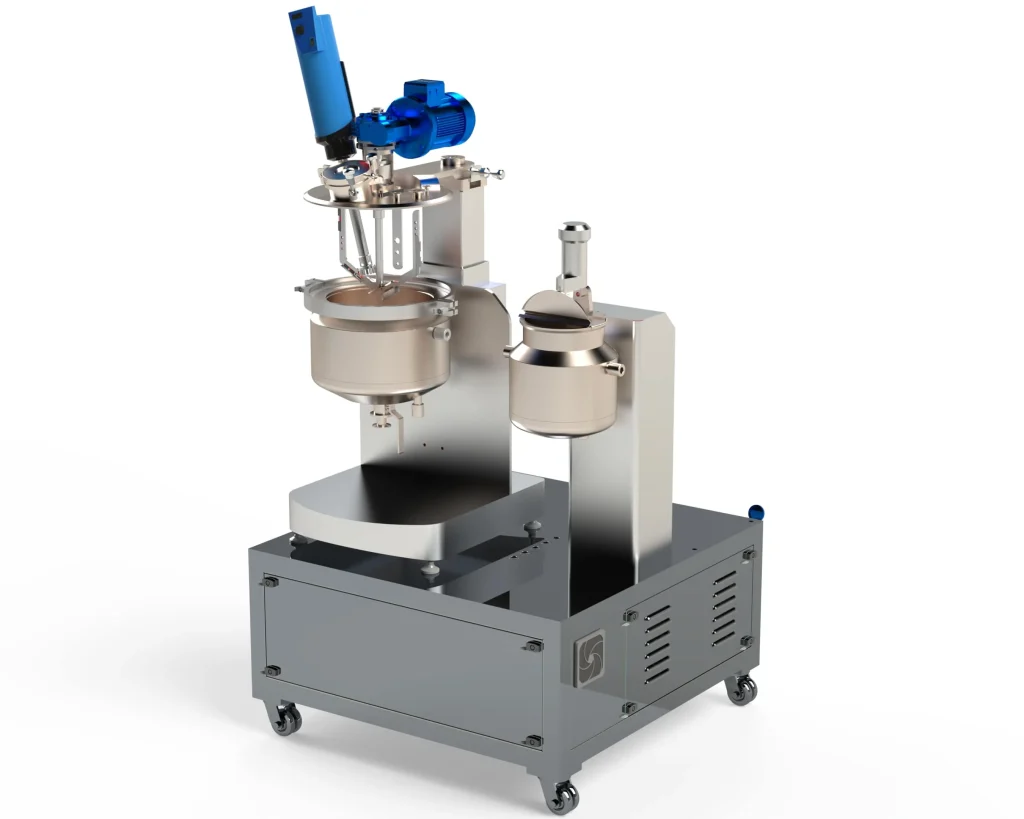
A multiple effect evaporator connects 2–7 evaporator bodies in series so that vapour generated in each effect serves as the heating medium for the next lower-pressure effect — recovering and reusing latent heat. Processing 500–500,000 kg/h with steam economy of 1.5–6.5 kg water per kg steam consumed, it achieves the lowest energy consumption per unit of water removed — the production standard for dairy, sugar, pulp, and chemical concentration.
Steam enters Effect 1 (highest pressure); vapour from Effect 1 heats Effect 2; Effect 2 vapour heats Effect 3 — continuing through the train. Feed flows forward, backward, or mixed depending on viscosity and scaling tendency. Each effect increases solids concentration. Final vapour is condensed by cooling water or MVR. Steam economy improves linearly with effect count — a 7-effect system evaporates approximately 6.5 kg water per kg steam consumed.
Challenges
Boiling Point Elevation Reducing Effective ΔT Across Train
High-solids feeds elevate boiling point — reduces available temperature driving force in later effects.
Fouling Intensification in High-Concentration Final Effects
Scaling rates highest in last effect where solids and viscosity are maximum.
Complex Control of Multi-Body Level and Pressure Balance
Instability in one effect propagates through train — requires multi-loop PLC cascade control.
High Capital Cost for 5–7 Effect Systems
Each additional effect requires full evaporator body, heat exchanger, separator, and controls.
Non-Condensable Gas Accumulation in Later Effects
Dissolved air released from feed accumulates in steam chest — reduces U-value.
Solutions
- Backward Feed for High-Viscosity Products (Last Effect Highest Temperature): Backward feed ensures highest-viscosity product contacts highest ΔT — restores driving force.
- Dedicated CIP Line to Final Effects (Higher Frequency Clean Cycle): Final effects cleaned 2–3× more frequently — scale removed before U-value degradation.
- Multi-Loop PLC with Model Predictive Control (MPC): MPC anticipates interaction between effects — maintains stable level and pressure balance.
- Mechanical Vapour Recompression (MVR) to Supplement Last Effect: MVR reduces required steam input by 60–80% — near-zero marginal steam cost.
- Venting of Non-Condensables at Each Effect Steam Chest (Timed Purge): Timed vent valve purges non-condensable build-up — maintains design U-value per effect.
Applications
- Dairy: Milk and whey evaporation before spray drying — 3–7 effect standard for large plants.
- Sugar: Thin juice evaporation (5–6 effects), cane juice concentration, beet sugar processing.
- Pulp & Paper: Black liquor evaporation before recovery boiler — 6–7 effects standard in kraft mills.
- Chemical: Caustic soda, phosphoric acid, ammonium nitrate, sodium sulphate concentration.
- Desalination: Multi-effect distillation (MED) for seawater and brackish water desalination.
Models & Capacities
Model | Scale | Effects (N) | Evaporation Capacity [kg/h] | Total Heating Area [m²] | Steam Consumption [kg/h] | Steam Economy [kg/kg steam] | Effect 1 Temp [°C] | Last Effect Temp [°C] | Last Effect Vacuum [mbar] | MVR Option |
|---|---|---|---|---|---|---|---|---|---|---|
MEE-2E-LAB | Lab | 2 | 100–1,000 | 2 | 55–550 | ~1.8 | 110 | 65 | 250 | Optional |
MEE-2E-PIL | Pilot | 2 | 500–5,000 | 10 | 280–2,800 | ~1.8 | 110 | 65 | 200 | Optional |
MEE-3E-PIL | Pilot | 3 | 800–8,000 | 20 | 300–3,000 | ~2.7 | 120 | 60 | 150 | Optional |
MEE-3E-P | Production | 3 | 2,000–20,000 | 50 | 750–7,500 | ~2.7 | 125 | 55 | 100 | Optional |
MEE-4E-P | Production | 4 | 5,000–50,000 | 120 | 1,300–13,000 | ~3.6 | 130 | 50 | 80 | Optional |
MEE-5E-P | Production | 5 | 10,000–100,000 | 250 | 2,200–22,000 | ~4.5 | 140 | 45 | 50 | Standard |
MEE-6E-LP | Large Prod | 6 | 20,000–200,000 | 550 | 3,500–35,000 | ~5.4 | 150 | 40 | 30 | Standard |
MEE-7E-LP | Large Prod | 7 | 50,000–500,000 | 1,200 | 8,000–80,000 | ~6.4 | 160 | 35 | 15 | Standard |