
Thermostatic Steam Trap — Bimetallic and Balanced Pressure Bellows
A thermostatic steam trap uses temperature — not density — to discriminate between steam and condensate: both bimetallic and balanced pressure bellows types close when steam temperature is present and open when sub-cooled condensate is present. The bimetallic type uses a temperature-sensitive bimetal disc that deflects proportional to temperature, closing the valve at steam temperature; the balanced pressure bellows type uses a hermetically sealed bellows filled with a volatile liquid that expands at steam saturation temperature to close the valve, and contracts on sub-cooling to open it.
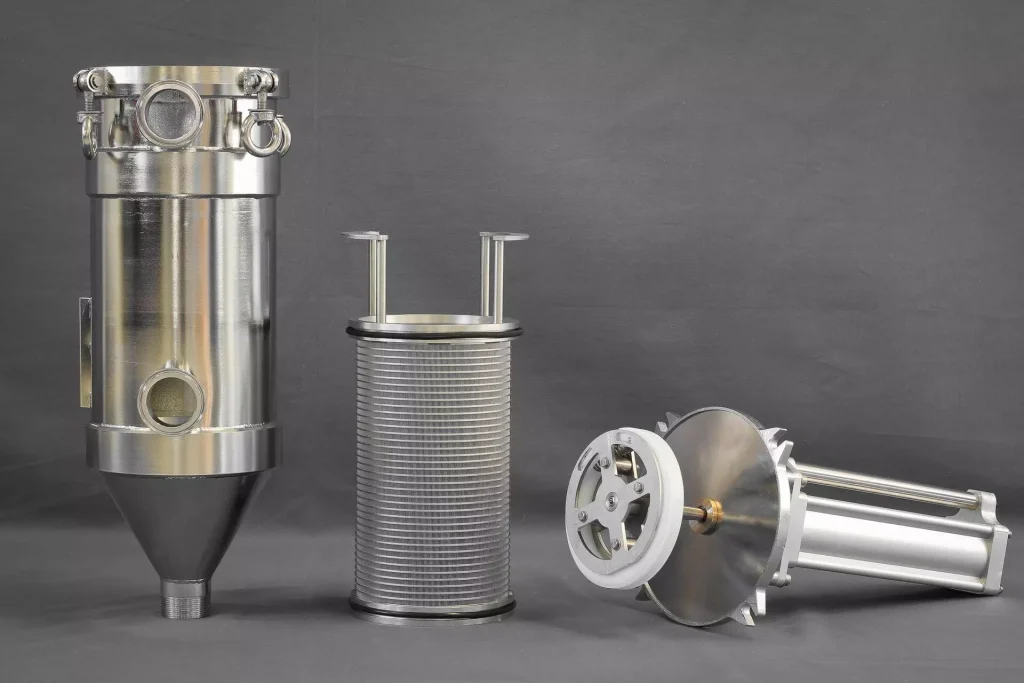
A thermostatic steam trap uses temperature — not density — to discriminate between steam and condensate: both bimetallic and balanced pressure bellows types close when steam temperature is present and open when sub-cooled condensate is present. The bimetallic type uses a temperature-sensitive bimetal disc that deflects proportional to temperature, closing the valve at steam temperature; the balanced pressure bellows type uses a hermetically sealed bellows filled with a volatile liquid that expands at steam saturation temperature to close the valve, and contracts on sub-cooling to open it.
Bimetallic: stacked bimetal discs deflect toward the valve seat as temperature rises toward saturation — disc closes at saturation temperature + adjustable offset (5–40°C sub-cooling setpoint). Balanced pressure bellows: the sealed bellows liquid has a vapour pressure equal to steam at saturation temperature — steam contacts the bellows and inflates it until it closes the valve; as condensate cools 5–15°C below saturation, bellows vapour condenses and contracts, opening the valve. Both types inherently pass non-condensable gases because cold gas at sub-saturation temperature opens the valve.
Challenges
Waterlogging Due to Required Sub-Cooling Before Opening (5–40°C)
Both thermostatic types require condensate to cool before opening — condensate backs up in steam space between cycles.
Bellows Failure from Water Hammer or Pressure Surge
Pressure surge crushes the delicate bellows element — immediate fail-open condition passes live steam.
Bimetallic Disc Fatigue from Rapid Cycling in Flash Steam Service
Frequent rapid open-close cycling in high-pressure drop service fatigues bimetal stack — disc loses calibration.
Overheating of Bellows Fill Fluid at Superheated Steam Inlet
Superheated steam contacts bellows — fill fluid decomposes or over-pressurises bellows; bellows failure.
Scale and Mineral Deposit Jamming Bimetal Disc in Closed Position
Mineral scale from poor condensate quality deposits on bimetal disc — disc locks closed; upstream flooding.
Solutions
- Install Trap Downstream of Cooling Leg (300–500 mm of Uninsulated Pipe): Cooling leg allows condensate to sub-cool before trap entry — reduces required sub-cooling within trap body.
- Inlet Strainer + Water Hammer Arrestor Before Every Thermostatic Trap: Combined strainer and WHA absorbs pressure surges — protects bellows from mechanical damage.
- Use Inverted Bucket or F&T Trap in Rapid-Cycling High-Pressure Service: Replace thermostatic with mechanical trap in flash steam cycling service — eliminates bimetal fatigue failure mode.
- Superheated Steam Service: Use Thermodynamic Trap or High-Temp Bimetallic Only: Standard balanced pressure bellows not rated for superheat — specify high-temperature bimetal (±5°C accuracy) for superheated service.
- Condensate Water Treatment + Regular Scale Inspection (6-Month Interval): Maintain condensate pH 8.5–9.2; neutralising amine dosing; regular trap inspection and cleaning removes scale.
Applications
- Steam Tracing Lines: Balanced pressure bellows standard for steam trace applications — temperature self-adjusting, compact, low cost.
- Radiators & Space Heating: Bimetallic type on low-pressure steam radiators — handles air venting and condensate with one device.
- Heat Exchangers (Low-Pressure): Balanced pressure bellows on LP heat exchangers — accepts condensate load variation, discharges at temperature.
- Pharmaceutical (Pure/Clean Steam): Thermostatic traps in clean steam systems — compact, all-stainless, FDA compliant for clean steam service.
- Jacketed Vessels (Low-Pressure): Bimetallic type on process vessel jackets at <3 bar(g) — cost-effective, reliable for light intermittent loads.
Models & Capacities
Type 2B — Thermostatic Steam Trap (Balanced Pressure Bellows and Bimetallic): Models & Capacities | ||||||||||
Model | Type | Connection DN [mm] | Max Inlet Pressure [bar(g)] | Sub-cooling Setpoint [°C] | Condensate Capacity [kg/h] | Min ΔP [bar] | Max ΔP [bar] | Air Venting | Body Material | Weight [kg] |
BP-010-6 | Balanced pressure bellows | DN 10 | 6 | 5–15 | 6 | 0 | 6 | Excellent (auto) | SS 316L | 0.15 |
BP-015-6 | Balanced pressure bellows | DN 15 | 6 | 5–15 | 20 | 0 | 6 | Excellent | SS 316L | 0.3 |
BP-015-16 | Balanced pressure bellows | DN 15 | 16 | 5–15 | 60 | 0 | 16 | Excellent | SS 316L | 0.5 |
BP-025-16 | Balanced pressure bellows | DN 25 | 16 | 5–15 | 150 | 0 | 16 | Excellent | SS 316L | 1.0 |
BM-015-6 | Bimetallic | DN 15 | 6 | 5–40 adj. | 25 | 0 | 6 | Good | SS 316L | 0.4 |
BM-015-16 | Bimetallic | DN 15 | 16 | 5–40 adj. | 80 | 0 | 16 | Good | SS 316L | 0.6 |
BM-025-16 | Bimetallic | DN 25 | 16 | 5–40 adj. | 200 | 0 | 16 | Good | SS 316L | 1.2 |
BM-025-32 | Bimetallic | DN 25 | 32 | 5–40 adj. | 150 | 0 | 32 | Good | Alloy steel | 1.8 |
BM-040-32 | Bimetallic | DN 40 | 32 | 5–40 adj. | 500 | 0 | 32 | Good | Alloy steel | 3.5 |