
Thermodynamic Steam Trap — Disc Type and Piston/Impulse Type
A thermodynamic steam trap exploits the difference in flow velocity — and therefore dynamic pressure — between steam and condensate to open and close the valve disc or piston: condensate flows slowly under the disc, opening it; steam flows at high velocity, creating a low-pressure pocket above the disc that allows the disc to close. The disc type uses a flat stainless steel disc that lifts off the seat when condensate pressure lifts it and snaps shut when steam velocity creates suction above it; the impulse/piston type uses a piston in a precision bore responding to the same pressure differential principle.
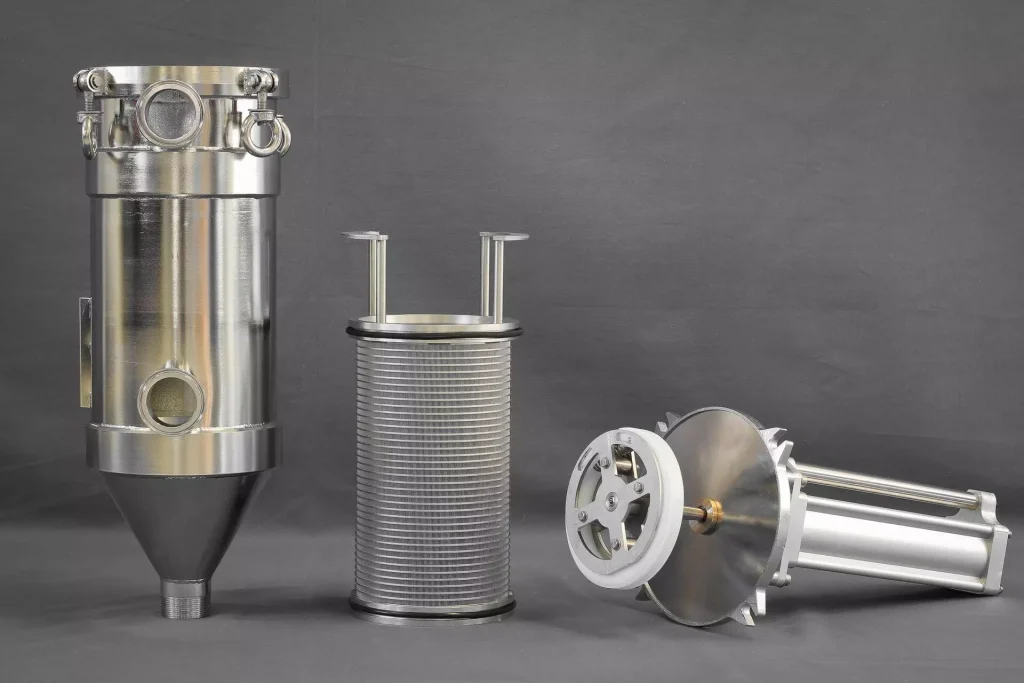
A thermodynamic steam trap exploits the difference in flow velocity — and therefore dynamic pressure — between steam and condensate to open and close the valve disc or piston: condensate flows slowly under the disc, opening it; steam flows at high velocity, creating a low-pressure pocket above the disc that allows the disc to close. The disc type uses a flat stainless steel disc that lifts off the seat when condensate pressure lifts it and snaps shut when steam velocity creates suction above it; the impulse/piston type uses a piston in a precision bore responding to the same pressure differential principle.
Challenges
Short Cycling at Very Light Condensate Load (Air Blowing in 2–5 Second Cycles)
At very low condensate load, trap cycles rapidly as air and flash steam keep triggering the disc — excessive wear.
Freezing of Disc/Piston in Cold Outdoor Installations (Trap Locks Open)
Water in control chamber freezes between steam shutdowns — disc or piston unable to seat; passes steam continuously.
Wire Drawing (Seat and Disc Erosion) from Continuous Partial Steam Pass-Through
High-velocity steam passing around the disc in the closed position erodes seat and disc surface — increases leak-by rate.
Noise and Vibration from Rapid Disc Cycling at High Pressure Drop
Rapid disc impact on seat during cycling generates mechanical noise and vibration — problematic in noise-sensitive installations
Contamination Sensitivity — Scale or Debris Preventing Full Disc Seating
Even small particle lodges between flat disc and seat — trap fails open; immediate steam loss.
Solutions
- Minimum Load Application: Use Thermostatic or F&T for Light Condensate Loads: Thermodynamic trap not suited for very light loads — replace with balanced pressure bellows or F&T at <10% rated load.
- Insulating Cap on Trap Body for Outdoor Installations: Insulating cover maintains control chamber above freezing — prevents ice formation between steam periods.
- Stellite 6 Hard-Faced Seat and Disc (HRC 60, 5–10× Standard Wear Life): Stellite-faced seat and disc resist erosion — maintain disc geometry and seating integrity over extended service.
- Piston Type in High-Noise-Sensitive Applications: Piston trap produces lower impulse noise than disc type — specify for installations near noise-sensitive areas.
- Inlet Strainer + 3-Valve Bypass Set Allowing Maintenance Under Live Steam: Isolation valves upstream and downstream + bypass valve allow trap change without system shutdown or steam loss.
Applications
- Steam Mains Drip Legs: Thermodynamic disc trap standard for steam main drainage — robust, compact, handles wide load range.
- Superheated Steam Service: Disc and piston types suitable for superheated steam — no temperature-sensitive elements to damage.
- High-Pressure Service (>10 bar): Thermodynamic traps rated to 32+ bar — suitable for high-pressure steam mains where mechanical traps are less robust.
- Tracing (Medium-to-High Pressure): Disc trap widely used on medium/high-pressure steam tracing — compact, economical, tolerates superheat.
- Power Plant Drain Points: Impulse piston type on turbine drip points and extraction steam lines — robust, handles all loads.
Models & Capacities
Type 2C — Thermodynamic Steam Trap (Disc Type and Piston / Impulse): Models & Capacities | |||||||||||
Model | Type | Connection DN [mm] | Max Inlet Pressure [bar(g)] | Max Temp [°C] | Condensate Capacity [kg/h] | Min ΔP [bar] | Max ΔP [bar] | Superheat Rated | Outdoor Insulating Cover | Body Material | Weight [kg] |
TD-015-14 | Disc | DN 15 | 14 | 198 | 60 | 0.1 | 14 | Yes | Optional | SS 316L | 0.3 |
TD-015-32 | Disc | DN 15 | 32 | 235 | 50 | 0.1 | 32 | Yes | Optional | SS 316L / Alloy | 0.5 |
TD-025-14 | Disc | DN 25 | 14 | 198 | 200 | 0.1 | 14 | Yes | Optional | SS 316L / CS | 0.8 |
TD-025-32 | Disc | DN 25 | 32 | 235 | 180 | 0.1 | 32 | Yes | Optional | Alloy steel | 1.2 |
TD-040-32 | Disc | DN 40 | 32 | 235 | 600 | 0.1 | 32 | Yes | Optional | Alloy steel | 2.5 |
TD-050-32 | Disc | DN 50 | 32 | 235 | 1,500 | 0.1 | 32 | Yes | Optional | Alloy steel CS | 4.5 |
PI-015-32 | Piston | DN 15 | 32 | 235 | 80 | 0.1 | 32 | Yes | Recommended | SS 316L / Alloy | 0.6 |
PI-025-32 | Piston | DN 25 | 32 | 235 | 300 | 0.1 | 32 | Yes | Recommended | Alloy steel | 1.5 |
PI-025-64 | Piston | DN 25 | 64 | 275 | 250 | 0.1 | 64 | Yes | Recommended | Forged alloy | 2.0 |
PI-040-64 | Piston | DN 40 | 64 | 275 | 800 | 0.1 | 64 | Yes | Recommended | Forged alloy | 4.0 |