
Pressure Reducing Valves (PRVs)
A pressure reducing valve (PRV) automatically maintains a constant lower downstream steam pressure regardless of upstream pressure variation or downstream flow demand changes — the valve modulates its opening to meter steam flow proportionally to the difference between downstream setpoint and actual downstream pressure. Direct-acting PRVs use a diaphragm or piston directly linked to the main valve plug by a spring — compact, simple, 2–3% regulation accuracy. Pilot-operated PRVs use a small pilot valve sensing downstream pressure to control a larger main valve — 0.5–1% regulation accuracy, suitable for DN 50–DN 300 and high-capacity steam distribution
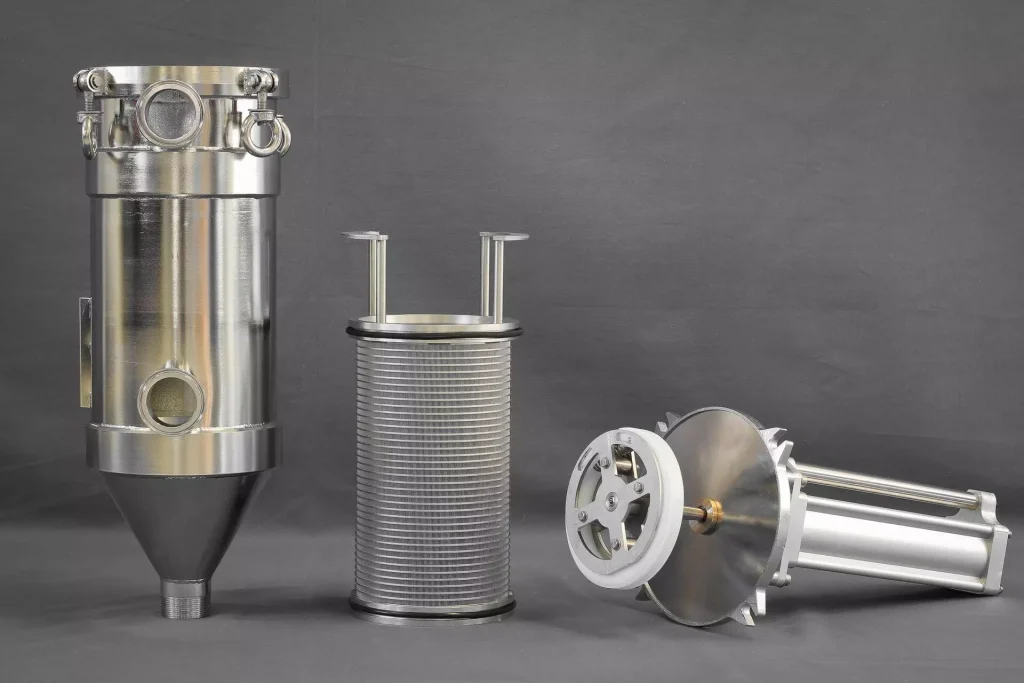
Direct-acting: downstream pressure acts on the diaphragm against the adjustable spring force — when downstream pressure falls (demand increases), the spring pushes the diaphragm down, opening the valve and admitting more steam until setpoint is restored. When demand decreases, rising downstream pressure pushes the diaphragm up, closing the valve. Pilot-operated: a small pilot valve senses downstream pressure and controls hydraulic (steam) pressure on a piston actuator driving the main valve plug — more sensitive and accurate. Both types are self-contained and require no external power; set pressure is adjusted by spring compression via the adjustment screw.
Challenges
Chattering (Rapid Valve Oscillation) at Very Low Load Conditions
At near-zero downstream demand, PRV cycles open-close rapidly — valve seat and disc wear rapidly; noise generated.
Hunting (Downstream Pressure Oscillation) from Oversized PRV for Service
PRV selected too large for actual load modulates between closed and fully open — pressure swings ±2–5 bar.
Water Hammer from Wet Steam Entering PRV at High Velocity
Condensate in the upstream pipe enters the PRV at steam velocity — violent impact on disc and seat.
Set Pressure Drift from Spring Fatigue Over Extended Service
Spring loses set length over time — downstream pressure creeps above setpoint without operator awareness.
Seat Erosion from Wire Drawing (Partial Opening at High ΔP)
PRV operating at partial opening with high pressure differential causes high-velocity steam to erode seat and plug.
Solutions
- Minimum Load Bypass Orifice (Fixed Orifice, 5% of Maximum Capacity): Small fixed bypass maintains minimum downstream pressure without PRV cycling — eliminates chatter at near-zero load.
- PRV Sized at 60–80% of Maximum Rated Capacity at Normal Operating Flow: Size PRV for actual working load, not peak — operates in middle modulating range; eliminates hunting.
- Upstream Separator and Strainer + Minimum 1 m Straight Pipe Before PRV: Dry saturated steam separator removes condensate; strainer removes particles; straight pipe reduces turbulence at inlet.
- Annual Spring Inspection and Replacement (Spring Life: 10–15 Years Under Normal Cycling): Scheduled spring replacement prevents setpoint drift — part of annual steam survey programme.
- Pilot-Operated PRV for High ΔP Service (>5 bar Pressure Reduction): Pilot-operated valve provides stable modulation at high ΔP — direct-acting chatters excessively above 5 bar reduction.
Applications
- Pharmaceutical: Clean steam pressure reduction to autoclave and SIP station setpoint (2.2 bar(g)) from 10 bar(g) supply.
- Food & Beverage: Culinary steam pressure reduction from boiler main to cooking and pasteuriser operating pressure.
- Chemical Processing: Process steam pressure regulation at heat exchanger inlets — maintains correct heating temperature.
- HVAC & Space Heating: Building steam heating system pressure reduction from distribution main to terminal unit operating pressure.
- Power & Industrial: Auxiliary steam let-down stations on turbine bypass and process steam header sub-stations.
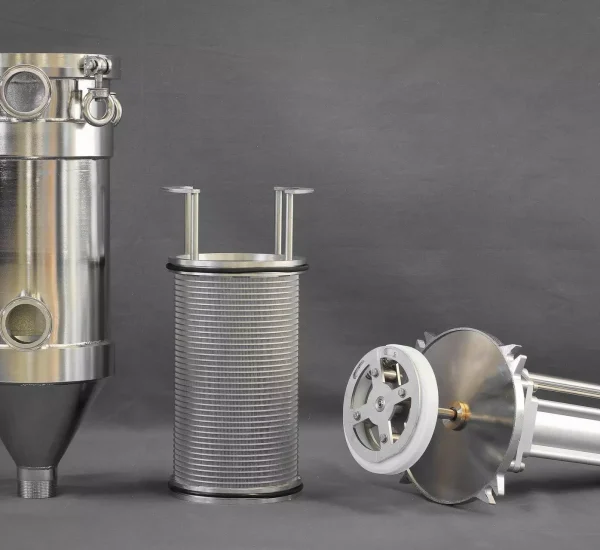
Table A — Direct-Acting PRV: Models & Capacities
Direct-Acting PRV — Models & Capacities (DN 15 to DN 50) | ||||||||||
Model | Type | Connection DN [mm] | Inlet Pressure Range [bar(g)] | Set Pressure Range [bar(g)] | Min ΔP [bar] | Capacity (max) [kg/h] | Regulation Accuracy [%] | Sensing Element | Body Material | Weight [kg] |
PRV-DA-015-6 | Direct-acting | DN 15 | 1–16 | 0.1–6 | 0.5 | 50 | ±2–3 | Diaphragm | SS 316L / BS | 0.8 |
PRV-DA-015-16 | Direct-acting | DN 15 | 1–25 | 0.5–16 | 0.5 | 80 | ±2–3 | Diaphragm | CS flanged | 1.2 |
PRV-DA-020-16 | Direct-acting | DN 20 | 1–25 | 0.5–16 | 0.5 | 150 | ±2–3 | Diaphragm | CS flanged | 1.8 |
PRV-DA-025-10 | Direct-acting | DN 25 | 1–16 | 0.1–10 | 0.5 | 350 | ±2–3 | Diaphragm | CS flanged | 2.5 |
PRV-DA-025-16 | Direct-acting | DN 25 | 1–25 | 0.5–16 | 0.5 | 500 | ±2–3 | Piston | CS flanged | 3.0 |
PRV-DA-040-16 | Direct-acting | DN 40 | 1–25 | 0.5–16 | 0.5 | 1,200 | ±2–3 | Piston | CS flanged | 5.5 |
PRV-DA-050-10 | Direct-acting | DN 50 | 1–16 | 0.1–10 | 0.5 | 2,000 | ±2–3 | Piston | CS flanged | 8.0 |
Table B — Pilot-Operated PRV: Models & Capacities
Pilot-Operated PRV — Models & Capacities (DN 25 to DN 300) | ||||||||||
Model | Type | Connection DN [mm] | Inlet Pressure Range [bar(g)] | Set Pressure Range [bar(g)] | Min ΔP [bar] | Capacity (max) [kg/h] | Regulation Accuracy [%] | Actuator Type | Body Material | Weight [kg] |
PRV-PO-025-16 | Pilot-operated | DN 25 | 1–25 | 0.5–16 | 0.3 | 800 | ±0.5–1 | Pilot valve + piston | CS flanged | 4.5 |
PRV-PO-040-16 | Pilot-operated | DN 40 | 1–25 | 0.5–16 | 0.3 | 2,000 | ±0.5–1 | Pilot valve + piston | CS flanged | 8 |
PRV-PO-050-16 | Pilot-operated | DN 50 | 1–25 | 0.5–16 | 0.3 | 4,500 | ±0.5–1 | Pilot valve + piston | CS flanged | 14 |
PRV-PO-080-16 | Pilot-operated | DN 80 | 1–25 | 0.5–16 | 0.3 | 10,000 | ±0.5–1 | Pilot valve + piston | CS flanged | 28 |
PRV-PO-100-16 | Pilot-operated | DN 100 | 1–25 | 0.5–16 | 0.3 | 18,000 | ±0.5–1 | Pilot valve + diaphragm | CS flanged | 48 |
PRV-PO-150-16 | Pilot-operated | DN 150 | 1–25 | 0.5–16 | 0.3 | 40,000 | ±0.5–1 | Pilot valve + diaphragm | CS flanged | 95 |
PRV-PO-200-16 | Pilot-operated | DN 200 | 1–25 | 0.5–16 | 0.3 | 80,000 | ±0.5–1 | Pilot valve + diaphragm | CS flanged | 185 |
PRV-PO-250-10 | Pilot-operated | DN 250 | 1–16 | 0.3–10 | 0.3 | 140,000 | ±0.5–1 | Pilot valve + diaphragm | CS flanged | 320 |
PRV-PO-300-10 | Pilot-operated | DN 300 | 1–16 | 0.3–10 | 0.3 | 220,000 | ±0.5–1 | Pilot valve + diaphragm | CS flanged | 520 |