
Dilute-Phase Vacuum / Positive Pressure Transfer (High-Velocity)
A dilute-phase transfer system suspends individual powder particles in a high-velocity air stream (15-35 m/s) at low solid-to-air ratios (1:1 to 15:1 by weight) -- conveying 5 kg/h to 50 t/h over distances of 5 m to 500 m using vacuum (-0.2 to -0.6 bar) or positive pressure (0.3-1.5 bar). Ideal for free-flowing non-fragile powders (flour, sugar, starch, cement, polymer pellets), it provides the highest transfer rates of all pneumatic conveying modes with the simplest pipeline design and lowest equipment cost.
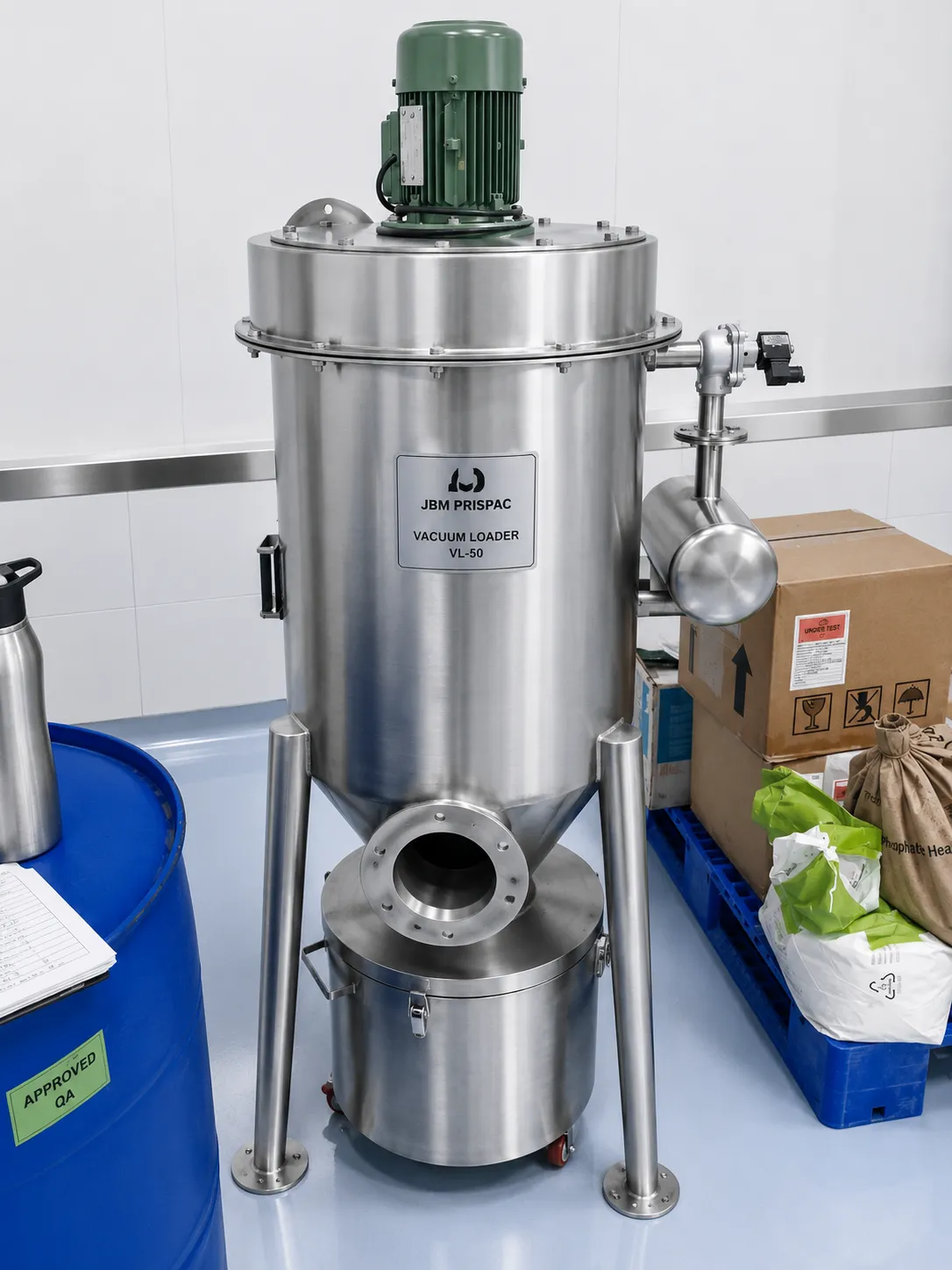
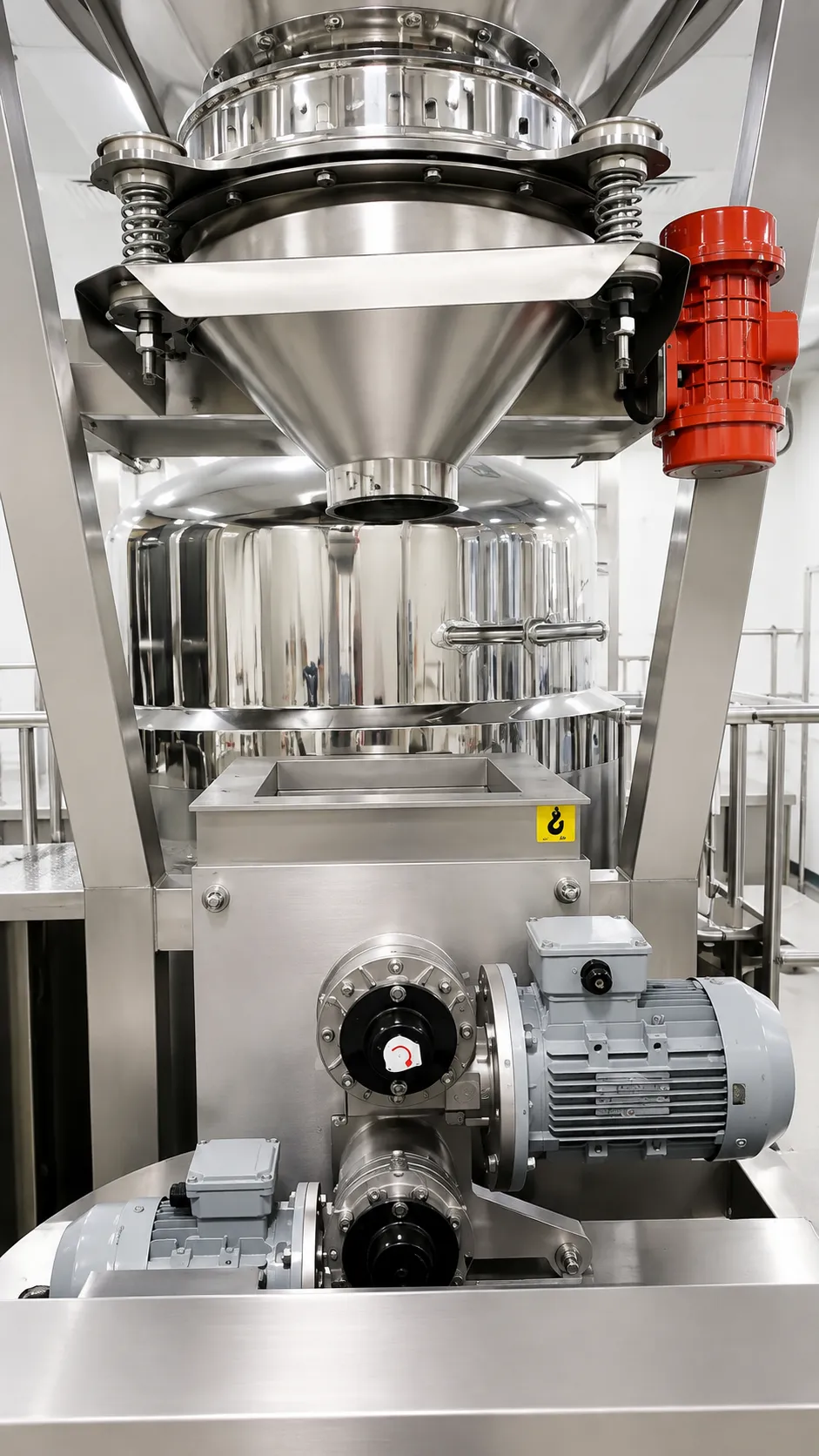
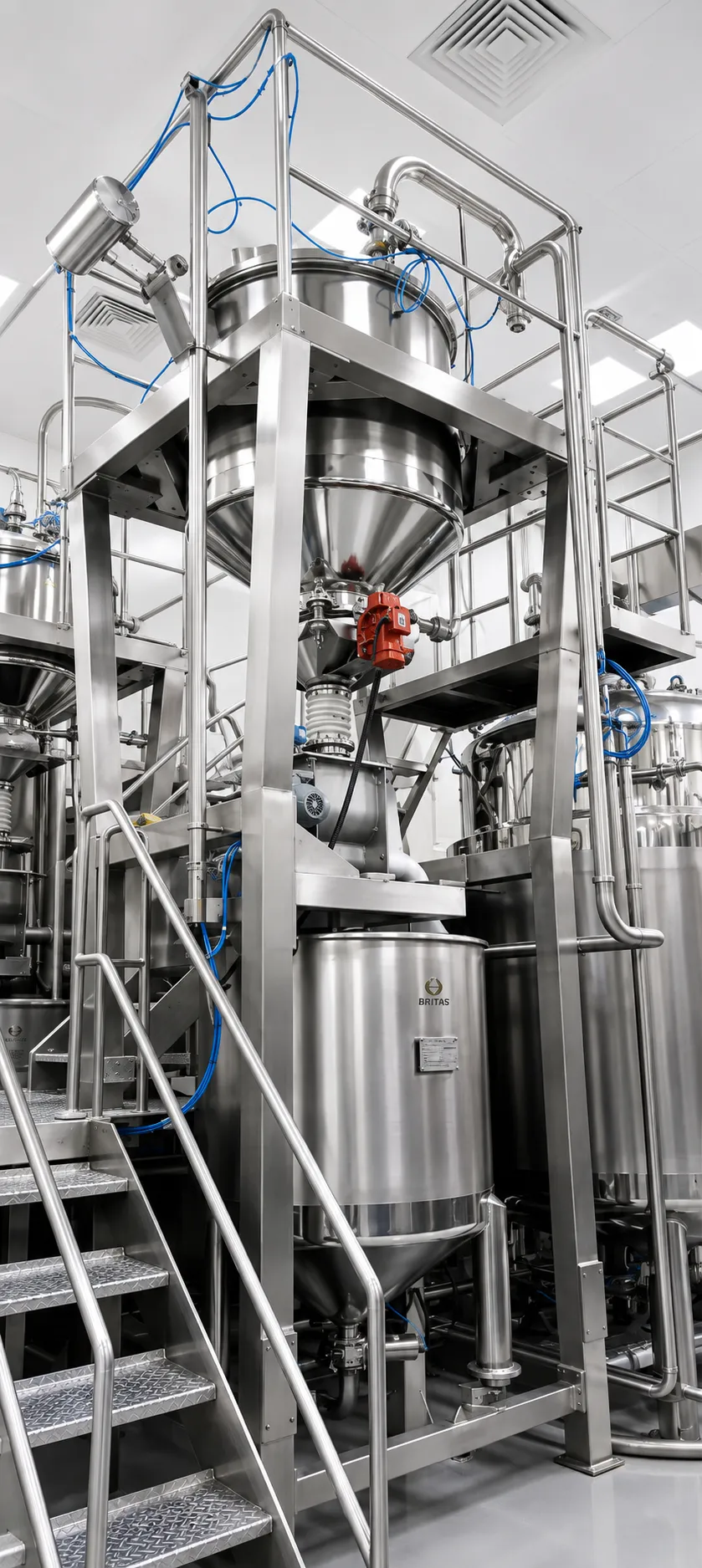
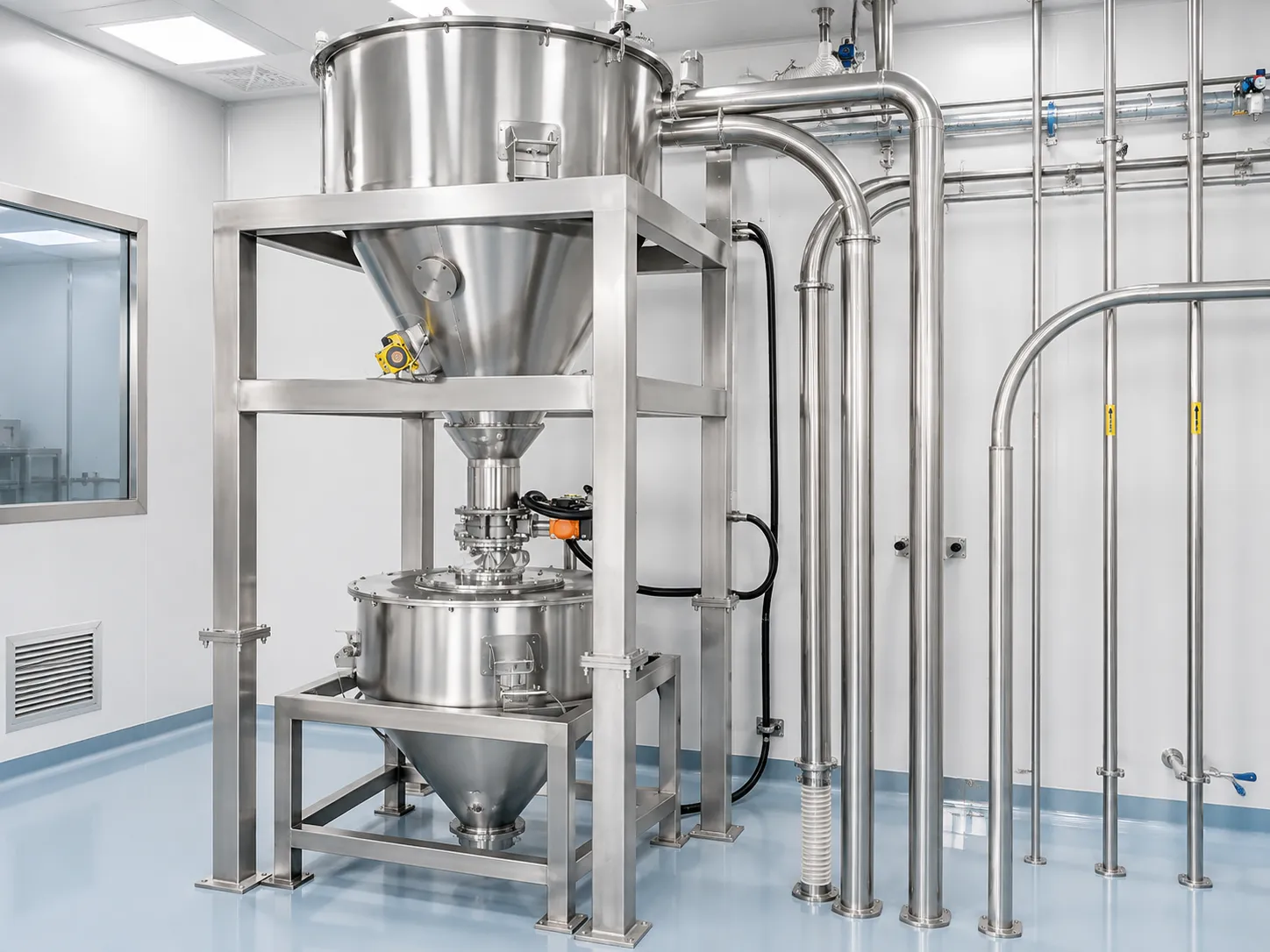
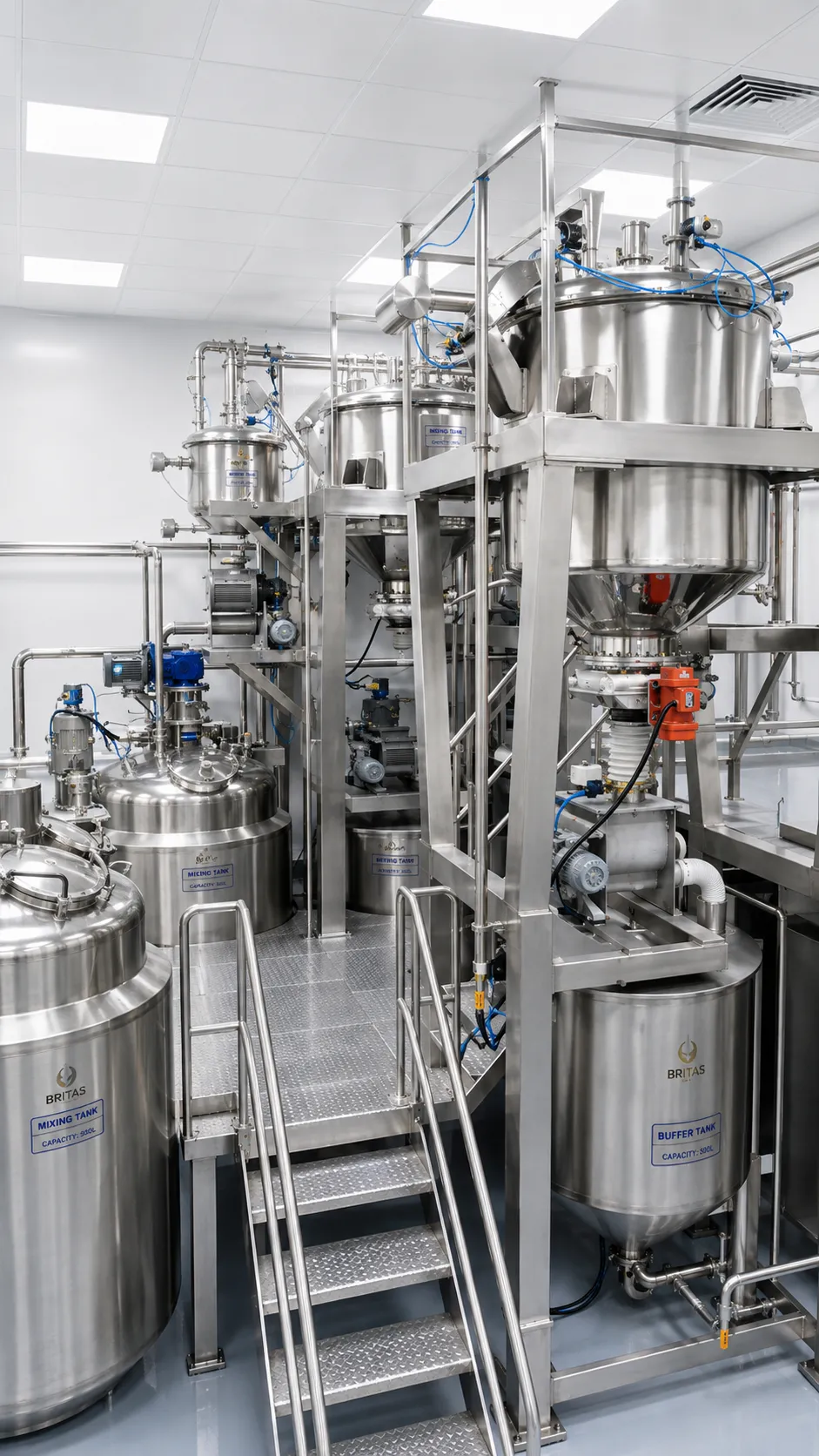
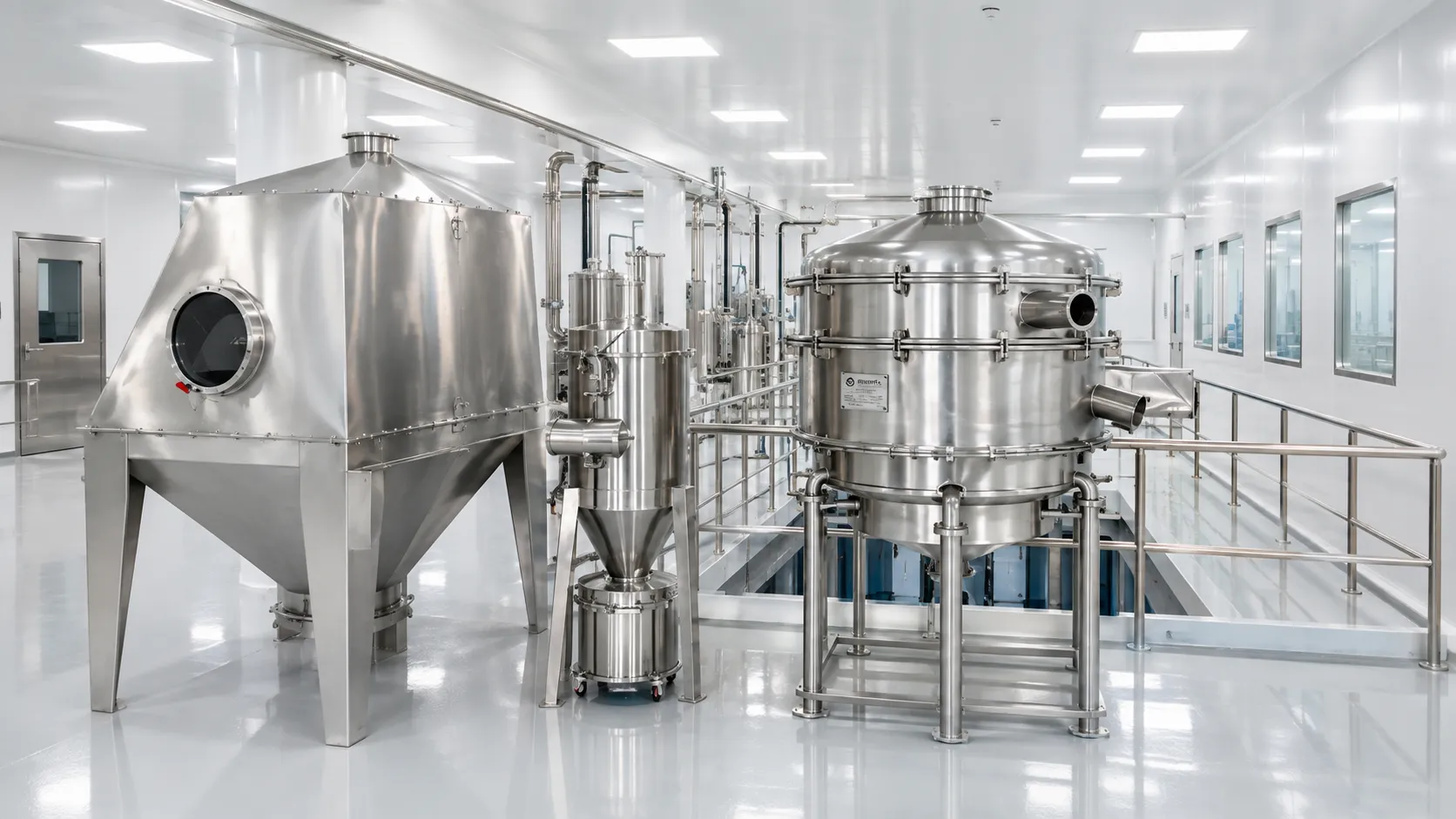
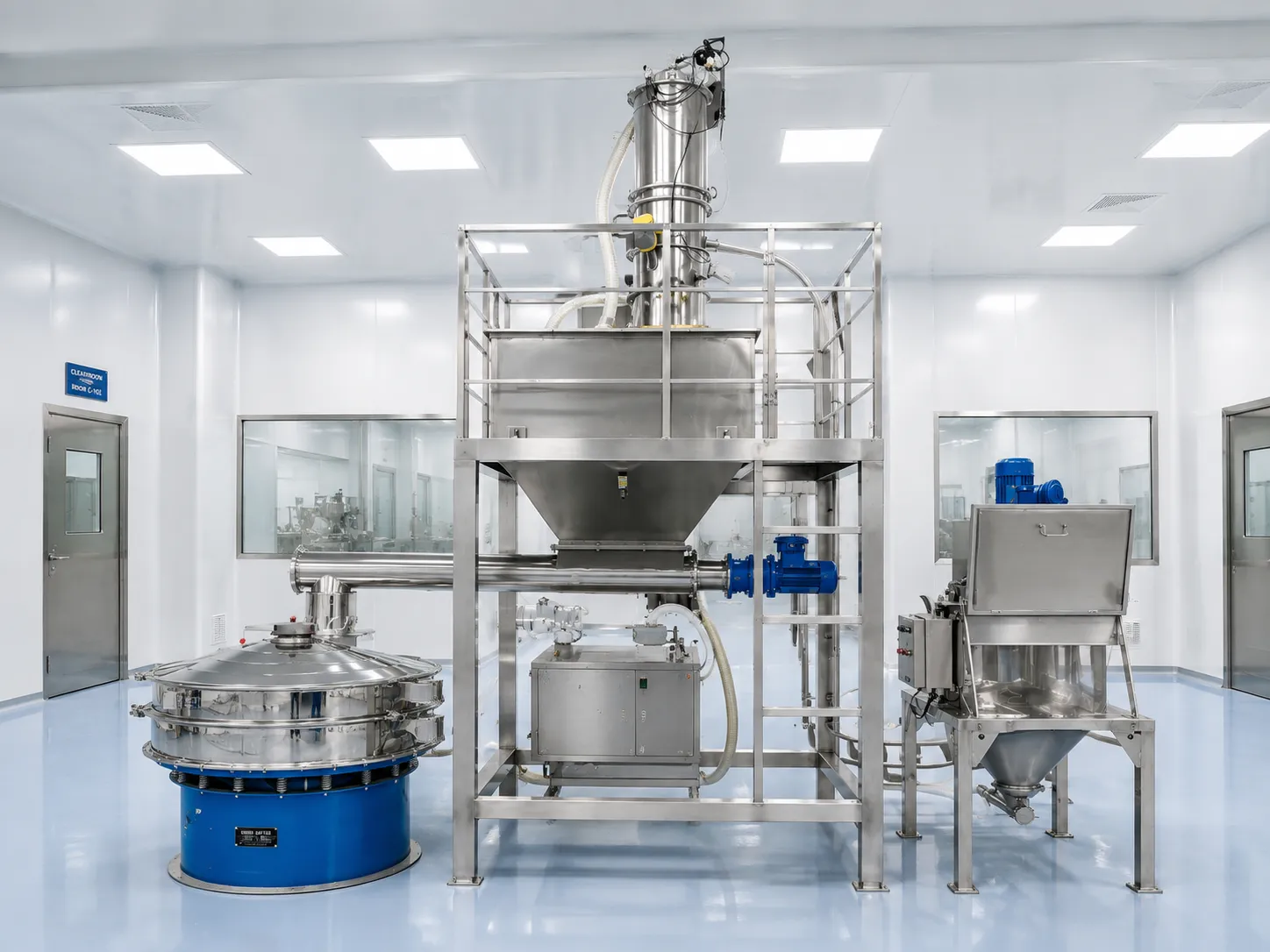
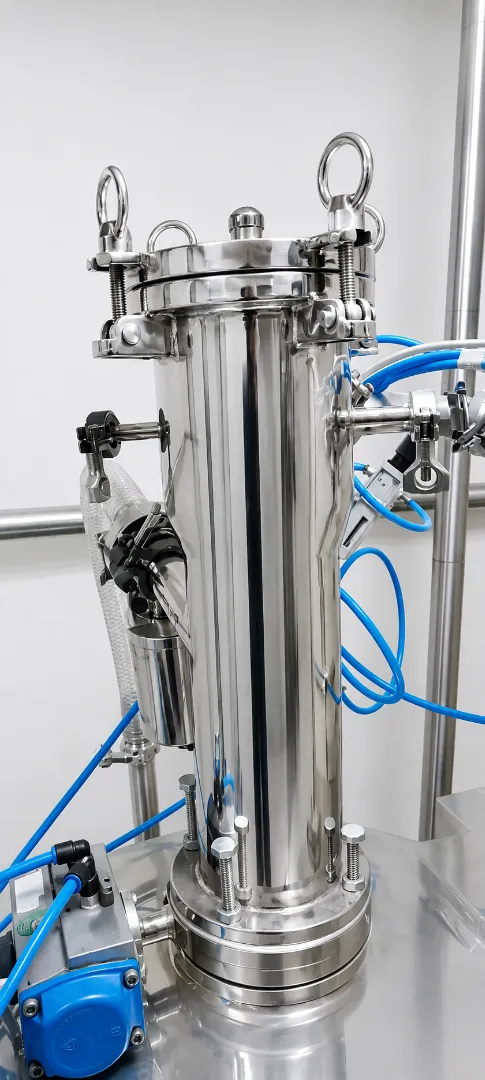
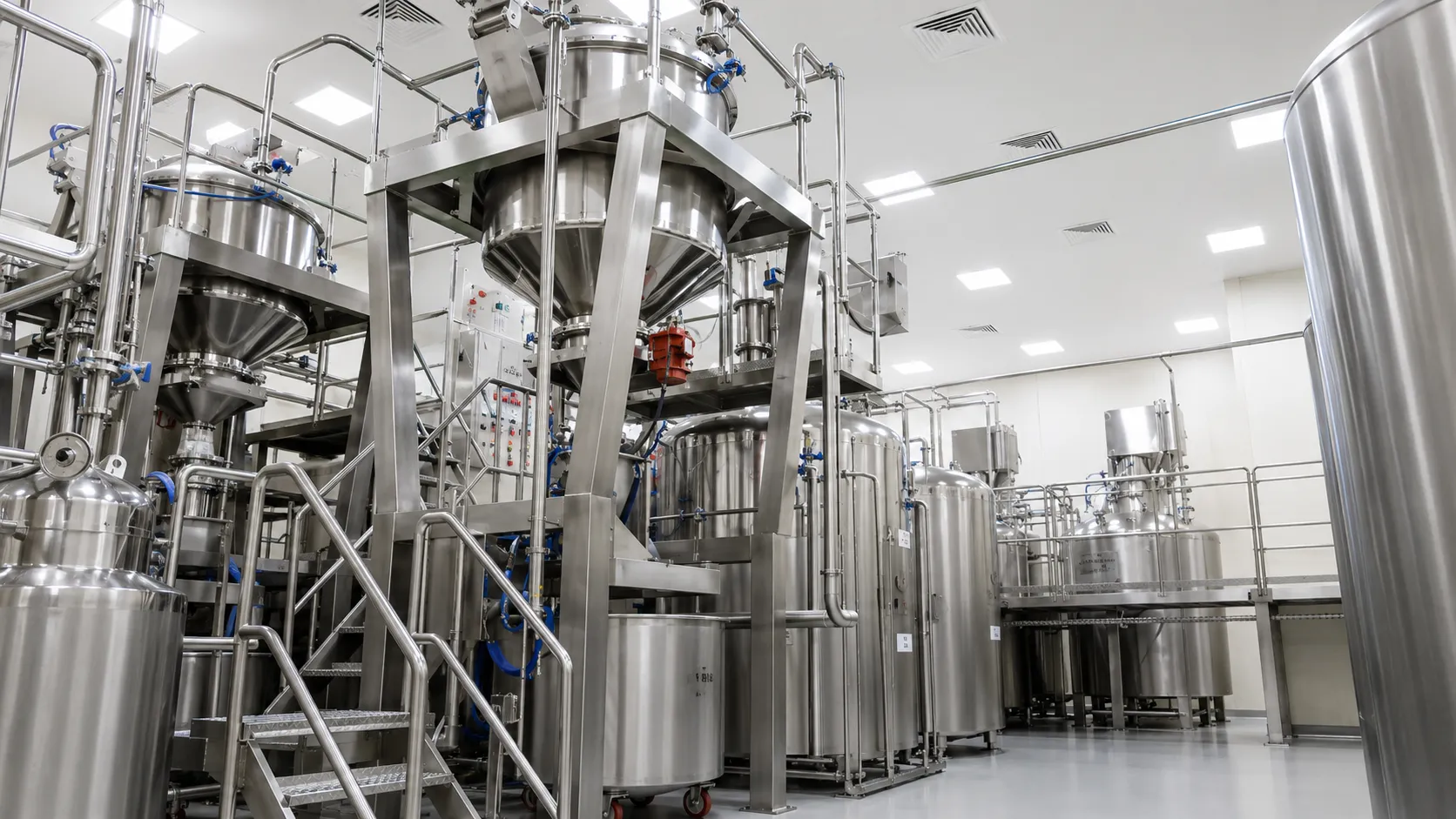
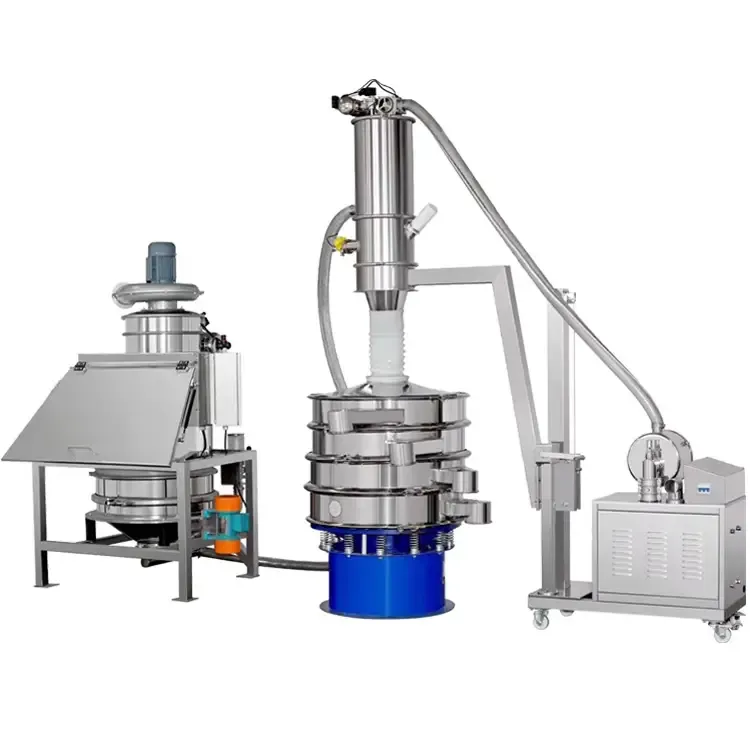
A dilute-phase transfer system suspends individual powder particles in a high-velocity air stream (15-35 m/s) at low solid-to-air ratios (1:1 to 15:1 by weight) — conveying 5 kg/h to 50 t/h over distances of 5 m to 500 m using vacuum (-0.2 to -0.6 bar) or positive pressure (0.3-1.5 bar). Ideal for free-flowing non-fragile powders (flour, sugar, starch, cement, polymer pellets), it provides the highest transfer rates of all pneumatic conveying modes with the simplest pipeline design and lowest equipment cost.
A roots blower or centrifugal fan generates the conveying airstream; a rotary valve or venturi injector introduces powder into the pipeline at the pickup point. Individual particles are suspended and transported as a dilute cloud to the destination filter receiver — where they separate from air by inertia in a cyclone or drop-out box. Air exits through a baghouse or HEPA filter before the blower return or atmosphere exhaust. Long-radius bends (R = 10x pipe dia minimum) reduce particle-wall impact velocity. VFD on blower motor adjusts air velocity to match product density and pipeline length — maintaining suspension without saltation (particle settling) throughout the transfer.
Challenges
Particle Attrition at High-Velocity Pipeline Bends
15-30 m/s particle velocity at standard 90 degree bends fractures fragile powders -- fines >5%.
Saltation Velocity Drop Causing Pipeline Blockage
Below minimum conveying velocity, particles settle in horizontal runs -- rapid blockage.
Air Volume Heating Product in Long-Distance Transfer
High air volume in dilute phase absorbs and transfers heat -- product temperature rises >10 deg C.
Fine Powder Bypassing Primary Cyclone Separator
Sub-20 um particles not captured by cyclone -- excessive load on secondary bag filter.
Rotary Valve Air Leakage Reducing Conveying Efficiency
Worn rotary valve blade tip clearance allows air blow-back -- reduces net conveying air velocity.
Solutions
- Long-Radius Bends (R = 15x D) or Blind-Tee Terminus at All Direction Changes: Low-impact bends reduce particle velocity at wall -- attrition <1% for standard granules.
- Minimum Velocity Interlock (Velocity Probe in Pipeline, PLC Alarm): Inline velocity monitor triggers VFD speed increase or alarm before saltation velocity is reached.
- Desiccated Conveying Air (Dew Point -20 deg C) at Controlled Temperature: Air-to-air heat exchanger pre-cools conveying air -- limits product temperature rise to <5 deg C.
- High-Efficiency Cyclone (>=95% at 10 um) + Secondary HEPA Filter: Two-stage separation: cyclone primary + HEPA secondary achieves >99.9% recovery of sub-20 um particles.
- High-Precision Rotary Valve (Blade Tip Clearance <=0.05 mm) with Annual Wear Check: Close-tolerance rotor maintains conveying efficiency; annual blade tip measurement triggers replacement.
Applications
- Food & Beverage: Flour, sugar, starch, salt, instant powder -- high-throughput plant-wide dilute-phase transfer.
- Chemical: Polymer pellet, fertiliser granule, pigment, and cement -- high-capacity dilute-phase transport.
- Dairy: Milk powder, whey powder, and skim milk powder -- dilute-phase silo-to-silo or dryer-to-silo.
- Pharmaceutical: Non-fragile excipient (lactose, MCC) high-throughput transfer -- not for fragile APIs.
- Mining & Minerals: Mineral powder, fly ash, and sand -- high-rate dilute-phase pneumatic transfer.
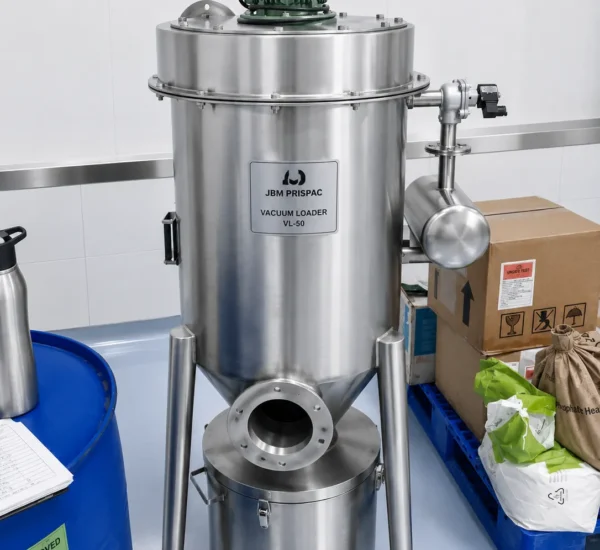
Product Catalogue & Technical Datasheet
| Model | Scale | Capacity (t/h) | Conveying Velocity (m/s) | Solid-to-Air Ratio | Pipeline Dia (mm) | Max Distance (m) | Blower Power (kW) | Air Pressure (bar) |
|---|---|---|---|---|---|---|---|---|
| DLP-LAB | Lab | 0.05-1 | 15-25 | 3:1-10:1 | Dia 32-50 | 50 | 0.55-1.5 | 0.3-0.8 |
| DLP-PIL | Pilot | 0.5-5 | 18-28 | 5:1-12:1 | Dia 50-80 | 100 | 2.2-5.5 | 0.3-1.0 |
| DLP-P-005 | Production | 2-10 | 20-30 | 5:1-15:1 | Dia 80-100 | 150 | 5.5-11 | 0.4-1.2 |
| DLP-P-020 | Production | 8-25 | 22-32 | 5:1-15:1 | Dia 100-125 | 200 | 11-22 | 0.5-1.5 |
| DLP-P-050 | Production | 20-50 | 25-35 | 8:1-15:1 | Dia 125-150 | 300 | 22-37 | 0.5-1.5 |
| DLP-LP-100 | Large Prod | 50-100 | 28-35 | 10:1-15:1 | Dia 150-200 | 400 | 37-75 | 0.6-1.5 |
| DLP-LP-200 | Large Prod | 100-200 | 28-35 | 10:1-15:1 | Dia 200-250 | 500 | 75-132 | 0.6-1.5 |