
Multi-Stage Shear Inline Mixer
A multi-stage shear inline mixer passes product through two or more successive rotor-stator stages in a single continuous pass, each stage applying progressively higher shear to reduce droplet and particle size incrementally. This cascade approach achieves finer particle size targets in a single pass compared to single-stage designs, making it suited to pharmaceutical, food, and cosmetic applications requiring consistent sub-5 µm results.
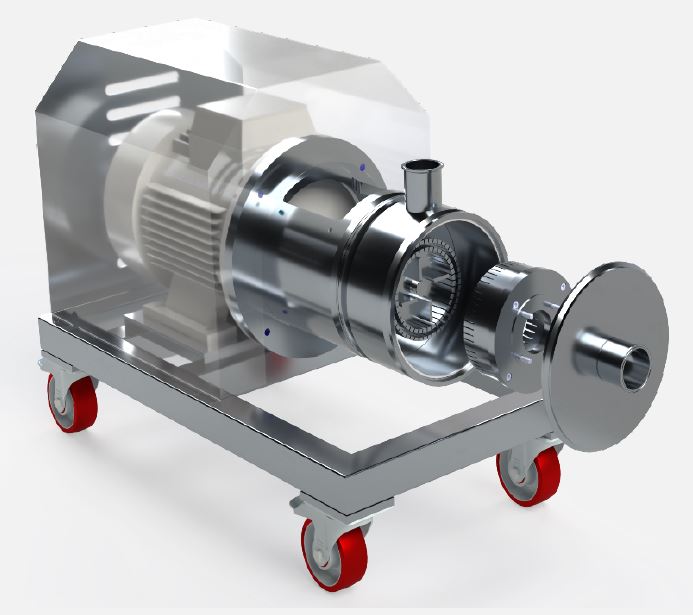
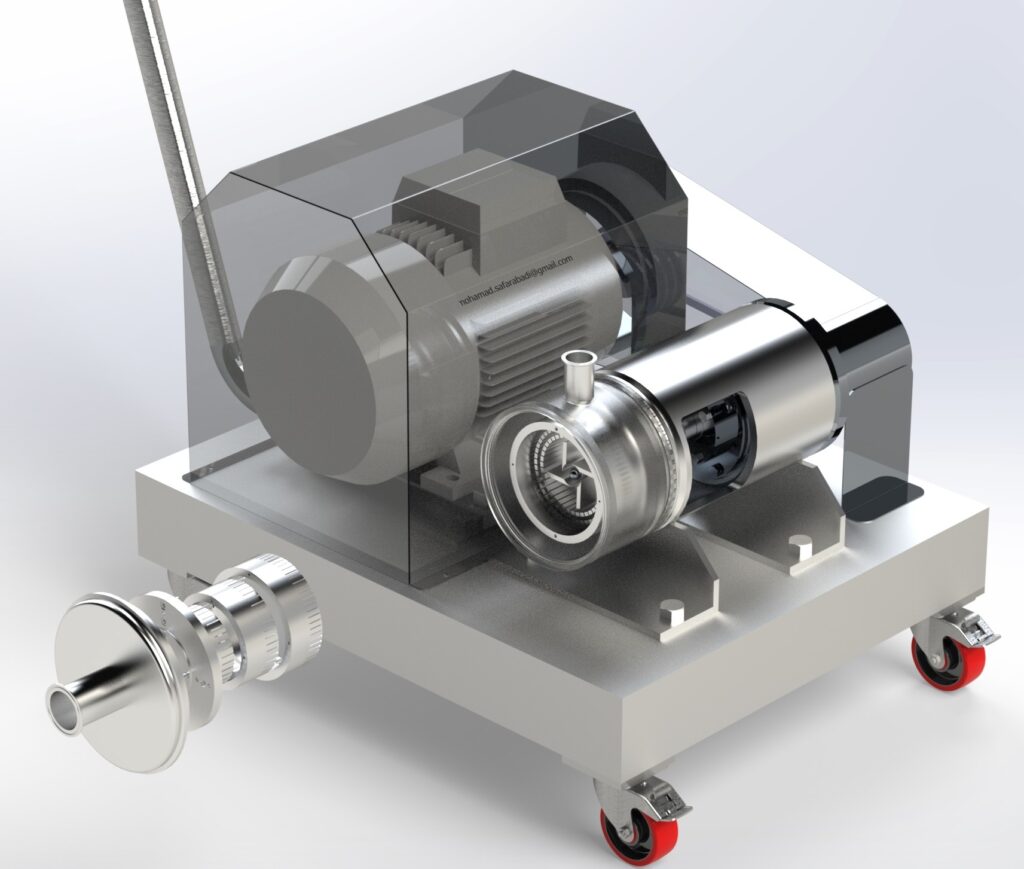
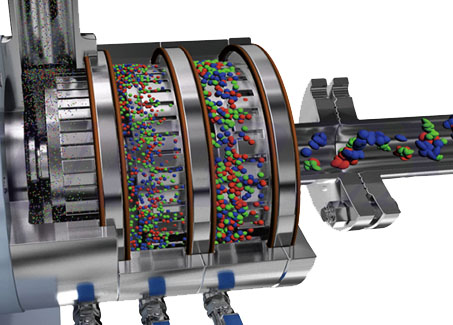
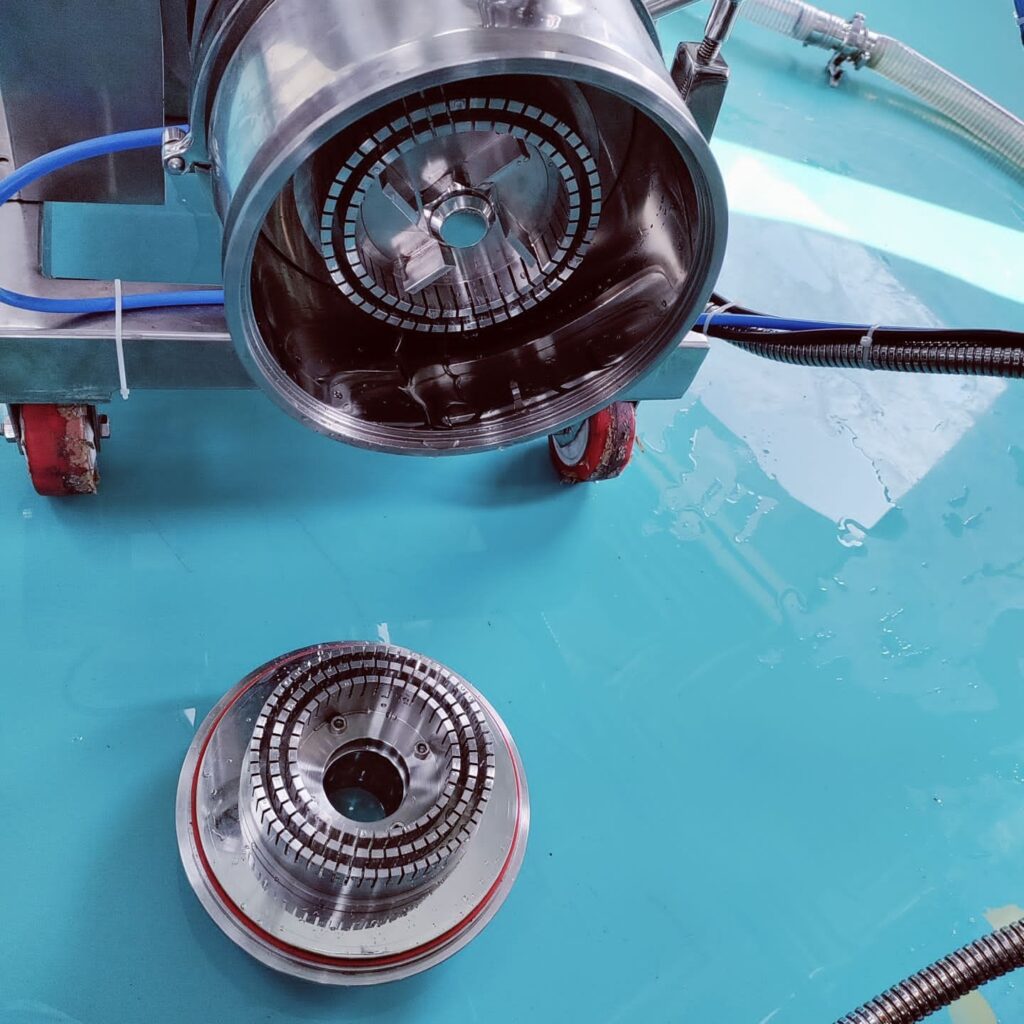
Product enters the first rotor-stator stage where initial shear breaks large agglomerates and coarse droplets. Each successive stage applies finer gap clearance and higher localised shear, progressively reducing droplet and particle size step by step. The cascade design allows a single pass to achieve particle sizes that would otherwise require multiple recirculation loops through a single-stage mixer, reducing overall processing time.
Challenges
Higher Pressure Drop Across Multiple Stages
Each additional rotor-stator stage adds flow resistance, requiring either a more powerful self-pumping rotor or an external feed pump to maintain adequate throughput, increasing system complexity and capital cost.
Cumulative Heat Generation Across Stages
Each stage adds shear energy to the product as heat, and without inter-stage cooling the cumulative temperature rise across multiple stages can damage thermally sensitive emulsions, proteins, or active ingredients.
Precision Maintenance of Multiple Gap Settings
Reassembling multiple rotor-stator stages to correct gap tolerances after cleaning or maintenance requires care and precision, increasing maintenance time and the risk of inconsistent shear performance if gaps are incorrectly set.
Scale-Up Complexity
Replicating the shear history delivered across each stage when transferring from laboratory to production scale is more complex than for single-stage designs, as each stage must be individually matched between scales.
Viscosity Limit per Stage
Each rotor-stator stage has a practical viscosity limit beyond which flow through the stage becomes restricted, requiring careful matching of product viscosity profile to the multi-stage configuration selected.
Solutions
- Progressive Gap Clearance from First to Final Stage: Designing each stage with progressively finer gap clearance optimises energy input at each step, preventing overloading of early stages and ensuring efficient particle size reduction through the full cascade.
- External Feed Pump for Viscous Products: Pairing the multi-stage mixer with a positive displacement or gear pump provides the pressure needed to maintain consistent flow rate through all stages regardless of product viscosity or pressure drop.
- Jacketed Mixer Housing with Cooling Water: Circulating cooling water through the mixer housing removes heat generated across all stages, limiting cumulative product temperature rise and protecting thermally sensitive formulations.
- Modular Stage Cartridge Design: Mixers with individually removable stage cartridges allow each stage to be disassembled, cleaned, and reassembled independently, reducing maintenance time and simplifying gap verification after cleaning.
- Variable Frequency Drive with Power Monitoring: Monitoring motor power draw during operation provides an indication of changes in product viscosity or rotor-stator condition across the stages, allowing early detection of wear or blockage before product quality is affected.
Applications
- Pharmaceutical API Nanosuspension and Sterile Emulsion Production: Single-pass reduction of active pharmaceutical ingredient particle size to sub-5 µm in oral suspensions and sterile emulsions within hygienic GMP pipeline systems.
- Food Mayonnaise and Dairy Cream Homogenisation: Continuous high-throughput production of stable oil-in-water emulsions including mayonnaise and dairy cream, achieving consistent droplet size distribution in a single production pass.
- Cosmetic Nanoemulsion Serum and SPF Lotion Manufacturing: Production of fine-droplet nanoemulsion serums and sunscreen lotions requiring consistent sub-5 µm droplet size for product stability and skin feel performance.
- Nutraceutical Bioavailability-Enhanced Emulsions: Single-pass emulsification of oil-soluble bioactive ingredients including omega-3 fatty acids and fat-soluble vitamins into stable nano-emulsified supplement and functional beverage bases.
- Polymer and Pigment Nano-Dispersion in Chemical Manufacturing: Continuous fine dispersion of pigments and polymer emulsions in coating and adhesive production lines where consistent sub-5 µm particle size is required for end-product performance.
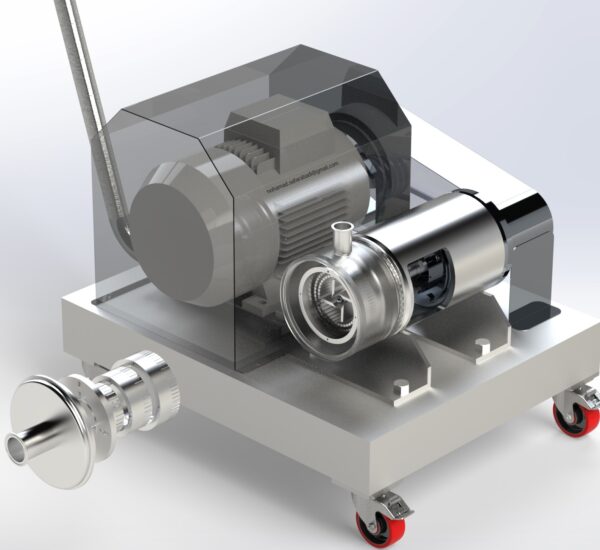
Models & Capacities
Type 1B Multi-Stage Shear Inline Mixer 2–4 Stages (Lab 10 L/h to Large Production 200,000 L/h) | ||||||||||||||
Model | Scale | Stages | Motor [kW] | Speed [RPM] | Flow Rate [L/h] | Tip Speed [m/s] | Shear Rate (max stage) [s⁻¹] | D90 [µm] | D50 [µm] | Max Viscosity [cP] | Inlet/Outlet Ø [mm] | L×W×H [mm] | Weight [kg] |
|
SIM-M-LAB-2 | Lab | 2 | 0.55 | 3,000–3,600 | 10–100 | 10–22 | 10³–10⁵ | 1–10 | 0.5–5 | <15,000 | DN 10 | 310×160×230 | 12 |
|
SIM-M-LAB-3 | Lab | 3 | 0.75 | 3,000–3,600 | 10–60 | 10–22 | 10³–10⁵ | 0.5–5 | 0.1–2 | <15,000 | DN 10 | 380×165×250 | 16 |
|
SIM-M-PIL-2 | Pilot | 2 | 2.2 | 3,000–3,600 | 100–1,500 | 12–25 | 10⁴–10⁵ | 1–10 | 0.5–5 | <35,000 | DN 32 | 530×250×360 | 55 |
|
SIM-M-PIL-3 | Pilot | 3 | 3.0 | 3,000–3,600 | 80–1,000 | 12–25 | 10⁴–10⁵ | 0.5–5 | 0.1–2 | <35,000 | DN 32 | 640×260×390 | 82 |
|
SIM-M-PIL-4 | Pilot | 4 | 4.0 | 3,000–3,600 | 50–600 | 12–25 | 10⁴–10⁵ | 0.2–2 | 0.05–1 | <35,000 | DN 32 | 750×270×420 | 110 |
|
SIM-M-10-2 | Production | 2 | 15 | 3,000–3,600 | 500–8,000 | 15–25 | 10⁴–10⁵ | 1–10 | 0.5–5 | <50,000 | DN 50 | 930×420×590 | 220 |
|
SIM-M-10-3 | Production | 3 | 22 | 3,000–3,600 | 300–5,000 | 15–25 | 10⁴–10⁵ | 0.5–5 | 0.1–2 | <50,000 | DN 50 | 1,080×430×630 | 310 |
|
SIM-M-10-4 | Production | 4 | 30 | 3,000–3,600 | 200–3,000 | 15–25 | 10⁴–10⁵ | 0.2–2 | 0.05–1 | <50,000 | DN 50 | 1,220×440×670 | 410 |
|
SIM-M-20-2 | Production | 2 | 30 | 3,600 | 1,000–15,000 | 18–25 | 10⁴–10⁵ | 1–10 | 0.5–5 | <50,000 | DN 65 | 1,130×490×700 | 480 |
|
SIM-M-20-3 | Production | 3 | 45 | 3,600 | 500–10,000 | 18–25 | 10⁴–10⁵ | 0.5–5 | 0.1–2 | <50,000 | DN 65 | 1,320×500×750 | 680 |
|
SIM-M-40-2 | Large Prod | 2 | 55 | 3,600 | 2,000–30,000 | 20–25 | 10⁴–10⁵ | 1–10 | 0.5–5 | <50,000 | DN 80 | 1,520×580×880 | 1,050 |
|
SIM-M-40-3 | Large Prod | 3 | 75 | 3,600 | 1,000–20,000 | 20–25 | 10⁴–10⁵ | 0.5–5 | 0.1–2 | <50,000 | DN 80 | 1,760×590×940 | 1,420 |
|
SIM-M-75-2 | Large Prod | 2 | 110 | 3,000–3,600 | 5,000–60,000 | 18–25 | 10⁴–10⁵ | 1–15 | 0.5–8 | <50,000 | DN 125 | 2,050×700×1,100 | 2,200 |
|
SIM-M-75-3 | Large Prod | 3 | 160 | 3,000–3,600 | 3,000–40,000 | 18–25 | 10⁴–10⁵ | 0.5–5 | 0.1–2 | <50,000 | DN 125 | 2,350×710×1,180 | 3,100 |
|