
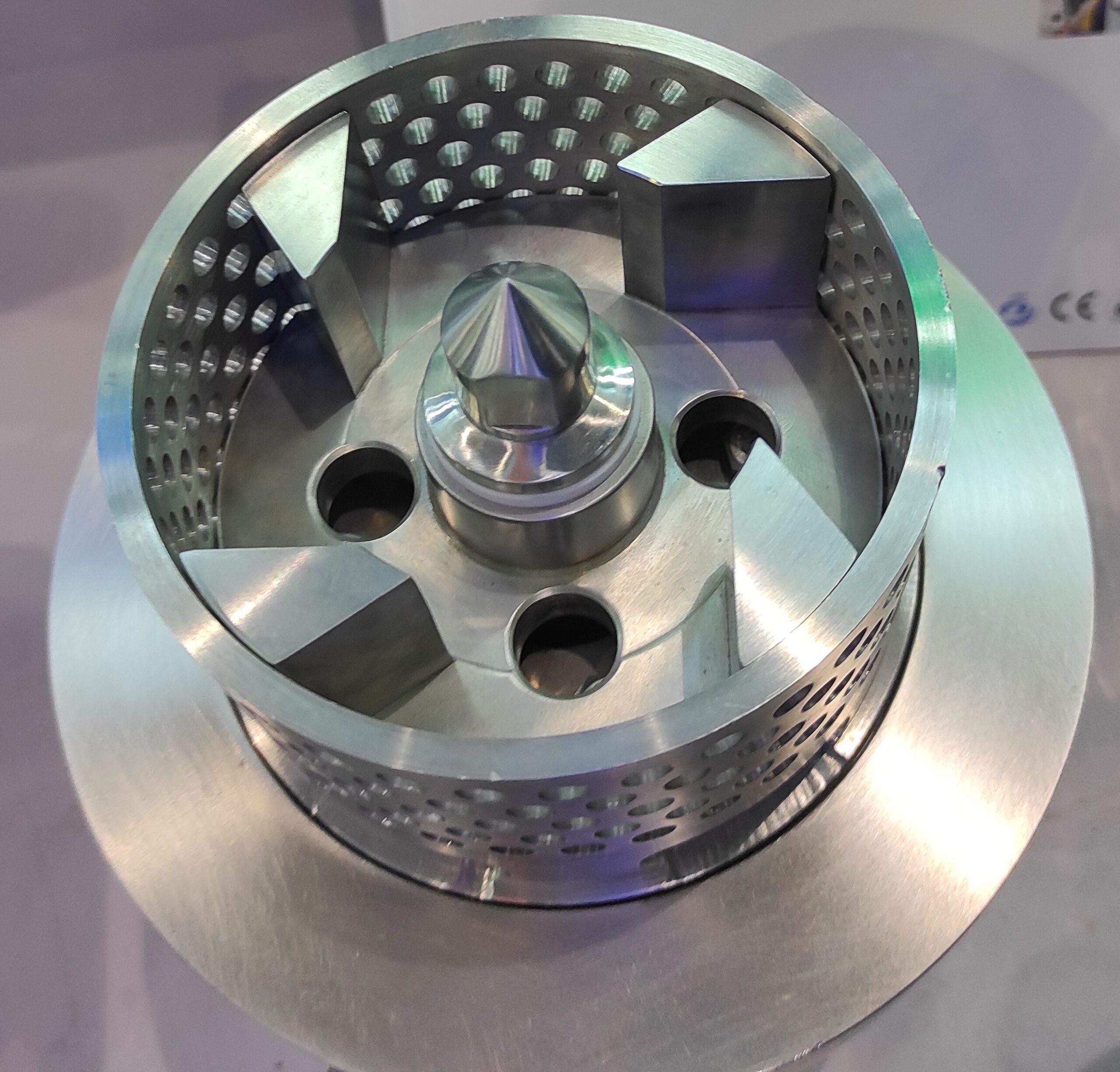
Pressure and Vacuum Rated Top Entry Homogenizer
A pressure and vacuum rated top entry homogenizer combines a high-shear rotor-stator workhead with a fully sealed, pressure-rated vessel mounting, allowing homogenisation under positive pressure or vacuum without interrupting the mixing cycle. Used where solvent containment, degassing during homogenisation, or processing under inert atmosphere is required in pharmaceutical, chemical, and cosmetic manufacturing.
What It Is
How It Works
Challenges
Solutions
Applications
What It Is
A pressure and vacuum rated top entry homogenizer combines a high-shear rotor-stator workhead with a fully sealed, pressure-rated vessel mounting, allowing homogenisation under positive pressure or vacuum without interrupting the mixing cycle. Used where solvent containment, degassing during homogenisation, or processing under inert atmosphere is required in pharmaceutical, chemical, and cosmetic manufacturing.
How It Works
The homogenizer shaft enters the sealed vessel through a pressure-rated mechanical seal assembly. The workhead operates identically to a standard top entry homogenizer while the vessel headspace is maintained at the required pressure or vacuum throughout processing. Vacuum operation removes entrained air during homogenisation, producing bubble-free emulsions without a separate degassing step. Positive pressure operation enables processing of volatile or oxygen-sensitive formulations.
Challenges
- Mechanical Seal Integrity Under Pressure Cycling: Repeated transitions between atmospheric, pressurised, and vacuum conditions stress the seal faces, accelerating wear and increasing the risk of leakage or process contamination over time.
- Limited Sampling Access During Sealed Operation: Fully sealed pressure-rated operation prevents manual sampling or addition of ingredients without interrupting process conditions, complicating in-process quality control during long homogenisation cycles.
- Higher Capital and Maintenance Cost: Pressure-rated shaft seals, vessel flanges, and safety pressure relief systems add significant cost compared to standard open-vessel top entry configurations, requiring justification based on process necessity.
Solutions
- Double Mechanical Seal with Barrier Fluid: A double seal arrangement with a pressurised barrier fluid between seal faces isolates the process from the atmosphere, extending seal life under pressure cycling and preventing process fluid from reaching the outer seal face.
- Inline Sampling Valve on Vessel Body: A pressure-rated sampling valve installed on the vessel wall allows representative samples to be withdrawn at process pressure without breaking vessel integrity or interrupting homogenisation.
- Pressure Relief and Interlocked Safety System: Installing a calibrated pressure relief valve and interlocking vessel opening mechanisms with pressure instrumentation prevents unsafe vessel opening under residual pressure, protecting operators during and after processing.
Applications
- Pharmaceutical Solvent-Based Emulsion and Dispersion Processing: Homogenisation of formulations containing volatile organic solvents within sealed pressure-rated vessels, preventing solvent loss and maintaining formulation composition throughout the batch cycle.
- Oxygen-Sensitive Cosmetic and Nutraceutical Emulsification: Batch emulsification of oxidation-sensitive ingredients including unsaturated oils and antioxidant actives under inert nitrogen atmosphere to prevent oxidative degradation during processing.
- Vacuum Degassing Combined with Homogenisation: Production of bubble-free pharmaceutical gels, creams, and emulsions by applying vacuum during homogenisation, eliminating the need for a separate post-homogenisation degassing step.