
Single-Stage Top Entry Homogenizer
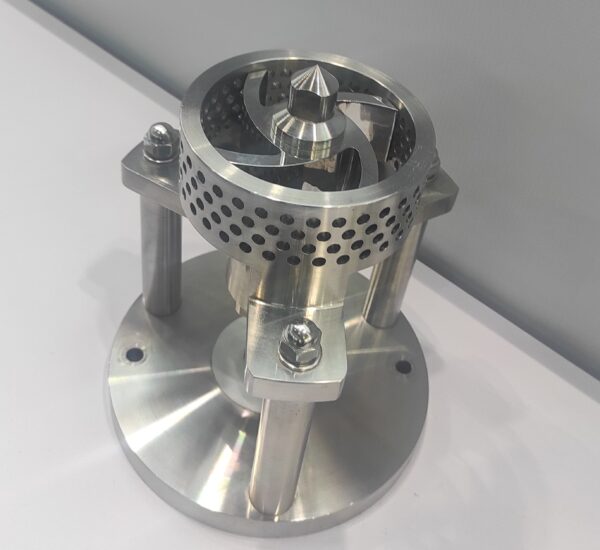
A single-stage top entry homogenizer mounts one rotor-stator workhead through the vessel lid, drawing surrounding fluid into the gap by suction and expelling homogenised product radially. Operating across a wide viscosity range, it is the standard configuration for batch emulsification, dispersion, and particle size reduction in food, cosmetic, and pharmaceutical production vessels.
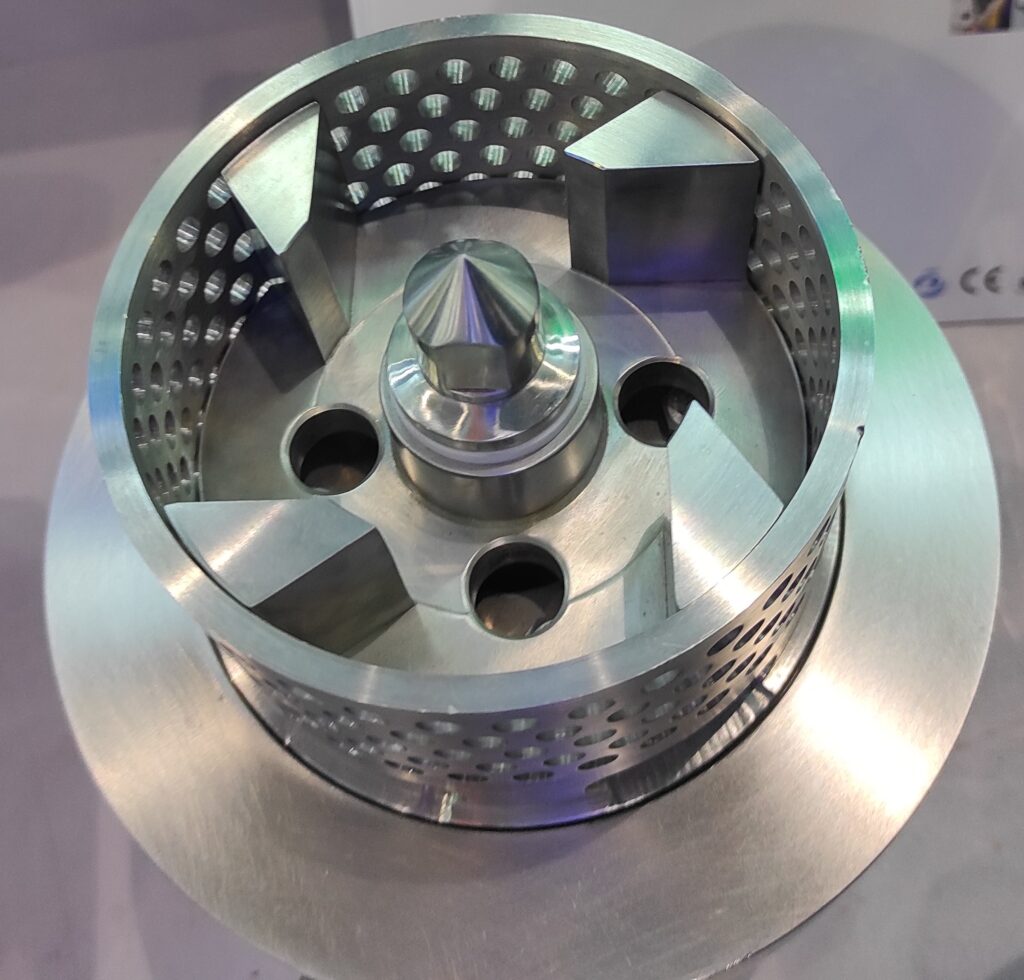
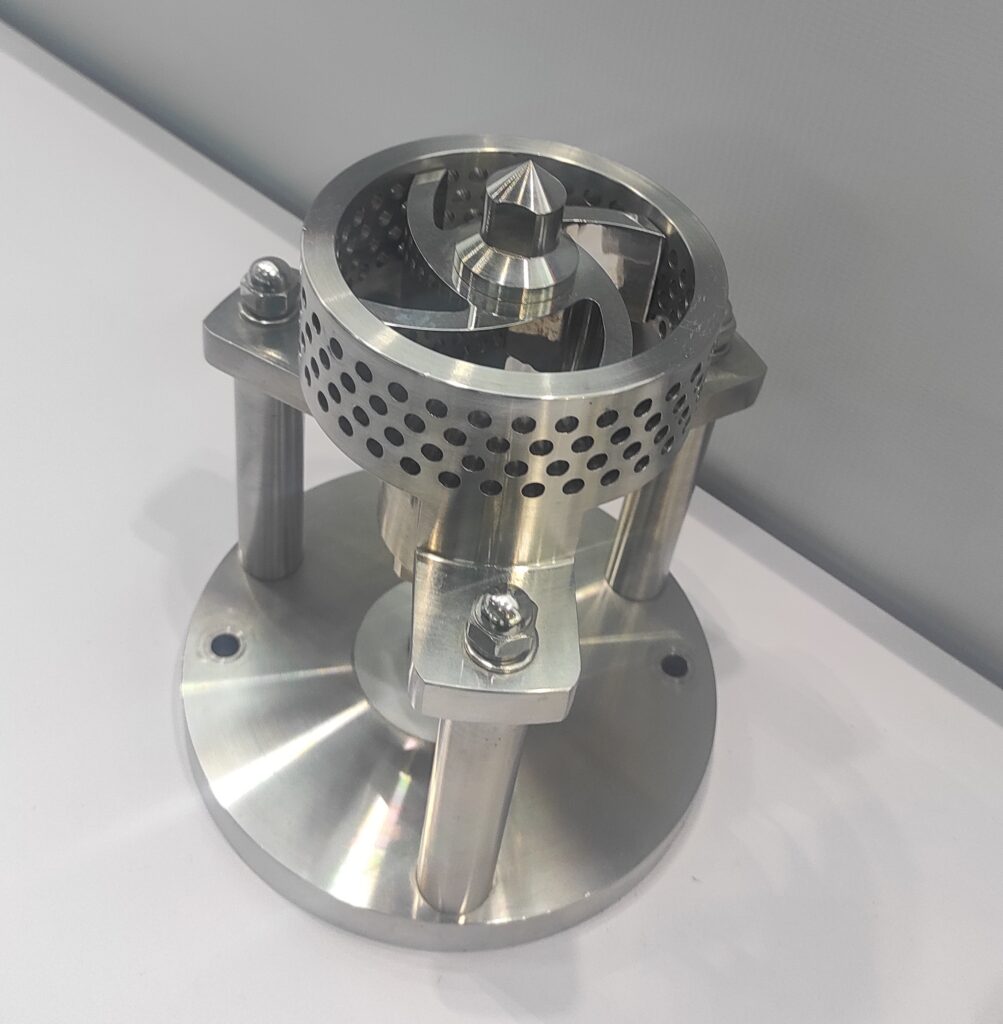
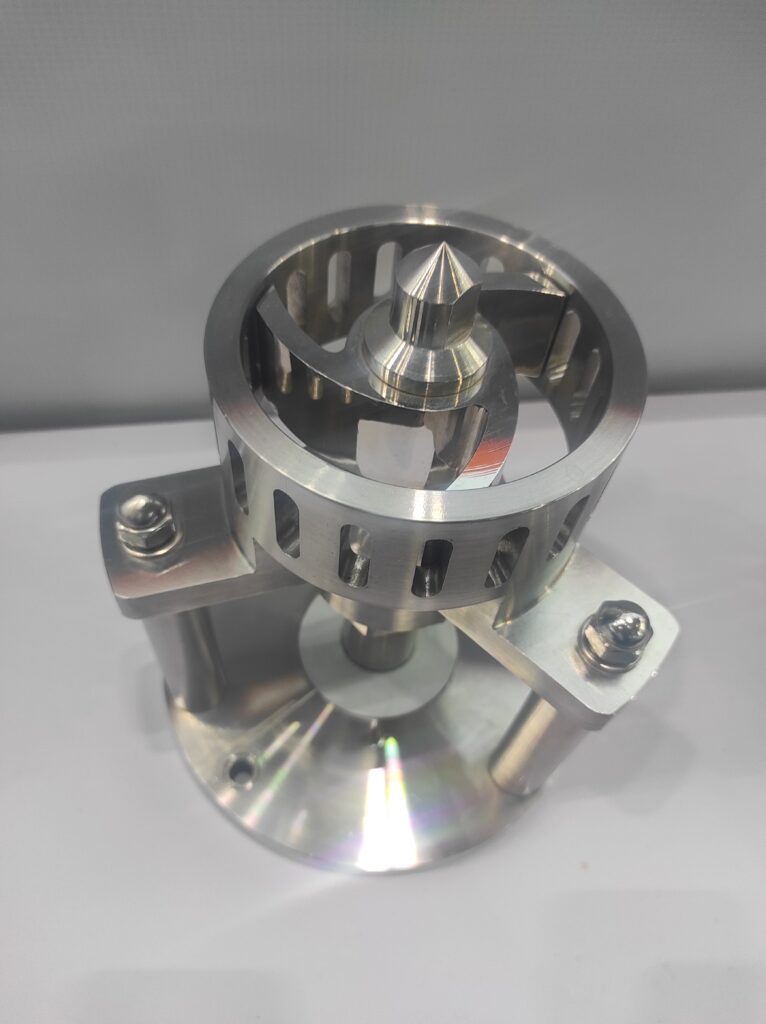
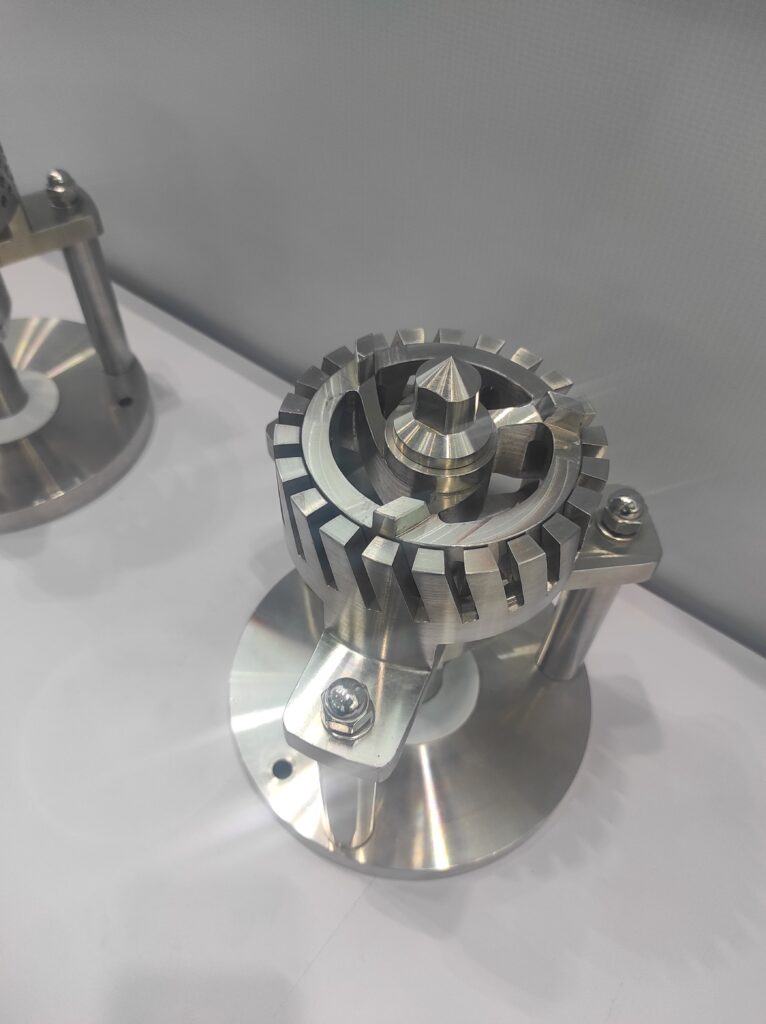
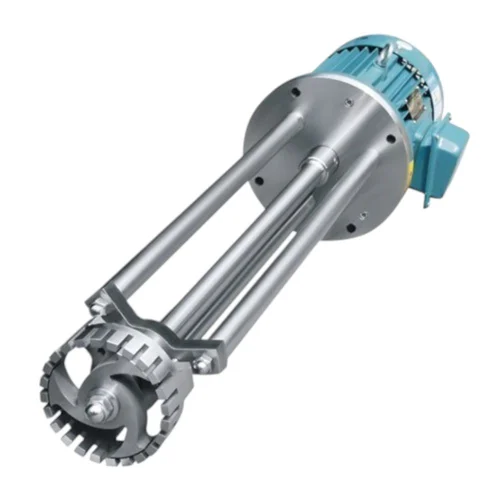
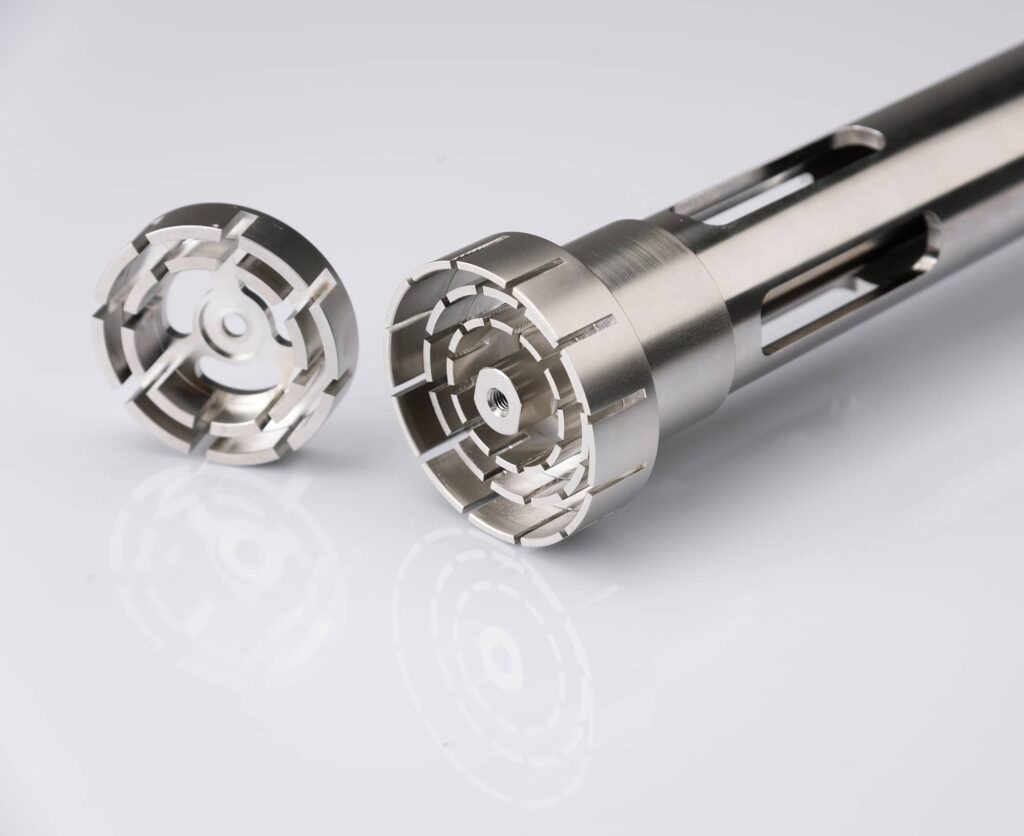
The rotor draws fluid into the rotor-stator gap, subjects it to intense localised shear, and expels it radially, creating recirculation loops throughout the vessel. The workhead is positioned below the liquid surface to prevent air entrainment. Vessel baffles or an anchor agitator improve bulk circulation, ensuring all batch material passes repeatedly through the high-shear zone.
Challenges
Bottom Dead Zones in High-Viscosity Batches
In viscous systems, settled solids and dense material at the vessel base are not drawn up into the workhead effectively, leaving portions of the batch unprocessed without supplementary agitation.
Air Entrainment at Insufficient Submergence
If the workhead is too close to the liquid surface, particularly during early batch charging, the high-speed rotor draws headspace air into the dispersion, generating foam and reducing homogenisation efficiency.
Limited Self-Pumping at High Viscosity
Above approximately 50,000 cP, the rotor's self-pumping capacity diminishes, reducing the flow of material into the workhead and extending processing time to achieve target particle size.
Batch Overheating During Sustained Operation
Continuous high-shear processing transfers energy into the batch as heat, raising temperature gradually throughout the cycle and risking stability issues in heat-sensitive emulsions and biological formulations.
Shaft Mechanical Load at High Speed
The cantilever configuration of the top-entry shaft places bending and vibration loads on the seal and upper bearing, accelerating wear particularly at higher speeds and in dense or viscous products.
Solutions
- Positioning Workhead at 70–80% of Vessel Depth: Submerging the workhead well below the liquid surface prevents air entrainment and maximises the volume of liquid drawn into the high-shear zone throughout the batch cycle.
- Combining with Low-Speed Anchor Agitator: Installing a slow-speed anchor or paddle agitator on a separate shaft provides bottom circulation in viscous systems, continuously feeding settled material upward toward the homogenizer workhead.
- Jacketed Vessel with Active Cooling: Circulating cooling water through the vessel jacket during homogenisation removes heat generated by the workhead, maintaining batch temperature within acceptable limits for thermally sensitive formulations.
- Gradual Speed Ramp via Variable Frequency Drive: Programming a controlled speed ramp at batch start-up minimises air entrainment during the initial surface-wetting phase before the workhead is fully submerged.
- Mechanical Seal with Cooling Water Flush: Providing a dedicated cooling water flush to the mechanical seal reduces operating temperature at the seal face, extending service life under the bending load imposed by the cantilever shaft configuration.
Applications
- Pharmaceutical Suspension and Gel Manufacturing: Batch dispersion of active pharmaceutical ingredients and thickeners into suspension and gel bases within GMP-rated jacketed vessels with CIP-compatible top-flange mounting.
- Cosmetic Cream and Lotion Emulsification: Primary batch emulsification of oil and water phases in cream, lotion, and serum manufacturing vessels, achieving stable droplet size distribution prior to filling.
- Food Sauce and Dressing Production: Batch homogenisation of oil-in-water emulsions including sauces, dressings, and mayonnaise in jacketed production vessels at pilot and commercial scale.
- Nutraceutical Supplement Suspension: Dispersion and homogenisation of protein, vitamin, and mineral ingredients in liquid supplement and functional beverage bases during batch production.
- Chemical Resin and Polymer Dispersion: Batch dispersion of resins, polymer emulsions, and specialty chemical systems in flexible production vessels where product changeover and CIP cleaning are required between batches.
Product Catalogue & Technical Datasheet
Model | Scale | Power (HP / kW) | Speed (RPM) | Flow Rate (L/h) | Particle Size (µm) | Viscosity Max (cP) | Tip Speed (m/s) | Shear Rate (s⁻¹) | Stages | Op. Temp (°C) |
TEH-LAB-01 | Lab | 0.5 / 0.37 | 1,500–3,000 | 10–50 | <1–20 | 10,000 | 5–15 | 10³–10⁴ | 1 | 0–150 |
TEH-LAB-05 | Lab / Pilot | 1.0 / 0.75 | 1,500–3,000 | 50–250 | <1–20 | 20,000 | 8–20 | 10³–10⁵ | 1–2 | 0–150 |
TEH-PIL-10 | Pilot | 5 / 3.7 | 1,500–3,000 | 250–1,000 | <1–15 | 30,000 | 10–22 | 10³–10⁵ | 1–2 | 0–150 |
TEH-PIL-20 | Pilot | 10 / 7.5 | 1,500–3,000 | 500–2,000 | <1–10 | 50,000 | 12–25 | 10⁴–10⁵ | 1–3 | 0–150 |
TEH-100 | Production | 20 / 15 | 1,500–3,000 | 1,000–5,000 | <1–10 | 50,000 | 12–25 | 10⁴–10⁵ | 1–3 | 0–150 |
TEH-300 | Production | 40 / 30 | 1,500–3,000 | 2,000–10,000 | <1–5 | 50,000 | 15–25 | 10⁴–10⁵ | 2–3 | 0–150 |
TEH-500 | Production | 60 / 45 | 1,500–3,000 | 5,000–20,000 | <1–5 | 50,000 | 15–25 | 10⁴–10⁵ | 2–3 | 0–150 |
TEH-HP-75 | Large Prod. | 75 / 55 | 1,500–3,000 | 10,000–35,000 | <1–3 | 50,000 | 18–25 | 10⁴–10⁵ | 3 | 0–150 |