
Contained / HPAPI Inline Vacuum Siever (OEB 3–5)
A contained HPAPI inline vacuum Siever is a fully enclosed, high-containment vacuum sieving system achieving operator exposure below 1 µg/m³ (OEB 5) all connections are split butterfly valve (SBV) or rapid transfer port (RTP), the Siever body is maintained at −30 to −50 Pa negative pressure by a dedicated LEV with HEPA H14 filter, and all screen access for change or inspection is through integral glove ports without opening the body. Processing 50–3,000 kg/h with screen apertures of 150 µm–5 mm, it integrates into HPAPI vacuum transfer systems to provide inline sieving of cytotoxic, hormonal, and potent API powder without any open powder step.
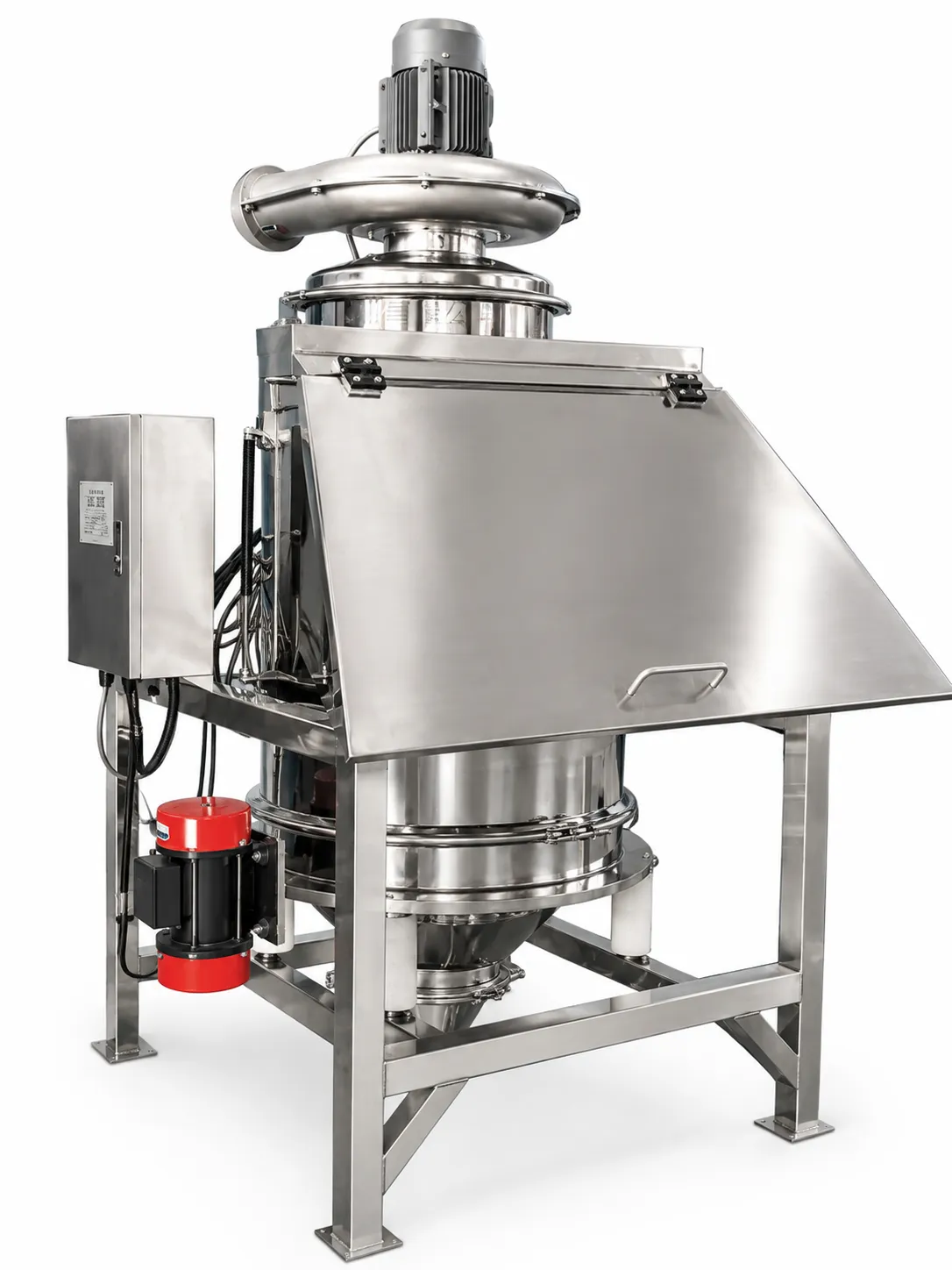
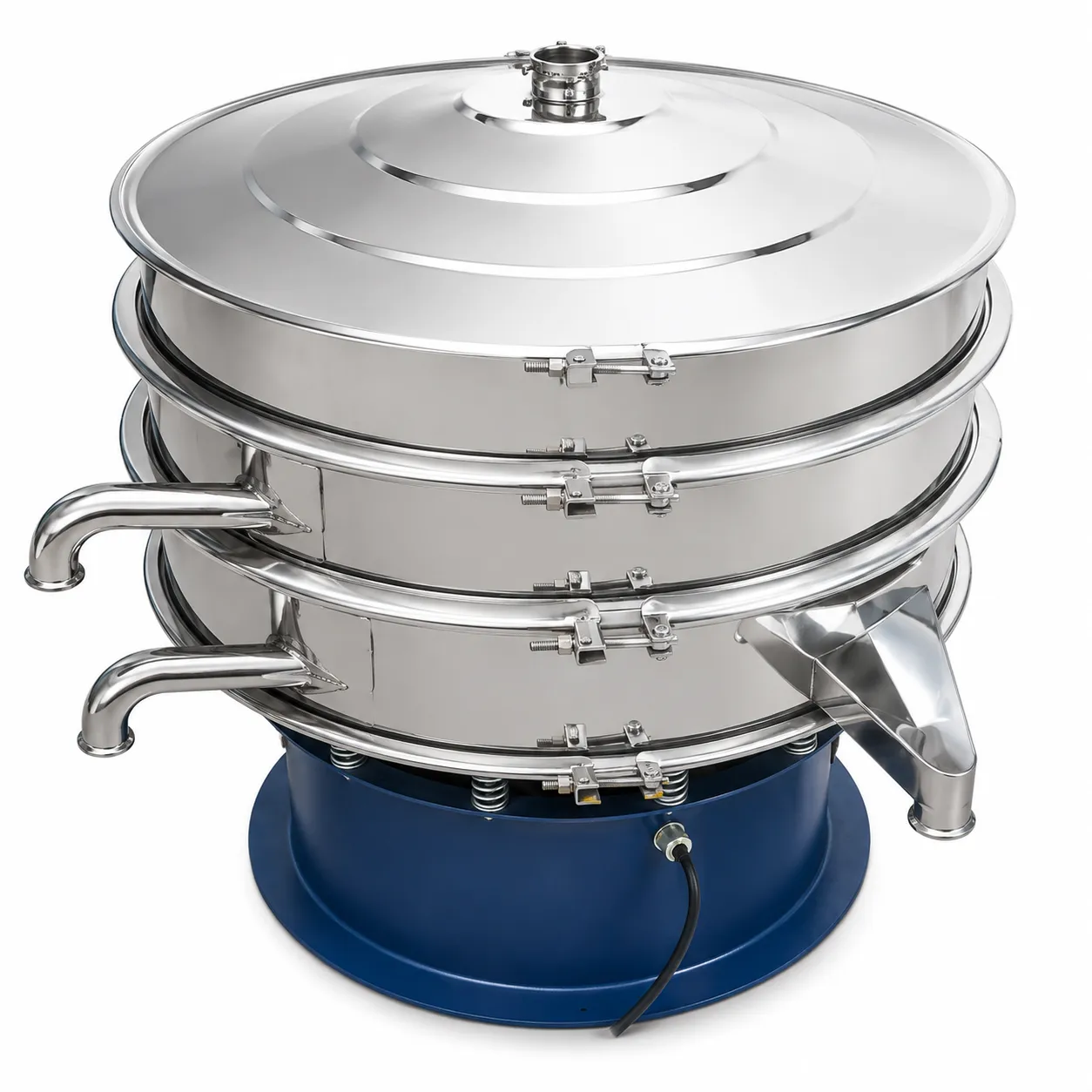
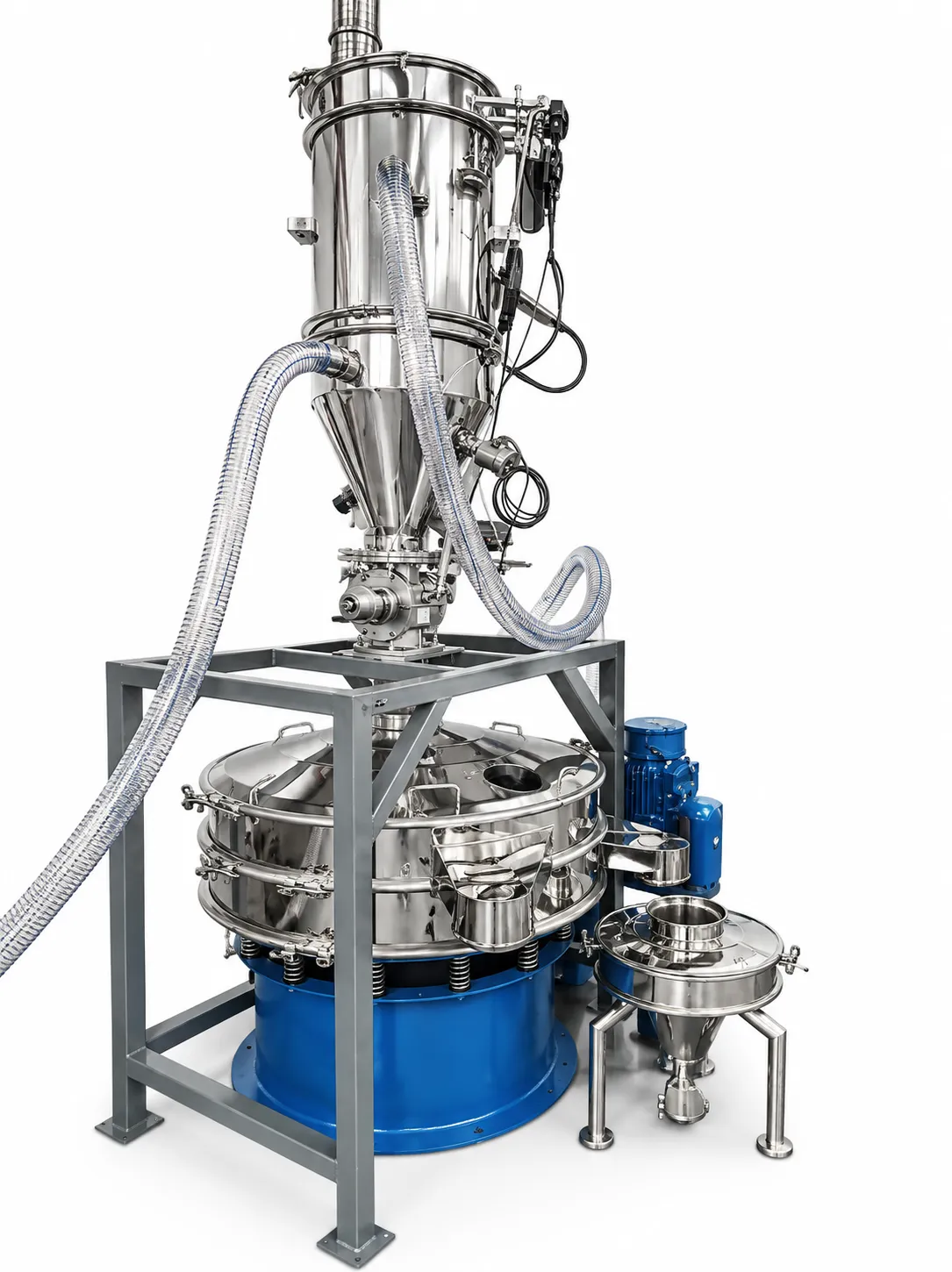
A contained HPAPI inline vacuum Siever is a fully enclosed, high-containment vacuum sieving system achieving operator exposure below 1 µg/m³ (OEB 5) all connections are split butterfly valve (SBV) or rapid transfer port (RTP), the Siever body is maintained at −30 to −50 Pa negative pressure by a dedicated LEV with HEPA H14 filter, and all screen access for change or inspection is through integral glove ports without opening the body. Processing 50–3,000 kg/h with screen apertures of 150 µm–5 mm, it integrates into HPAPI vacuum transfer systems to provide inline sieving of cytotoxic, hormonal, and potent API powder without any open powder step.
The HPAPI inline vacuum Siever is installed in the vacuum conveying line between the HPAPI source vessel and the receiving vessel all connections use SBV or RTP interfaces with mechanical double-interlock docking. The Siever body is maintained at −30 to −50 Pa differential relative to the surrounding room by a dedicated LEV unit with HEPA H14 exhaust filtration any breach draws room air inward rather than releasing API outward. Screen change is performed through integrated glove ports without breaking body seal. The reverse pulse clean uses dry nitrogen at 6 bar the nitrogen purge eliminates air ingress while dislodging screen cake. All operations are PLC-logged for 21 CFR Part 11 electronic batch record compliance.
Challenges
SBV/RTP Connection Breach During Screen Change Under Containment
Screen change requires hands inside Siever body via glove ports any misalignment risks containment breach.
Compressed Air Pulse Creating Positive Pressure Inside Contained Body
Standard compressed air reverse pulse momentarily creates positive pressure releases contained API through any gap.
LEV Negative Pressure Loss During High-Throughput Transfer
High vacuum transfer airflow opposes LEV suction ΔP narrows at maximum transfer rate.
Oversize Reject Discharge Without Breaking Containment
Reject valve must discharge oversize to a contained vessel without opening the Siever body.
CIP Validation of Siever Interior Through Glove-Port-Only Access
All CIP operations performed through glove ports spray lance reach and coverage validation required.
Solutions
- Integrated Glove Ports with Torque-Assist Screen Change Tool (450 mm Extended Reach): Extended-reach tool fits through 150 mm glove port screen bayonet lock and O-ring re-seating achievable.
- Dry Nitrogen Reverse Pulse (N₂ at 6 bars, Sealed Circuit): N₂ replaces compressed air for reverse pulse inert atmosphere; zero positive pressure escape from sealed body.
- Counterbalance Pressure Relief Valve on Siever Outlet (Spring-Loaded, 5 mbar Cracking): Relief valve counteracts transfer airflow against LEV ΔP maintained at −35 Pa across full transfer range.
- Contained Reject Collection Vessel (SBV Connection Below Siever, Auto-Discharge): Reject vessel connected via SBV below Siever auto-discharge empties reject without body opening.
- CIP Spray Lance Through Glove Port + TOC and HPLC Wipe Test Validation: Dedicated spray lance through glove port delivers >3 m/s CIP velocity to all surfaces TOC <10 ppm validated.
Applications
- Pharmaceutical (Cytotoxic): Oncology API inline sieving during vacuum transfer OEB 5 (<1 µg/m³) fully validated.
- Pharmaceutical (Hormonal): Hormonal API inline vacuum sieving strict operator containment throughout transfer.
- Pharmaceutical (Potent OEB 4): High-potency API de-lumping during vacuum transfer SBV connections throughout.
- Pharmaceutical (Sterile): Sterile API powder inline sieving in cleanroom vacuum transfer fully closed system.
- Research & Development: HPAPI feasibility sieving at gram scale lab contained vacuum Siever with glove box integration.
Models & Capacities
| Type 2 Contained / HPAPI Inline Vacuum Siever (OEB 3–5): Models & Capacities | |||||||||||
|---|---|---|---|---|---|---|---|---|---|---|---|
| Model | Scale | Transfer Rate [kg/h] | Screen Ø [mm] | Screen Aperture [µm–mm] | Containment OEB Level | Vacuum Level [bar] | Inlet Connection | Outlet Connection | Glove Ports | Body L × Ø [mm] | |
| IVS-HP-LAB | Lab/Pilot | 50–200 | Ø100 | 150 µm–5 mm | OEB 3–5 | −0.2 to −0.8 | SBV DN 32 | SBV DN 32 | 2 | 300×Ø140 | |
| IVS-HP-PIL | Pilot | 100–500 | Ø150 | 150 µm–5 mm | OEB 3–5 | −0.2 to −0.8 | SBV DN 50 | SBV DN 50 | 2 | 420×Ø195 | |
| IVS-HP-300 | Production | 200–800 | Ø200 | 150 µm–5 mm | OEB 3–5 | −0.2 to −0.8 | SBV DN 65 | SBV DN 65 | 2 | 550×Ø255 | |
| IVS-HP-600 | Production | 400–1,500 | Ø250 | 150 µm–5 mm | OEB 4–5 | −0.2 to −0.8 | SBV DN 80 | SBV DN 80 | 2 | 680×Ø310 | |
| IVS-HP-1000 | Production | 600–2,500 | Ø320 | 150 µm–5 mm | OEB 4–5 | −0.2 to −0.8 | RTP DN 100 | RTP DN 100 | 4 | 820×Ø385 | |
| IVS-HP-2000 | Production | 1,000–3,500 | Ø400 | 200 µm–5 mm | OEB 4–5 | −0.2 to −0.8 | RTP DN 125 | RTP DN 125 | 4 | 1,000×Ø470 | |
| IVS-HP-3000 | Large Prod | 1,500–5,000 | Ø500 | 200 µm–5 mm | OEB 4–5 | −0.2 to −0.8 | RTP DN 150 | RTP DN 150 | 4 | 1,200×Ø580 | |