
Dense-Phase Positive Pressure Transfer System (PTS)
A dense-phase positive pressure transfer system (PTS) conveys powder in high-concentration slugs or plugs at low velocity (0.5-5 m/s) using low-pressure dry compressed air or nitrogen (0.2-3 bar) -- achieving solid-to-air ratios of 20:1 to 100:1 by weight versus 5:1 to 20:1 for dilute-phase systems. Processing 0.5-50 t/h across distances of 5-500 m with particle attrition below 0.1%, it is the preferred transfer mode for fragile pharmaceutical granules, crystalline APIs, coated pellets, and tablet intermediates where dilute-phase high-velocity transfer would cause unacceptable particle breakage.
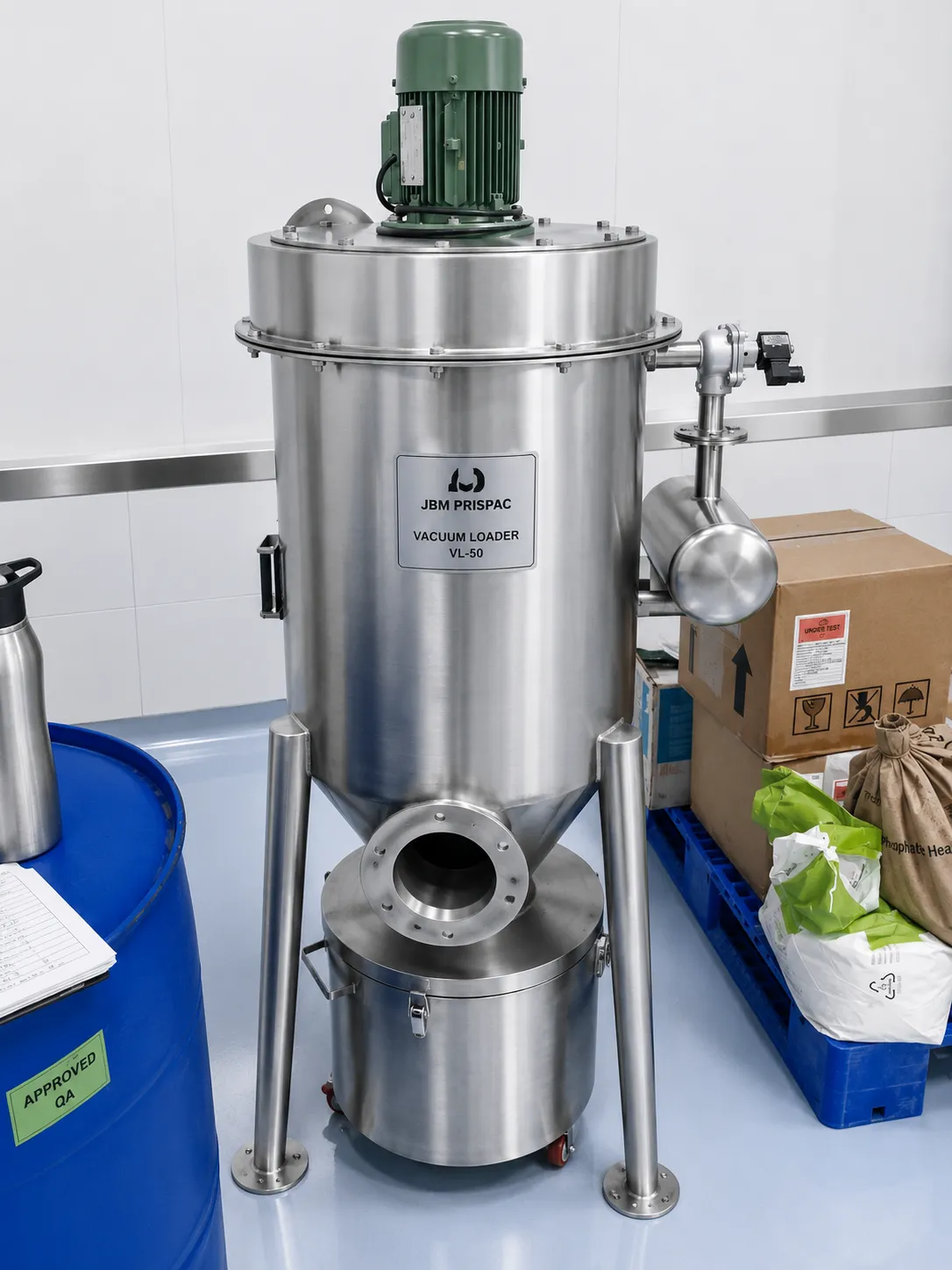
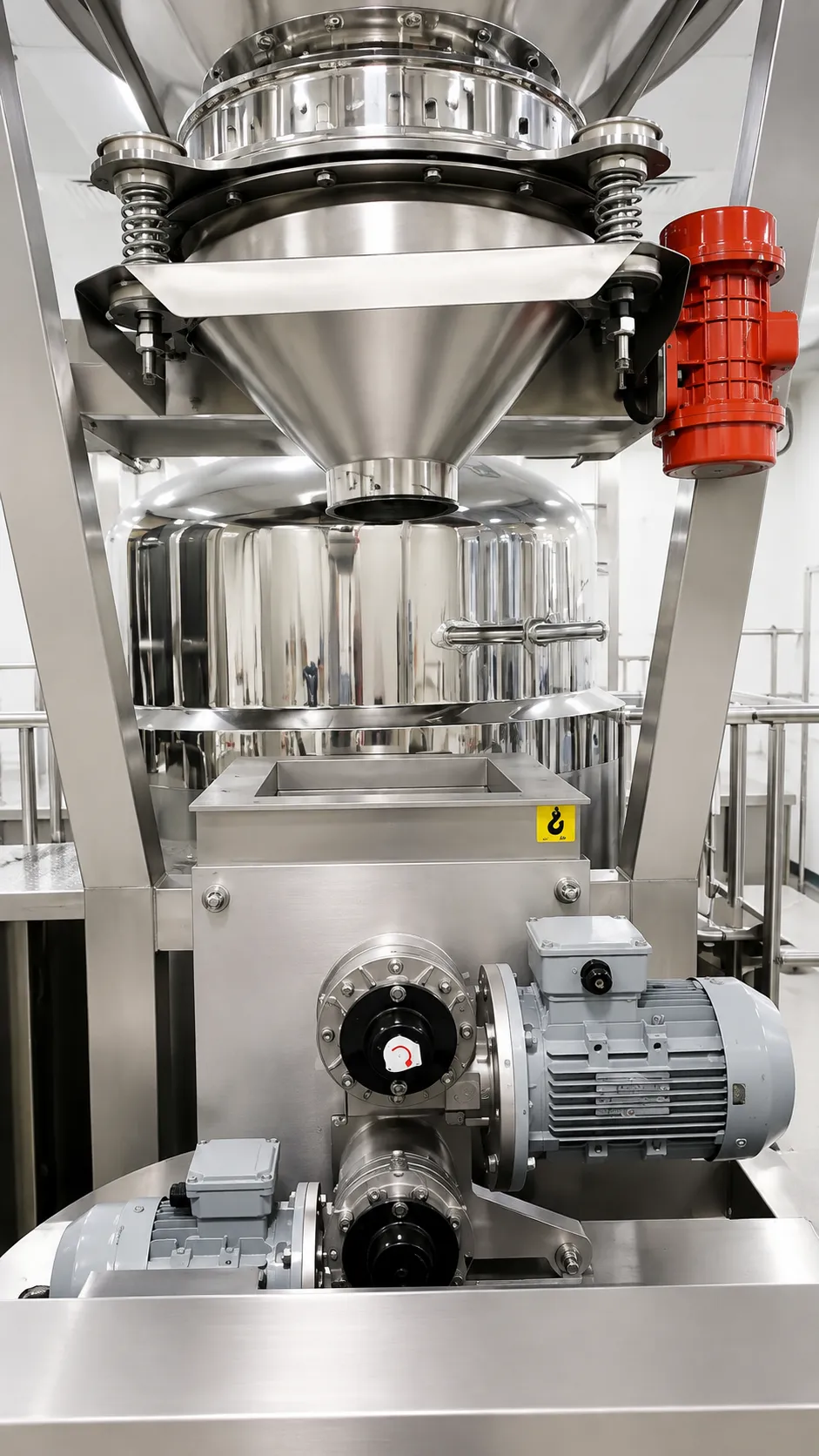
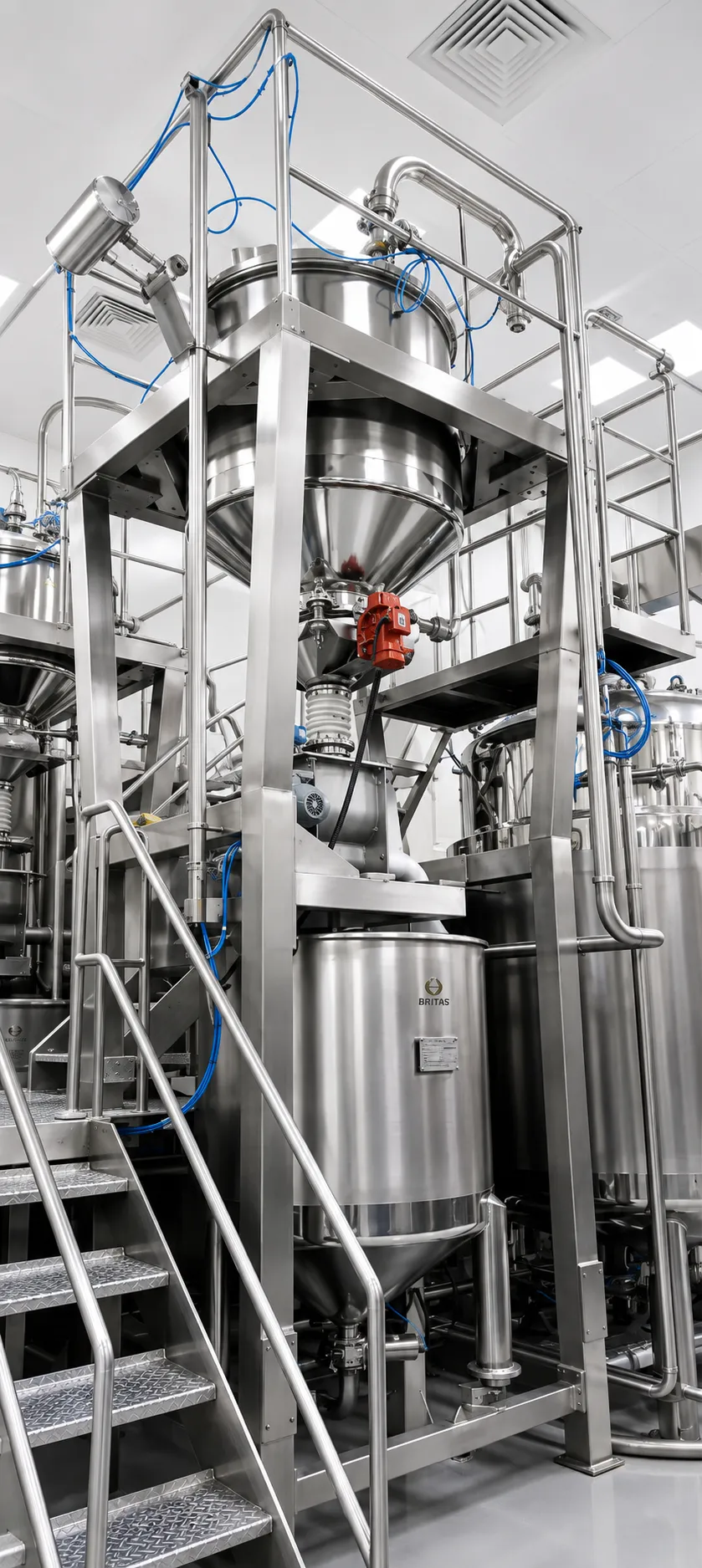
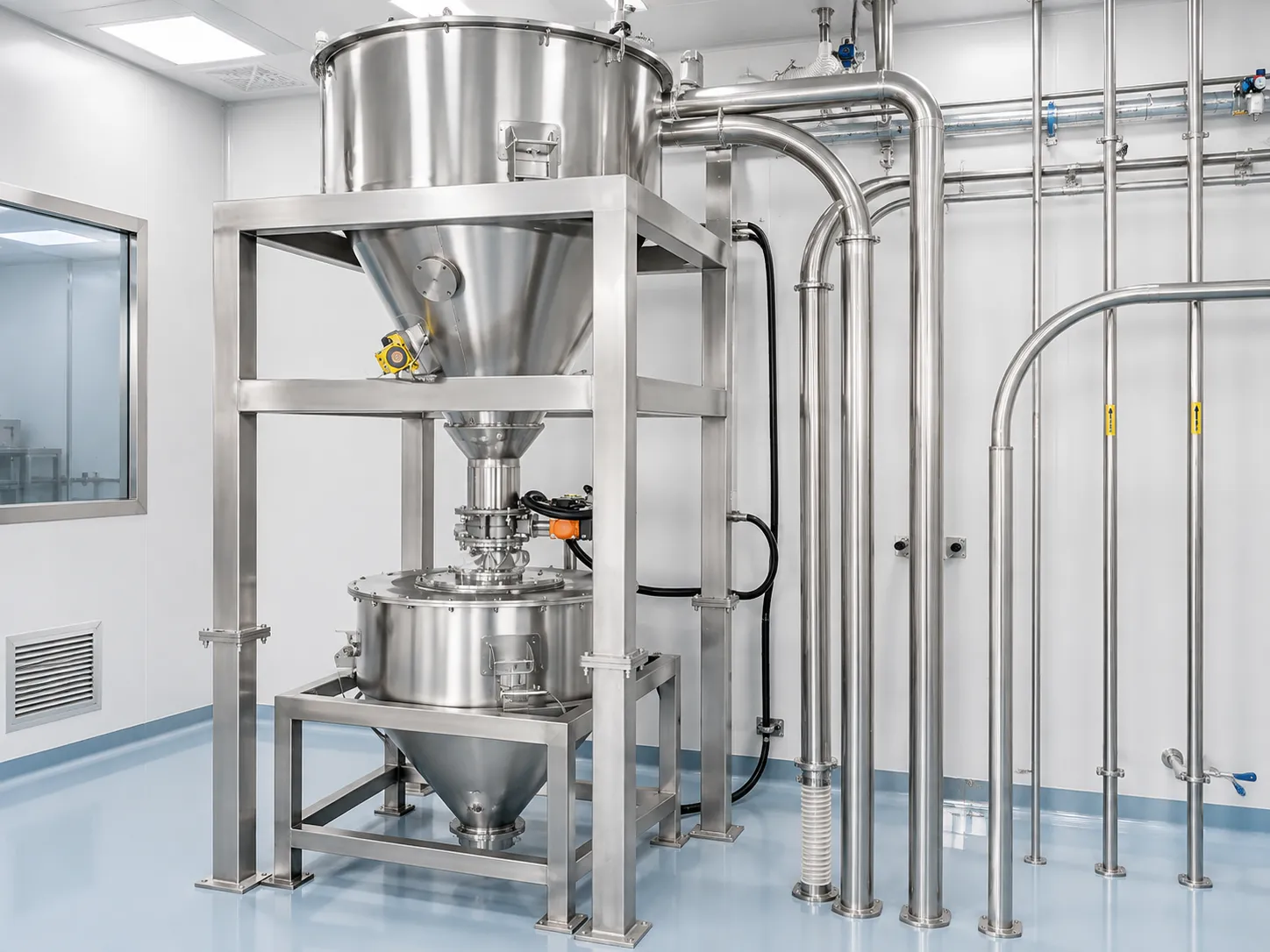
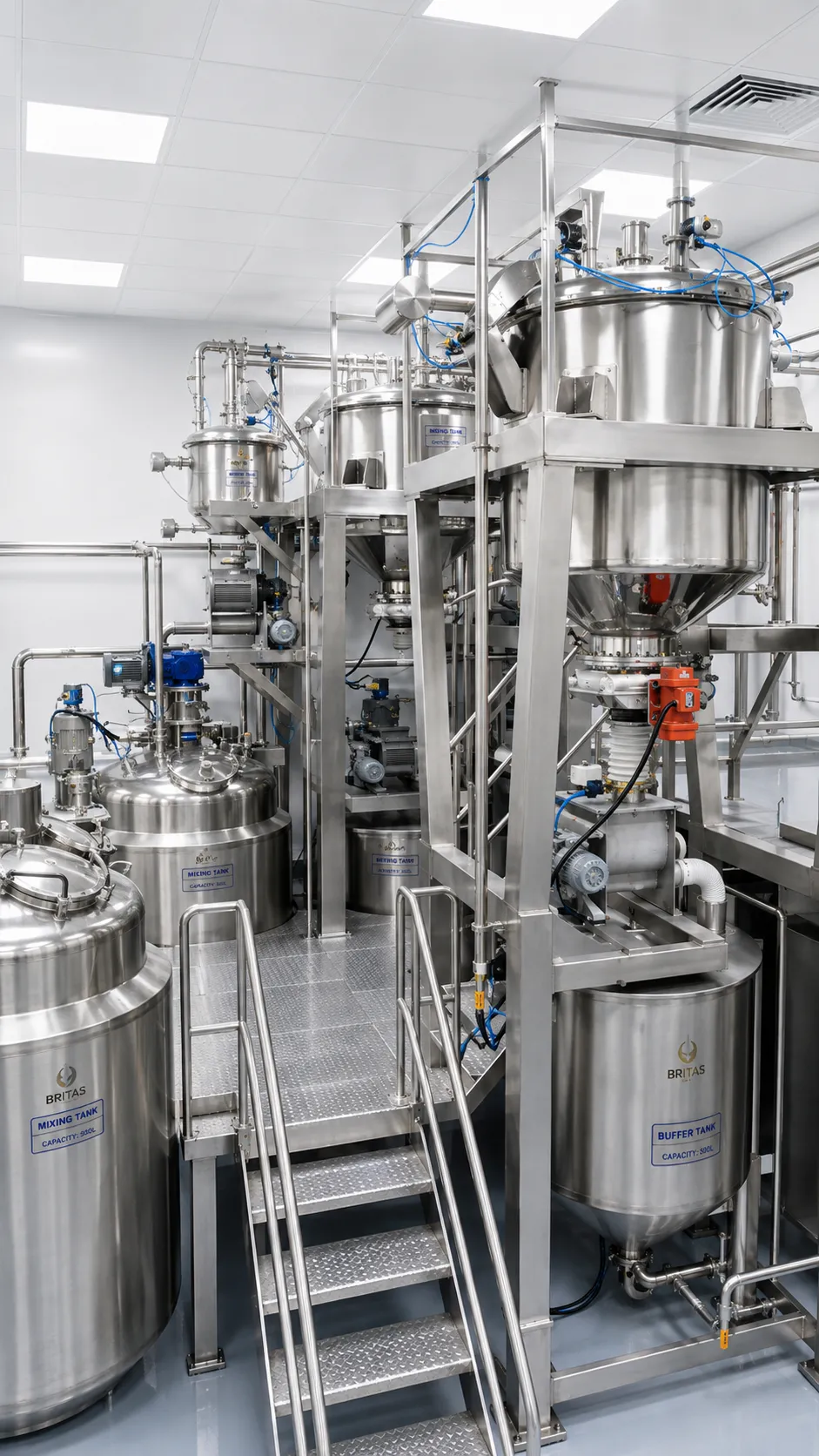
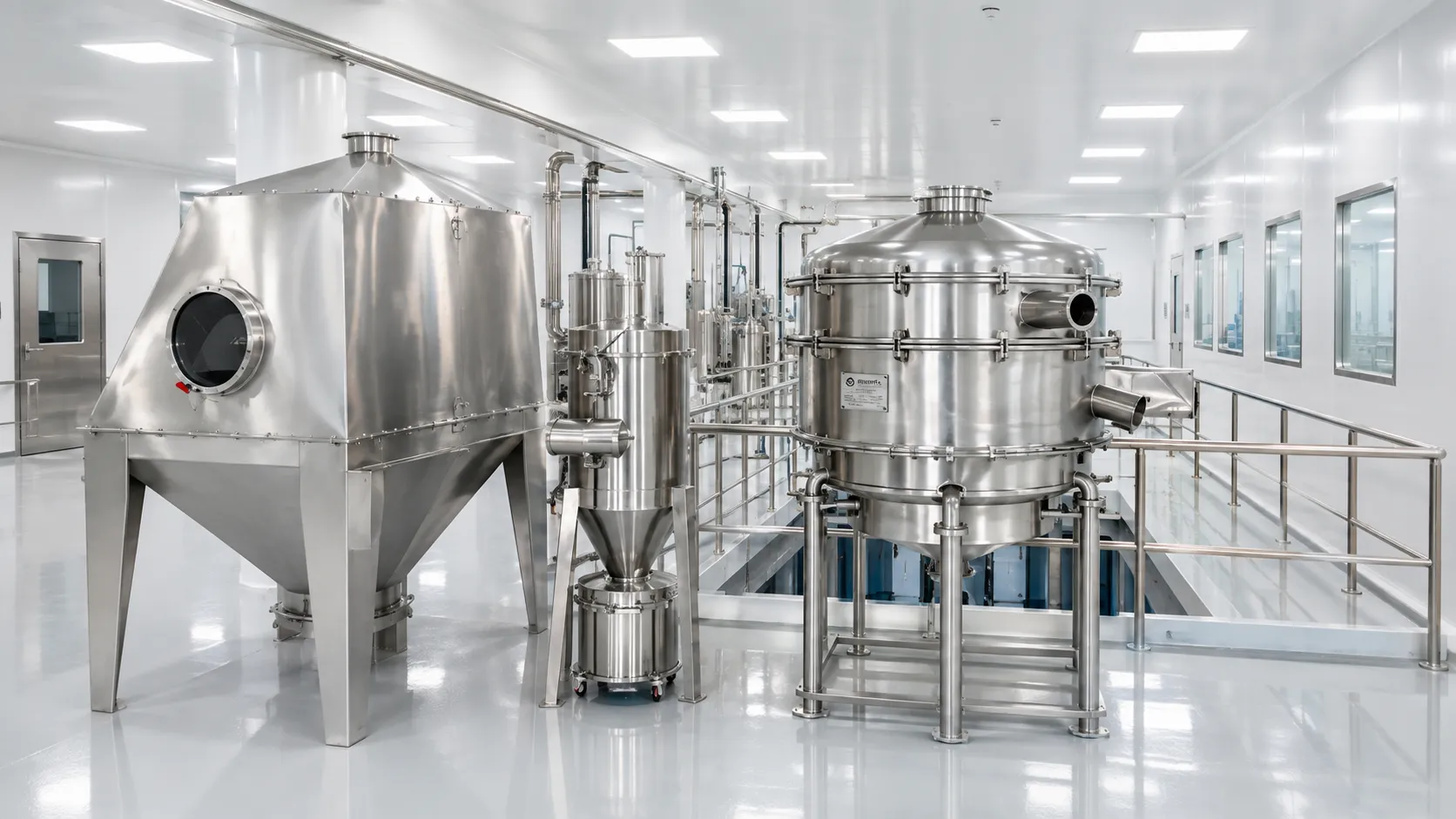
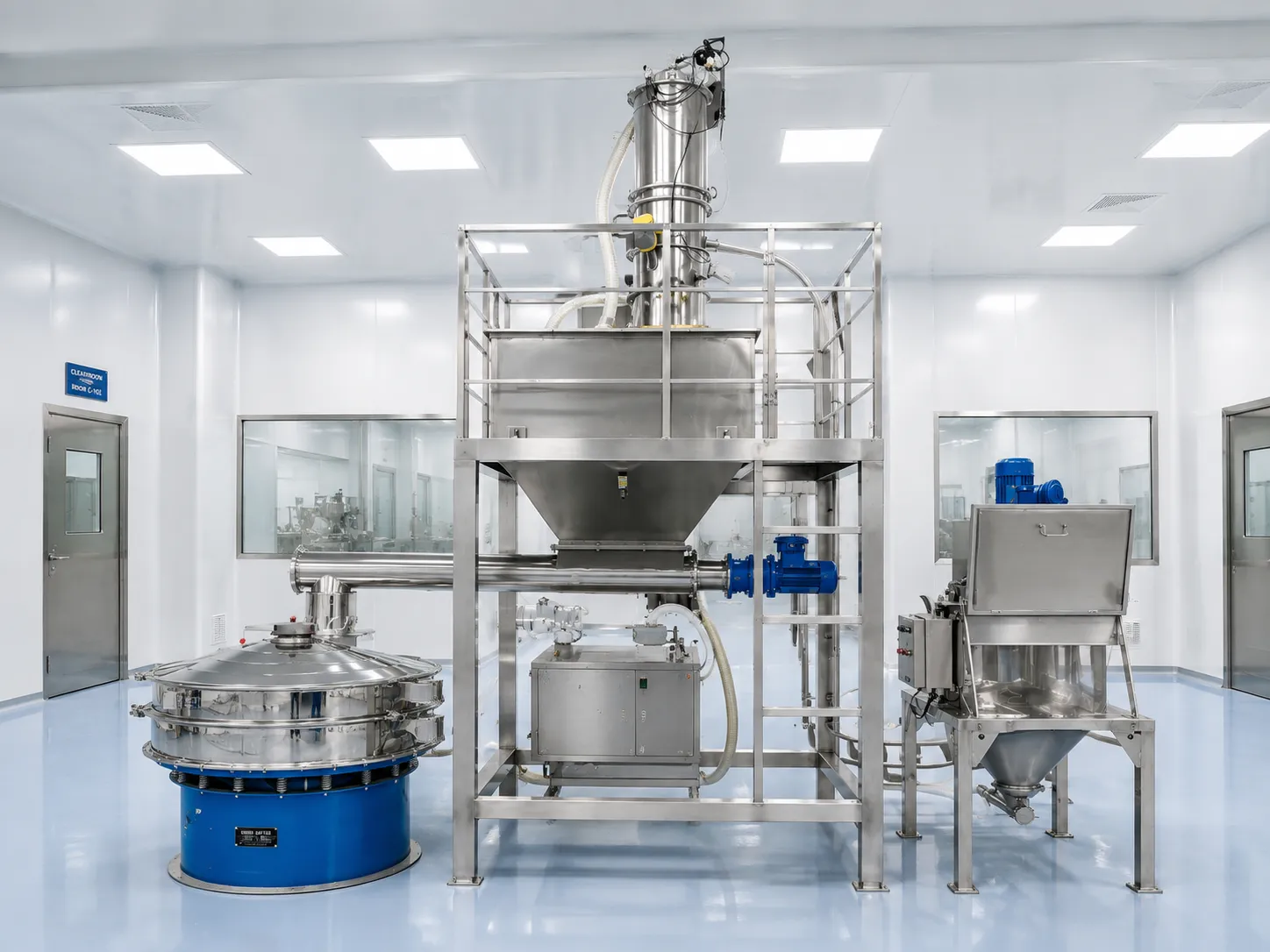
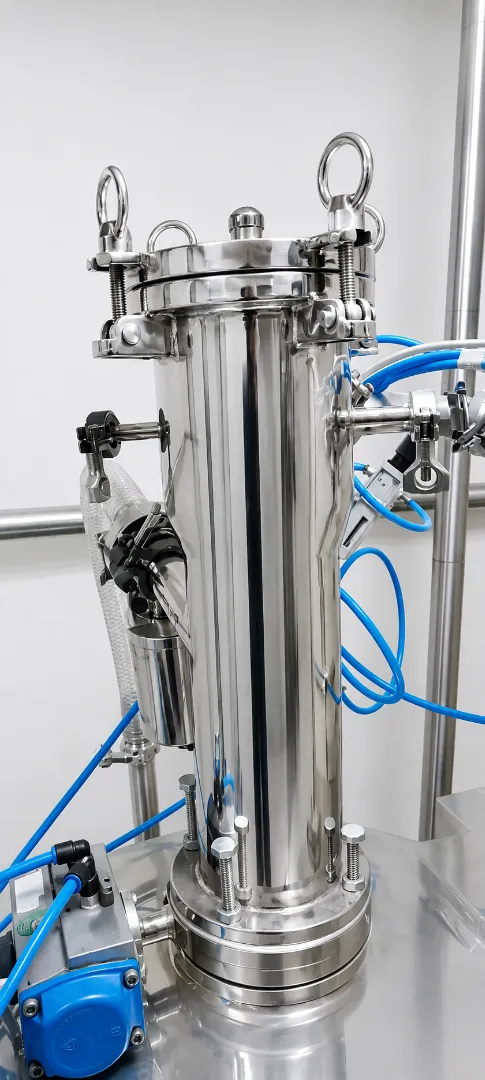
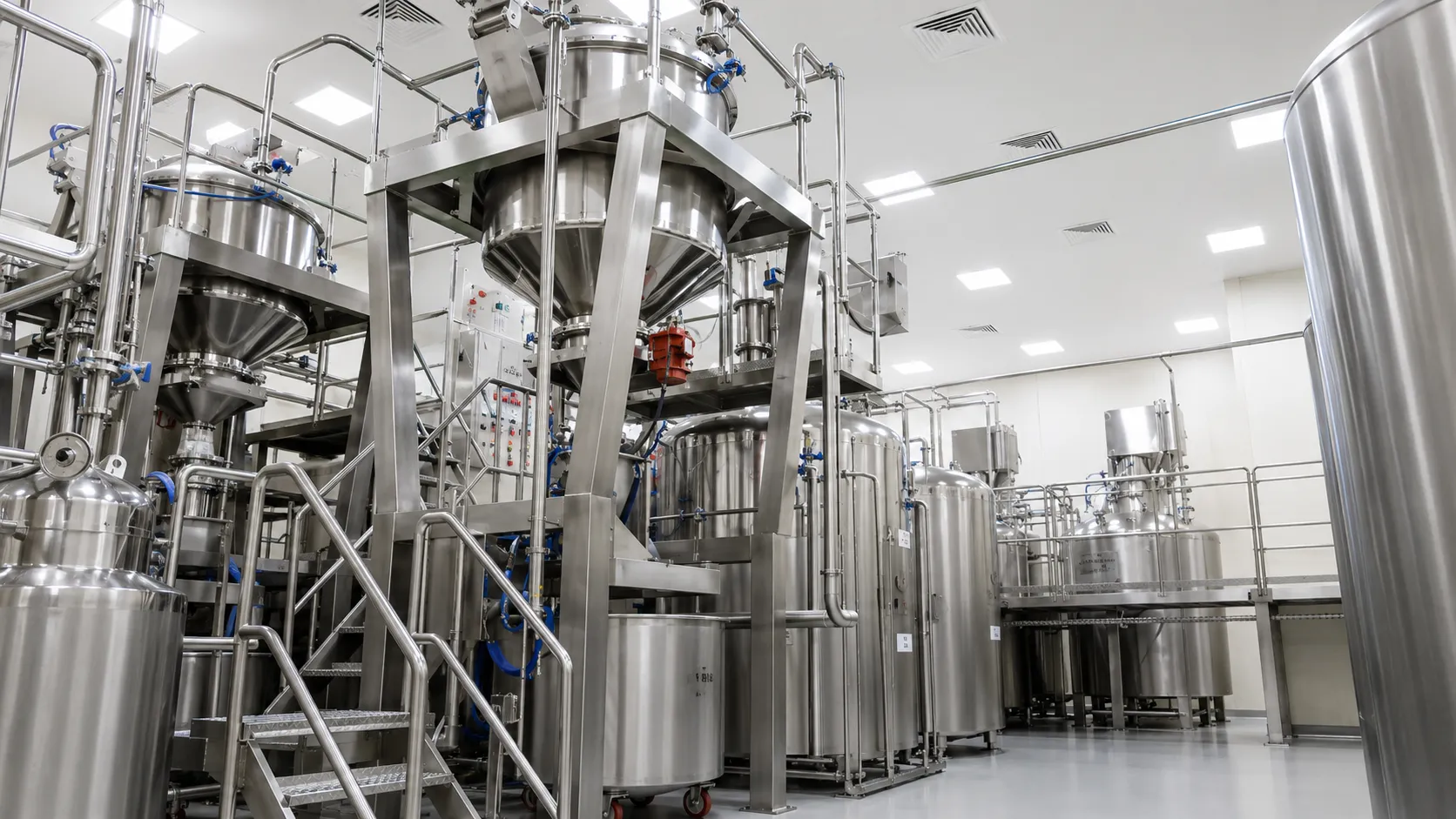
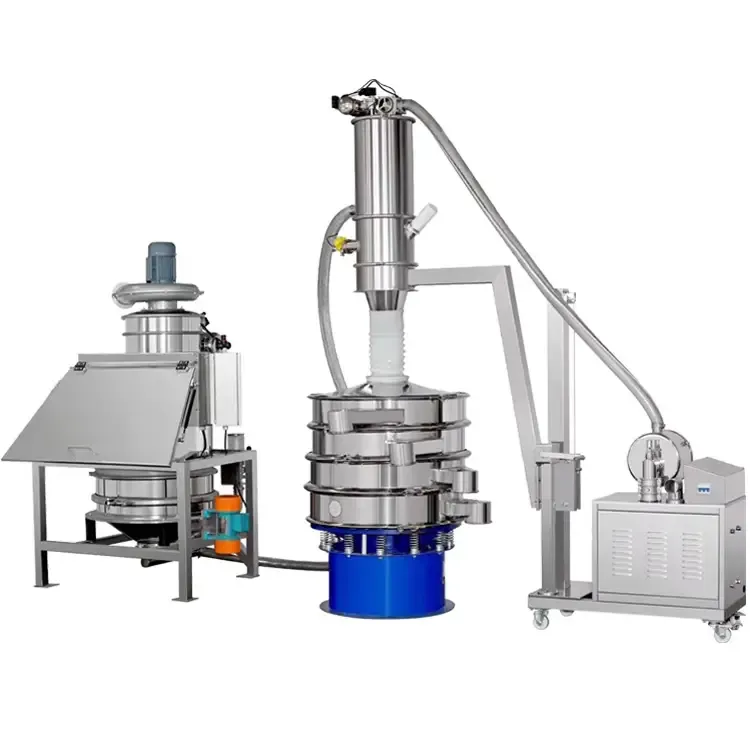
A dense-phase positive pressure transfer system (PTS) conveys powder in high-concentration slugs or plugs at low velocity (0.5-5 m/s) using low-pressure dry compressed air or nitrogen (0.2-3 bar) — achieving solid-to-air ratios of 20:1 to 100:1 by weight versus 5:1 to 20:1 for dilute-phase systems. Processing 0.5-50 t/h across distances of 5-500 m with particle attrition below 0.1%, it is the preferred transfer mode for fragile pharmaceutical granules, crystalline APIs, coated pellets, and tablet intermediates where dilute-phase high-velocity transfer would cause unacceptable particle breakage.
Powder is discharged from source hopper into a pressure vessel (blow tank, 10-500 L) which is then pressurised with compressed air/nitrogen to 0.2-3 bar. An inlet air metering valve controls the air-to-solids ratio — maintaining dense-phase slug flow in the transfer pipeline. Slugs of product (typically 0.3-2 m long) alternate with air pockets — travelling at 0.5-5 m/s (vs. 15-30 m/s for dilute phase) through the pipeline to the destination vessel. At destination, the pressure differential drops the solid into the receiving vessel; air exits through a vent filter. Cycle time is 30-120 seconds per blow; cycle frequency determines total transfer rate.
Challenges
Pipeline Blockage During Slug Formation from Over-Dense Feeding
Excess solids loading converts slug flow to packed plug -- pipeline blockage in minutes.
Pressure Surges at Destination Vessel During Slug Arrival
High-pressure slug arrival generates 0.5-2 bar surge at destination -- structural loading concern.
Attrition at Pipeline Bends Even at Low Velocity
Dense slug impacting bend at 2-5 m/s still generates particle fracture for ultra-fragile products.
Moisture Uptake from Compressed Air in Hygroscopic Powder Transfer
Wet compressed air saturates hygroscopic powder during transfer -- caking and pipe build-up.
Blow Tank Refilling Time Limiting Maximum Throughput
Blow tank fill + pressurise + transfer + depressurise cycle limits average throughput at high rates.
Solutions
- Air Metering Valve PID Loop (Solid-to-Air Ratio Feedback from Pressure Drop): Continuous pressure drop monitoring adjusts air flow -- maintains optimal dense-phase slug condition.
- Pressure-Rated Destination Vessel (1.5x Max System Pressure + Vent Valve): Destination vessel rated to 1.5x operating pressure; pressure relief valve prevents surge damage.
- Long-Radius Bends (R = 20x Pipe Dia) or Blind-Tee Terminus: Blind-tee terminus provides sacrificial pocket -- slug decelerates without particle-wall impact.
- Compressed Air Drying (Dew Point -40 deg C) or Nitrogen Generator: Instrument-dried air or N2 generation eliminates moisture source -- zero moisture absorption.
- Dual Blow Tank (Parallel Pressurising + Transferring): While one tank transfers, the second refills and pressurises -- continuous effective throughput.
Applications
- Pharmaceutical: Fragile granule and coated pellet transfer to tablet press -- attrition <0.1% vs. dilute phase.
- Nutraceuticals: Coated vitamin pellet and soft gel intermediate transfer without coating damage.
- Food & Beverage: Whole spice seed, coffee bean, and fragile food ingredient transfer without breakage.
- Chemical: Catalyst pellet transfer -- shape and attrition index critical for fixed-bed reactor loading.
- Cosmetics: Loose pressed compact granule and coated bead transfer to filling without surface damage.
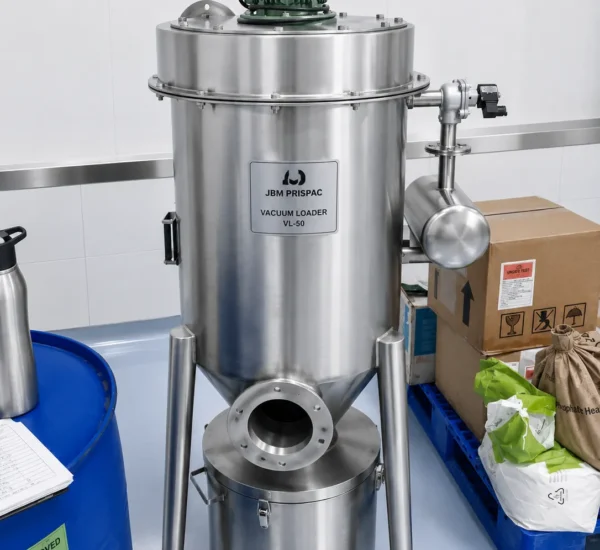
Product Catalogue & Technical Datasheet
| Model | Scale | Blow Tank Vol. (L) | Capacity (t/h) | Air Pressure (bar) | Conveying Velocity (m/s) | Solid-to-Air Ratio | Pipeline Dia (mm) | Max Distance (m) | Transfer Cycle (s) | System Weight (kg) |
|---|---|---|---|---|---|---|---|---|---|---|
| DPT-LAB-010 | Lab | 10 | 0.05-0.5 | 0.2-1 | 0.5-3 | 20:1-60:1 | Dia 25-32 | 50 | 30-60 | 120 |
| DPT-PIL-025 | Pilot | 25 | 0.1-1 | 0.2-2 | 0.5-4 | 20:1-80:1 | Dia 32-50 | 100 | 30-90 | 280 |
| DPT-PIL-100 | Pilot | 100 | 0.5-3 | 0.3-2 | 0.5-4 | 25:1-80:1 | Dia 50-65 | 150 | 45-90 | 550 |
| DPT-P-200 | Production | 200 | 1-8 | 0.3-3 | 0.5-5 | 25:1-100:1 | Dia 65-80 | 200 | 45-120 | 950 |
| DPT-P-500 | Production | 500 | 3-20 | 0.5-3 | 1-5 | 30:1-100:1 | Dia 80-100 | 300 | 60-120 | 1,800 |
| DPT-P-1000 | Production | 1,000 | 8-35 | 0.5-3 | 1-5 | 30:1-100:1 | Dia 100-125 | 400 | 60-120 | 3,200 |
| DPT-LP-2000 | Large Prod | 2,000 | 15-50 | 0.5-3 | 1-5 | 30:1-100:1 | Dia 125-150 | 500 | 60-120 | 5,500 |