
Velocity Flow Meters — Electromagnetic, Vortex, Turbine, Ultrasonic
Velocity flow meters measure the speed of fluid flow and multiply by pipe bore cross-section area to calculate volumetric flow. Electromagnetic (mag) meters apply a magnetic field across the pipe — conductive liquid flowing through it generates a voltage (Faraday's law) proportional to velocity; ideal for conductive aqueous liquids. Vortex meters count vortices shed from a bluff body at a frequency proportional to velocity — universal for liquid, steam, and gas without moving parts. Turbine meters count rotor revolutions per unit volume — precise but with moving parts. Ultrasonic meters measure the transit time difference of ultrasound signals transmitted with and against flow — the only non-invasive, no-insertion alternative.
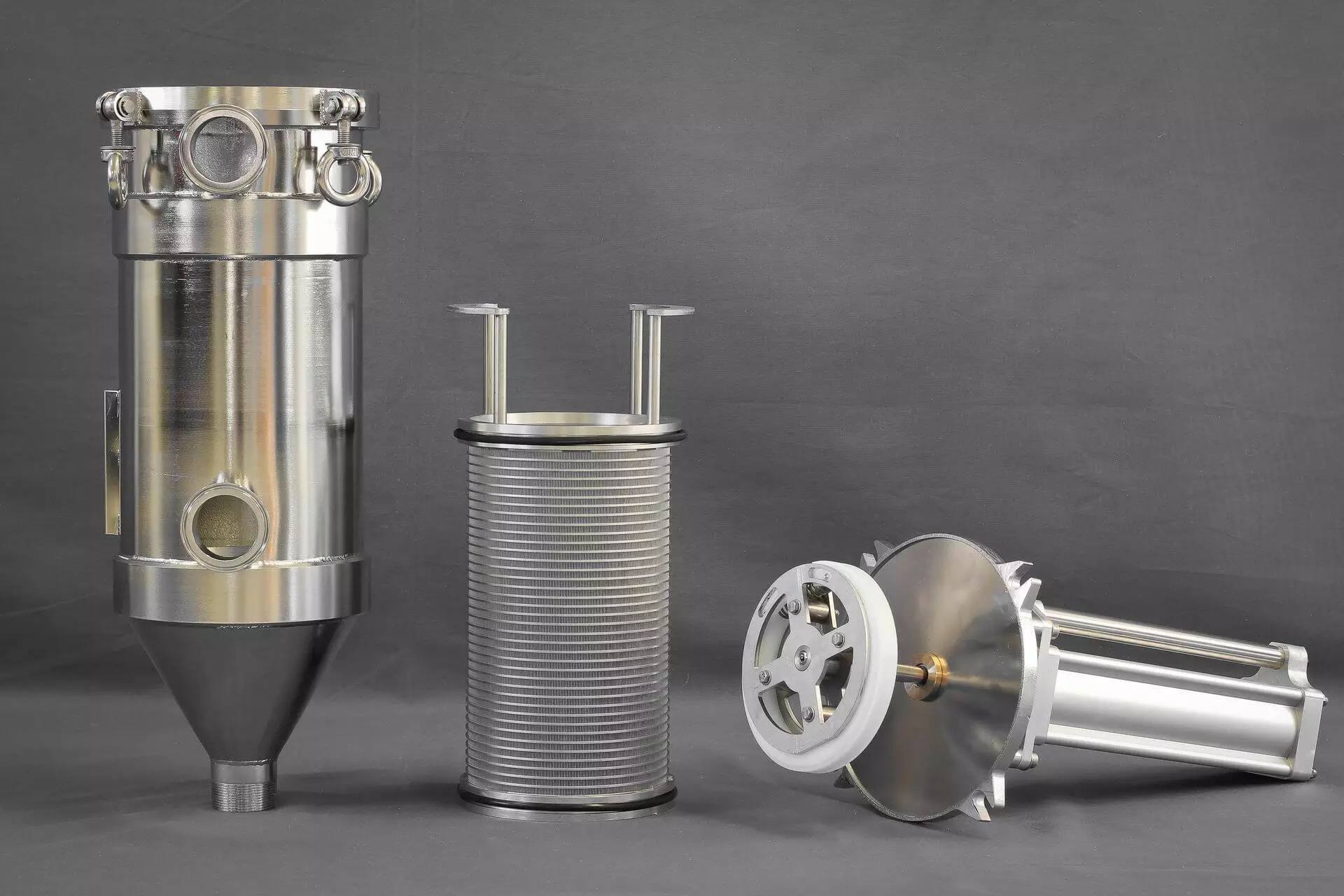
Electromagnetic: AC or pulsed DC magnetic field coils on opposite pipe sides; electrodes on orthogonal axis detect the induced voltage (mV per m/s velocity). Digital signal processing converts voltage to 4–20 mA output. Requires minimum conductivity >5 µS/cm; has no pressure drop; empty pipe detection standard. Vortex: bluff body (sitar, T-bar) mounted across pipe — alternating vortices shed at Strouhal number frequency; sensor (piezoelectric or thermal) counts vortex shedding frequency proportional to velocity. Turbine: rotor spins at speed proportional to flow; magnetic or optical pickup counts blade passes per second. Ultrasonic: downstream transit time shorter than upstream (flow assists forward signal, retards backward signal) — time difference Δt is directly proportional to mean flow velocity.
Challenges
Electromagnetic Meter Requires Minimum Fluid Conductivity (>5 µS/cm)
Low-conductivity fluids (purified water, hydrocarbons) produce insufficient induced voltage — measurement impossible.
Vortex Meter Lower Flow Velocity Limit (Min. 0.3–0.5 m/s) Below Which Vortices Unstable
At low velocity, vortex formation becomes irregular — measurement accuracy degrades below minimum velocity threshold.
Turbine Meter Bearing Wear from Abrasive Particles or Viscous Fluid
Rotor bearings wear in dirty or viscous service — calibration shifts; eventually rotor seizes; requires frequent maintenance.
Ultrasonic Signal Attenuation from Entrained Gas, Bubbles, or Heavy Solids
Gas bubbles and suspended solids scatter ultrasound — signal lost above ~5% entrained gas volume fraction.
Vortex/Turbine Susceptibility to Vibration-Induced False Counts
Pipeline vibration at vortex shedding frequency generates false signals — errors in pulsating or vibrating process environments.
Solutions
- Low-Conductivity Service: Use Coriolis or Vortex Instead of Mag Meter: Coriolis handles any liquid including hydrocarbons; vortex handles gases, steam — both independent of conductivity.
- Extended Turndown with Dual-Range Transmitter (0.1–10 m/s, Auto-Select): Dual-range transmitter auto-selects high/low sensitivity — extends usable range from 0.15 m/s to 10 m/s (67:1 turndown).
- Clamp-On Ultrasonic Meter for Existing Pipelines (No Process Interruption): Clamp-on transducers attach externally — zero process interruption; no wetted parts; suitable for retrofitting.
- Turbine in Clean, Filtered, Constant-Viscosity Service Only: Install 50 µm strainer upstream; viscosity compensation in transmitter; monthly calibration check in critical service.
- Digital Signal Processing (DSP) Noise Filter on Vortex in Vibrating Environments: Smart vortex transmitter with spectral analysis distinguishes true vortex signal from vibration noise — ±0.5% accuracy retained.
Applications
- Water & Wastewater: Mag meter on conductive water, effluent, slurry — full-bore, no pressure drop, self-cleaning.
- Steam Utilities: Vortex meter on steam, condensate, compressed air — no moving parts, wide temperature range.
- Pharmaceutical: Mag meter for WFI and purified water; Coriolis for API solution; all GMP-clean-service rated.
- Oil & Gas: Turbine for clean petroleum products; ultrasonic for custody transfer (4-path); clamp-on for non-invasive survey.
- Food & Beverage: Sanitary mag meter (Tri-Clamp, Ra <0.8 µm) for conductive beverages; Coriolis for density measurement
Models & Capacities
Velocity Flow Meters — Technology Comparison & Size Range | ||||||||||
Meter Type | Pipe Size DN [mm] | Flow Range [m/s] | Accuracy [% reading] | Pressure Loss | Turndown | Min Conductivity / Fluid Req. | Temp Range [°C] | Max Pressure [bar] | Output Signal | Best Application |
Electromagnetic (mag) | DN 2.5–DN 3,000 | 0.1–10 | ±0.3–0.5 | Zero (full bore) | 100:1 | >5 µS/cm (conductive liquid) | −40 to +180 | 40 bar | 4–20 mA + HART/FF/PA | Conductive liquid; water; slurry; beverages; pharma WFI |
Electromagnetic (low-flow) | DN 1–DN 25 | 0.01–5 | ±0.5–1 | Negligible | 100:1 | >20 µS/cm | −10 to +130 | 16 bar | 4–20 mA + HART | Micro-dosing, analytical, laboratory |
Vortex | DN 15–DN 300 | 0.5–10 (liq); 4–80 (gas) | ±0.5–1.0 | Low (1–3 bar) | 20:1 | Clean to 40 mg/m³ solids | −200 to +450 | 250 bar | 4–20 mA + HART/FF | Steam; compressed gas; liquid; condensate |
Turbine (liquid) | DN 4–DN 400 | 0.3–10 | ±0.15–0.5 | Medium (1–3 bar) | 10:1–20:1 | Clean, low viscosity <50 cP | −50 to +250 | 400 bar | Pulse + 4–20 mA | Clean petroleum, solvents, liquid metering — high accuracy |
Turbine (gas) | DN 25–DN 600 | 0.3–25 m/s | ±0.5–1.0 | Low (0.5 bar) | 20:1 | Dry clean gas | −40 to +150 | 100 bar | Pulse + 4–20 mA | Natural gas distribution; compressed gas metering |
Ultrasonic (clamp-on, 1-path) | DN 15–DN 3,000 | 0.1–15 | ±1–3 | Zero | 50:1 | Bubble-free, acoustically transmissive | −40 to +200 | No pressure limit | 4–20 mA + Modbus | Retrofit, non-invasive survey, temporary measurement |
Ultrasonic (inline, 2-path) | DN 25–DN 600 | 0.1–15 | ±0.5–1.0 | Negligible | 50:1 | Clean to moderately dirty | −40 to +200 | 100 bar | 4–20 mA + HART/FF | Custody transfer; water; gas — bidirectional |
Ultrasonic (inline, 4-path) | DN 50–DN 3,000 | 0.05–15 | ±0.2–0.5 | Negligible | 100:1 | Clean gas and liquid | −40 to +200 | 300 bar | 4–20 mA + HART/FF/RS485 | Fiscal metering; custody transfer; large pipeline |
Swirl / Fluidic | DN 25–DN 200 | 0.5–10 | ±0.5–1.5 | Low–medium | 10:1 | Clean liquid, viscosity 1–50 cP | −30 to +120 | 20 bar | 4–20 mA + HART | Clean liquid at varying viscosity — no-moving-parts liquid |