
Dispersion (Roller-Blade / Double-Arm) Sigma Mixer
A dispersion sigma mixer replaces one sigma blade with a cylindrical or contra-blade roller that runs in the opposite trough section — the asymmetric design creates a primary shear zone between the roller surface and trough base (0.5–5 mm gap) combined with secondary kneading by the sigma blade on the opposing side. Processing 0.5–500 L at viscosities of 500,000–5,000,000 cP, it handles the stiffest materials — unvulcanised rubber, chewing gum base, and ultra-viscous polymer where standard sigma geometry stalls.
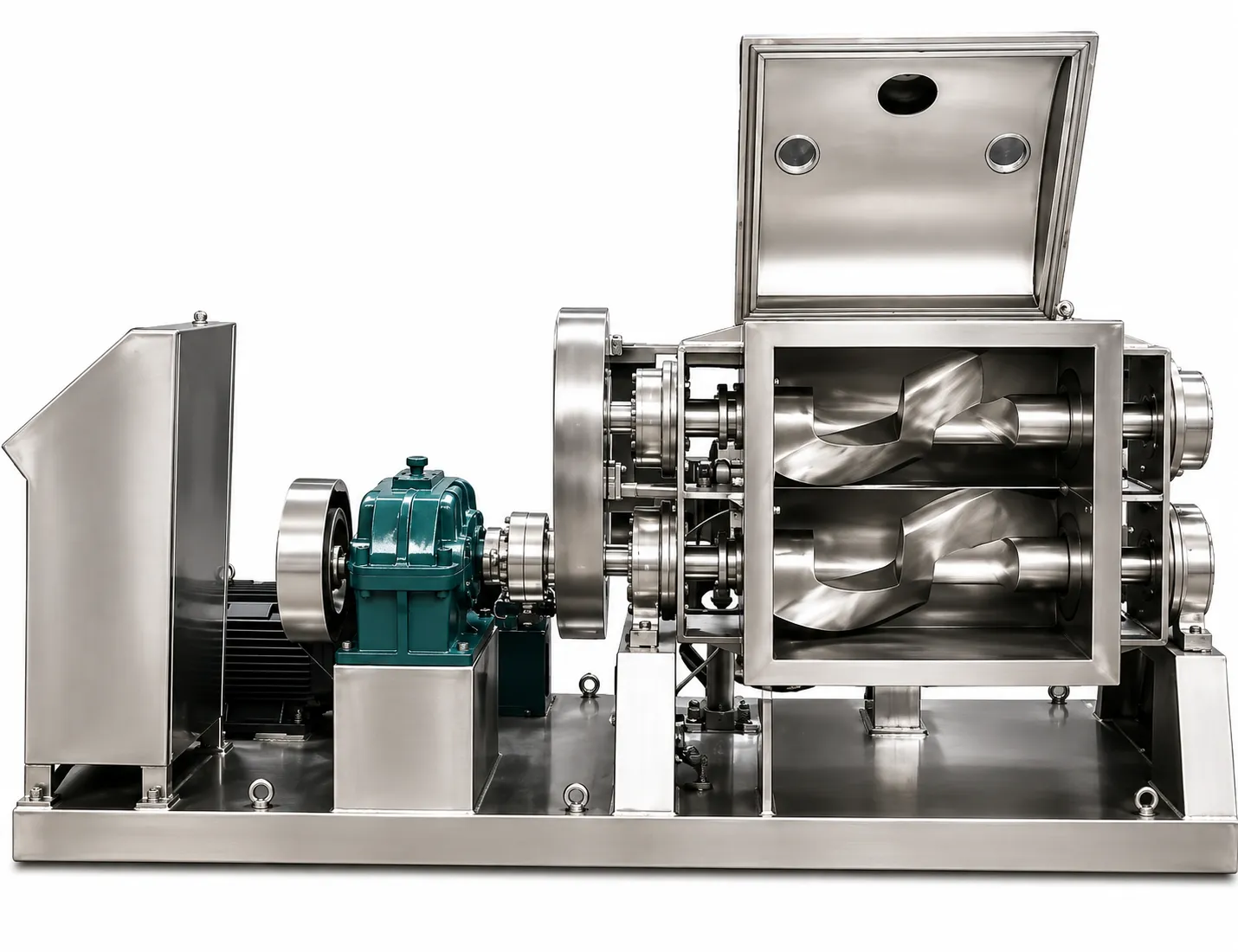
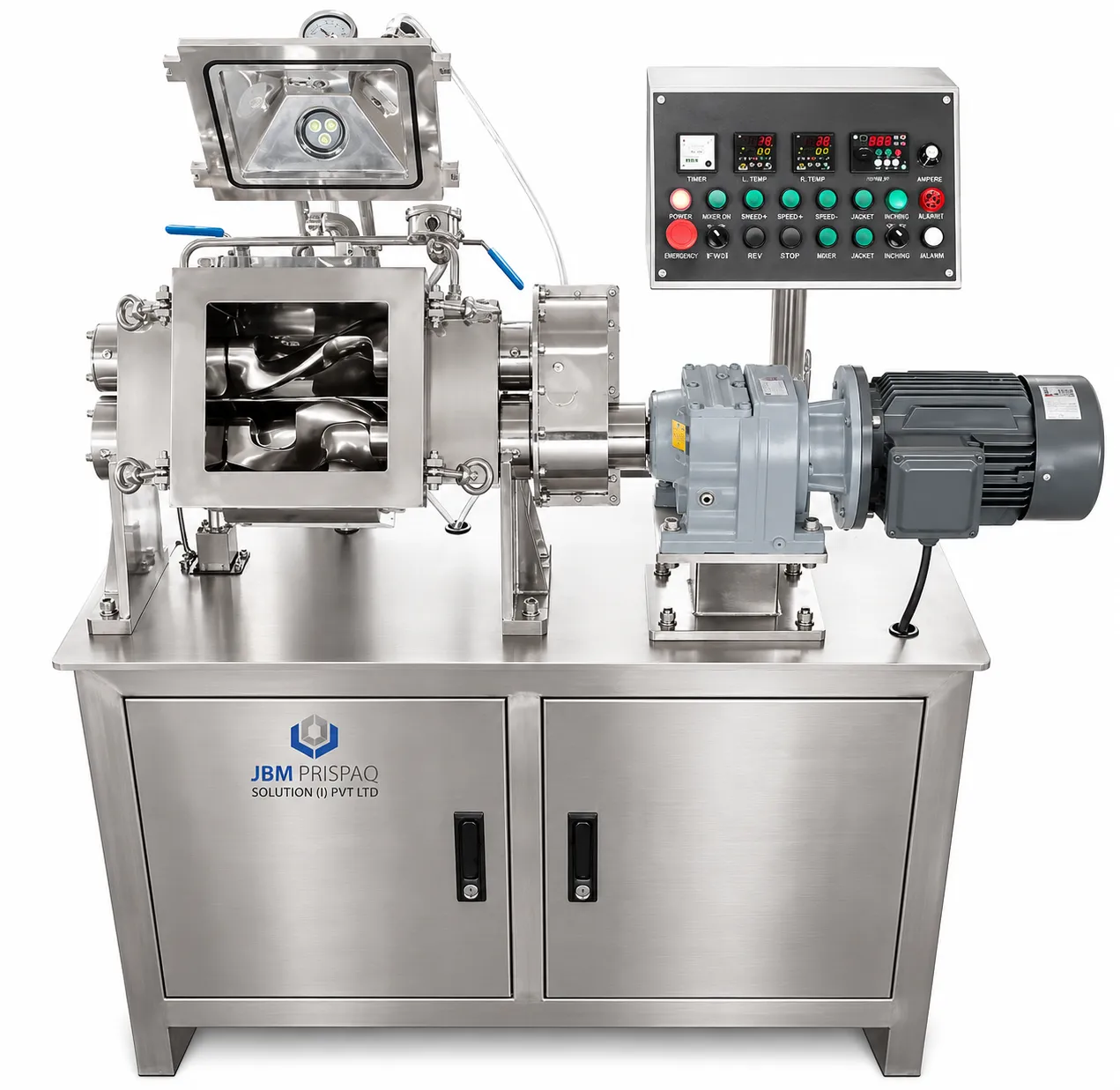
A dispersion sigma mixer replaces one sigma blade with a cylindrical or contra-blade roller that runs in the opposite trough section — the asymmetric design creates a primary shear zone between the roller surface and trough base (0.5–5 mm gap) combined with secondary kneading by the sigma blade on the opposing side. Processing 0.5–500 L at viscosities of 500,000–5,000,000 cP, it handles the stiffest materials — unvulcanised rubber, chewing gum base, and ultra-viscous polymer where standard sigma geometry stalls.
Challenges
Roller-to-Trough Gap Setting at Ultra-High Viscosity
Stiff material forces roller away from trough — gap must be mechanically set and locked.
Product Wrapping Around Roller in Soft or Tacky Materials
Tacky polymer or adhesive wraps around roller OD — prevents roller rotation and stalls machine.
Ram Pressure Containment at Maximum Batch Volume
High-viscosity material + ram pressure requires robust vessel lid and ram seal design.
Heat Generation from Roller-Nip High-Shear Zone
Roller-nip shear intensity significantly higher than sigma blade — faster local temperature rise.
Batch Discharge of Ultra-High-Yield-Stress Material
Materials above 500 kPa yield stress cannot flow out under hydraulic tilt alone — manual assist required.
Solutions
- Hydraulic Gap Setting System (Manual Override + Digital Display): Hydraulic ram holds roller against trough at preset force — compensates stiff material spring-back.
- Anti-Stick PTFE or Chrome-Plated Roller OD Surface: PTFE release coating on roller prevents tacky adhesive or rubber wrap-around — sustained rotation.
- Full-Width Pneumatic Ram (2–5 bar) Above Batch Surface: Uniform pneumatic pressure across full trough width forces stiff material into roller gap consistently.
- Roller Water-Cooling Through Central Hollow Shaft: Cooling water through roller axis removes nip shear heat directly — limits local temperature rise.
- Front-Opening Full-Bore Door + Material Extraction Tool: Wide front door provides full trough access; extraction bar manually dislodges residual material.
Applications
- Rubber: Unvulcanised natural and synthetic rubber kneading, sponge rubber compound, silicone rubber base.
- Food & Confectionery: Chewing gum base kneading, dense fondant and candy mass, extreme-viscosity marzipan.
- Chemical: Ultra-high-viscosity polymer processing, structural epoxy paste, high-solids sealant base.
- Pharmaceutical: Ultra-stiff ointment base, suppository wax compound, veterinary paste at maximum viscosity.
- Cosmetics: Solid lipstick base kneading, dense wax compound, maximum-viscosity pomade processing.
Product Catalogue & Technical Datasheet
Model | Scale | Trough Vol. (L) | Batch Size (kg) | Roller RPM | Sigma RPM | Blade Motor (kW) | Roller-Trough Gap (mm) | Viscosity Max (cP) | Jacket Temp (°C) | Weight (kg) |
DSM-001 | Lab | 1 | 0.5–0.8 | 2–10 VFD | 5–20 VFD | 1.5–3 | 0.5–5 | 5,000,000 | 0–200 | 140 |
DSM-005 | Lab/Pilot | 5 | 2–4 | 2–10 VFD | 5–20 VFD | 4.0–5.5 | 0.5–5 | 5,000,000 | 0–200 | 380 |
DSM-025 | Pilot | 25 | 10–20 | 2–10 VFD | 5–20 VFD | 11–15 | 0.5–5 | 5,000,000 | 0–200 | 980 |
DSM-100 | Production | 100 | 40–80 | 2–8 VFD | 4–16 VFD | 30–37 | 0.5–5 | 5,000,000 | 0–200 | 2,600 |
DSM-250 | Production | 250 | 100–200 | 2–6 VFD | 4–12 VFD | 55–75 | 1–5 | 5,000,000 | 0–200 | 6,200 |
DSM-500 | Large Prod | 500 | 200–400 | 2–5 VFD | 3–10 VFD | 90–132 | 1–5 | 4,000,000 | 0–200 | 12,500 |