
Multi-Point Central Vacuum Transfer System
A multi-point central vacuum transfer system uses a single central vacuum unit (roots blower or water-ring vacuum pump, -0.4 to -0.85 bar) connected to multiple pickup and delivery points through a common stainless steel pipeline network -- enabling sequential or simultaneous transfer of different powders from up to 20 sources to up to 20 destinations in a pharmaceutical or food production building. Processing 50-10,000 kg/h across transfer distances up to 200 m and floor heights up to 30 m, it replaces all manual powder handling across an entire production floor with a single validated closed-transfer infrastructure.
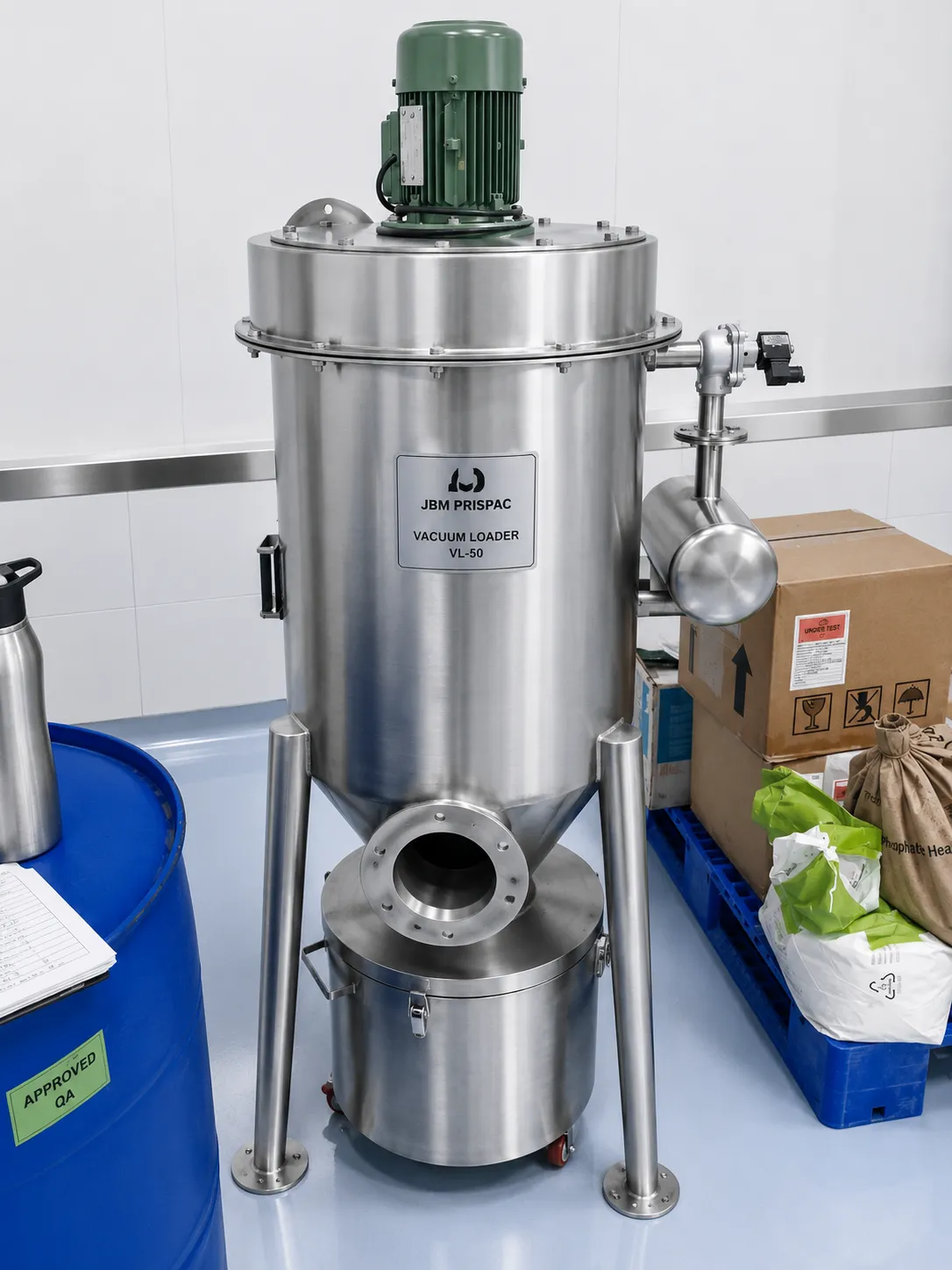
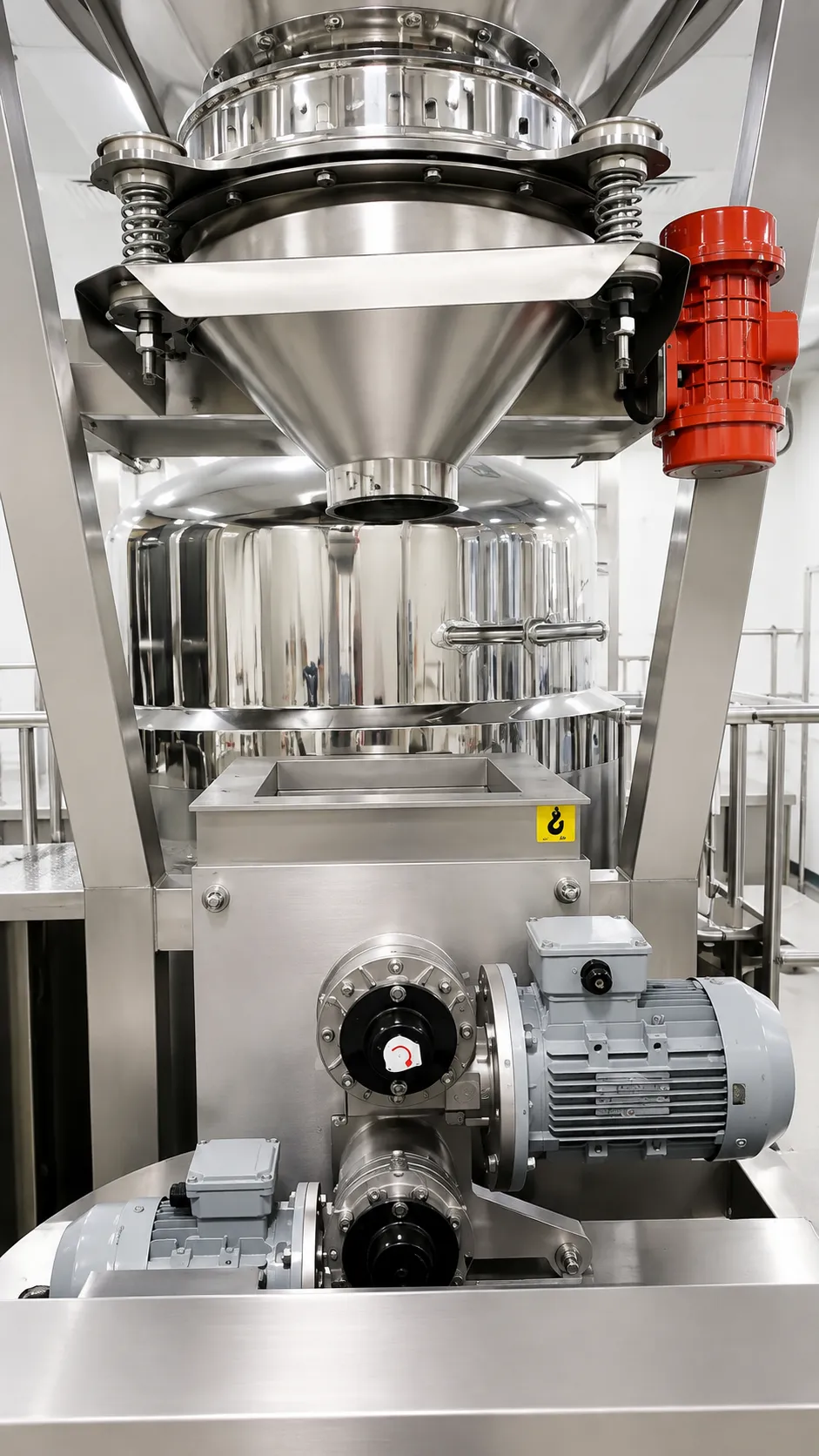
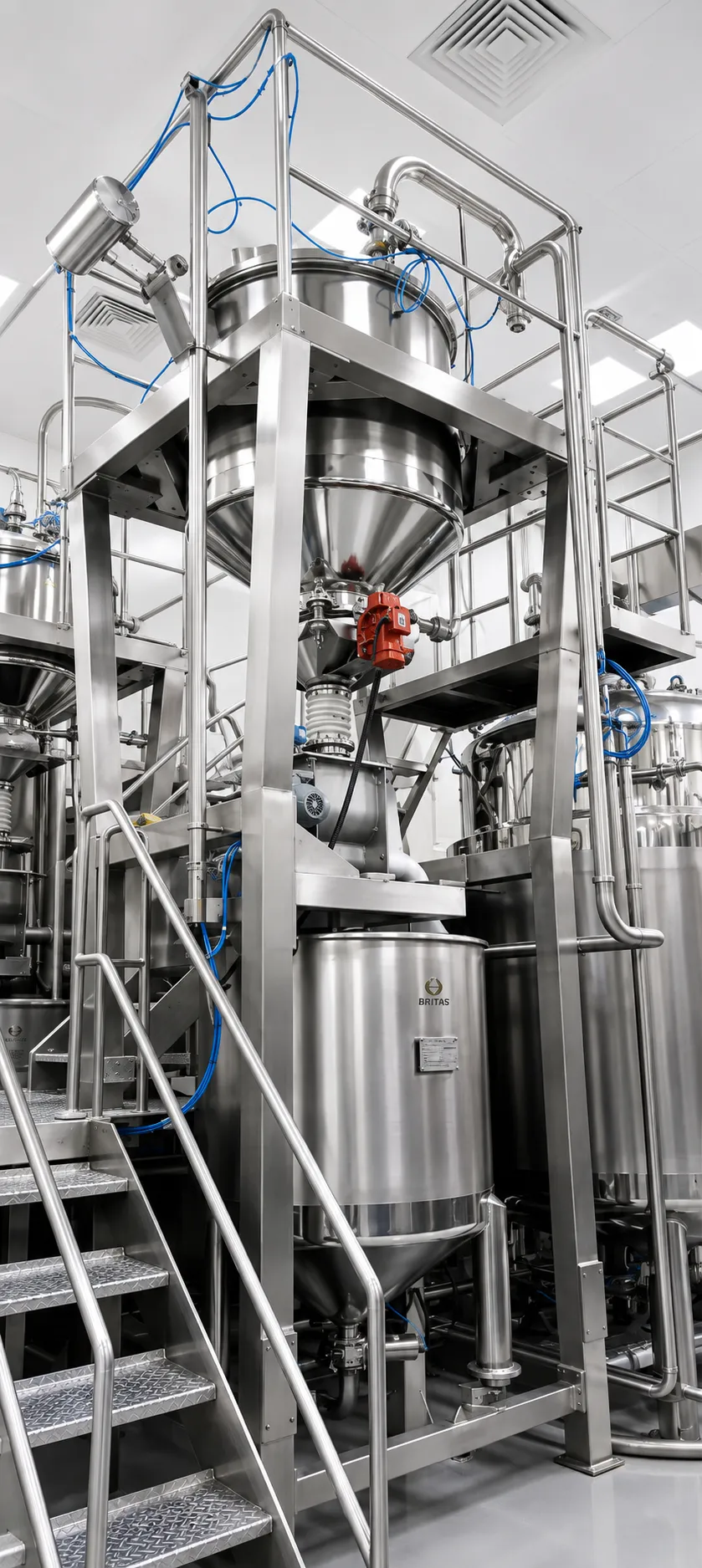
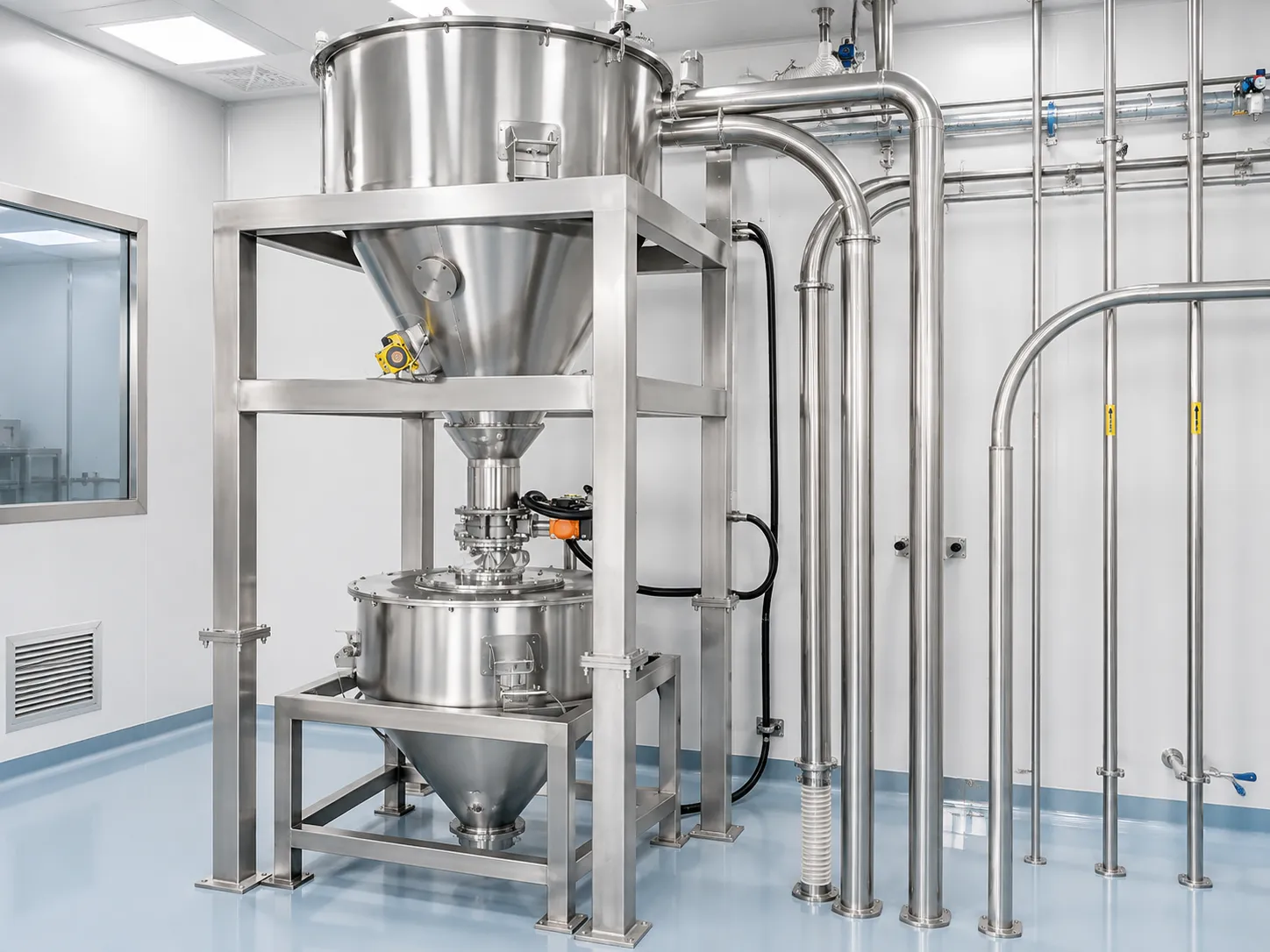
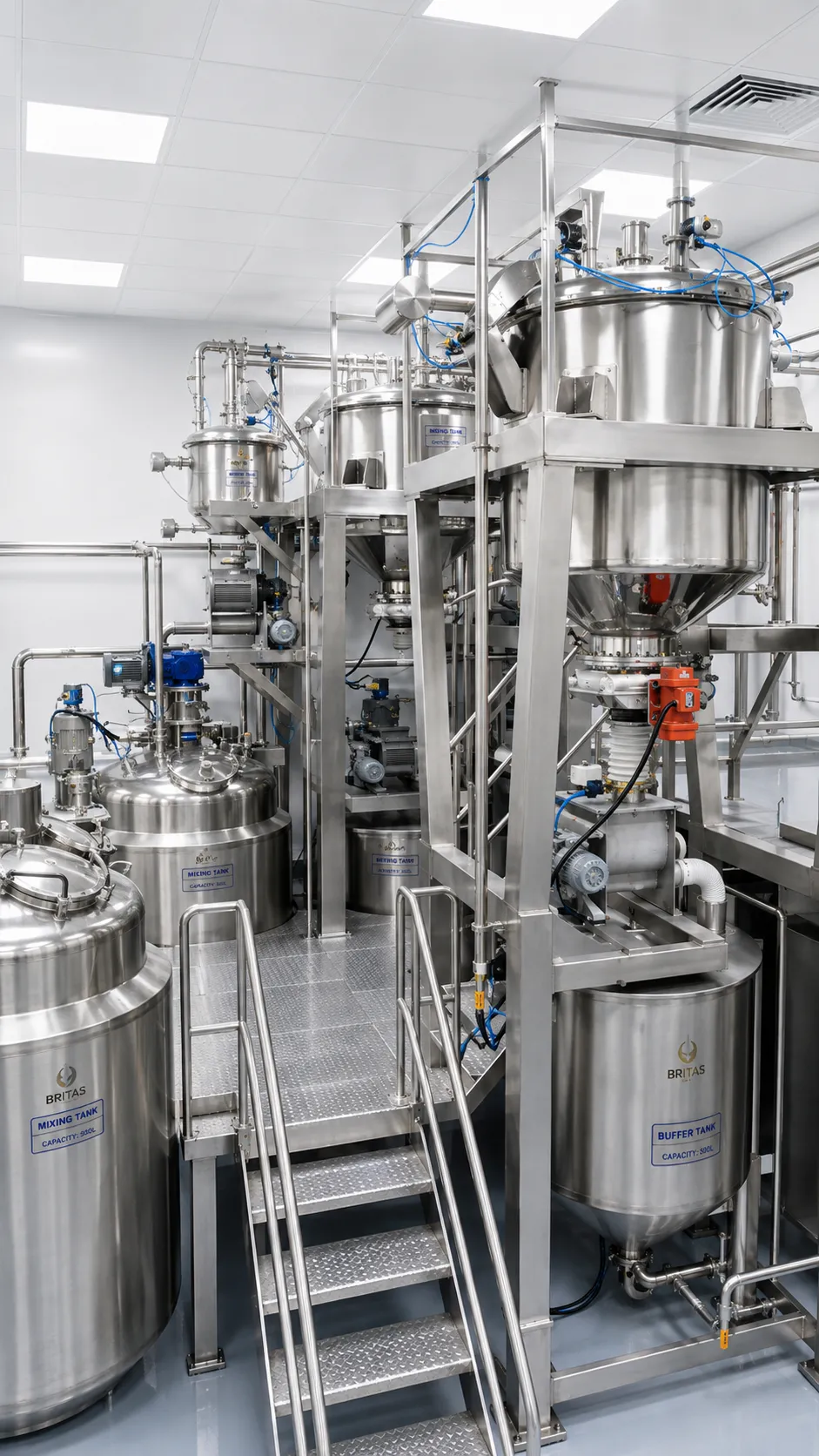
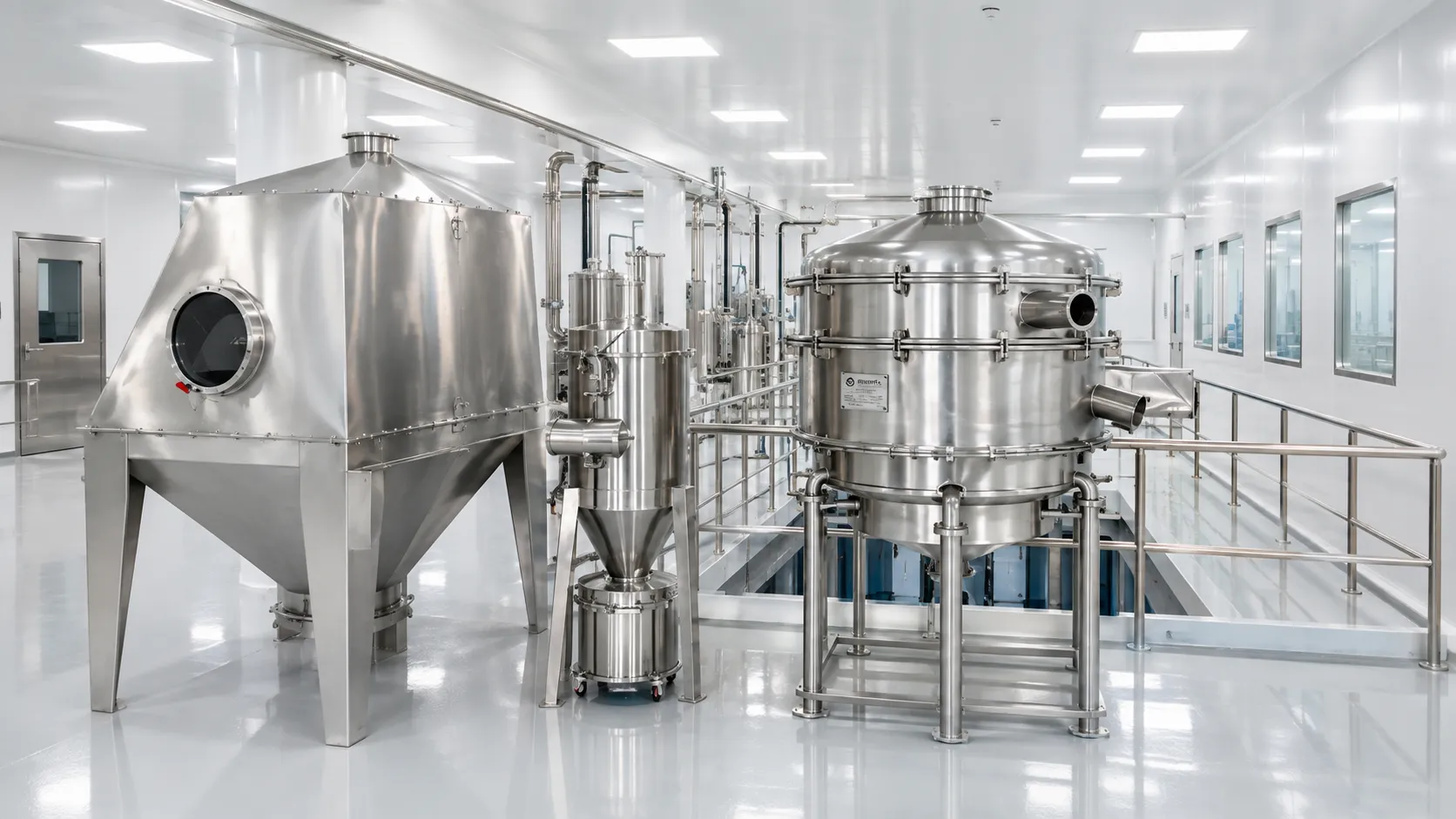
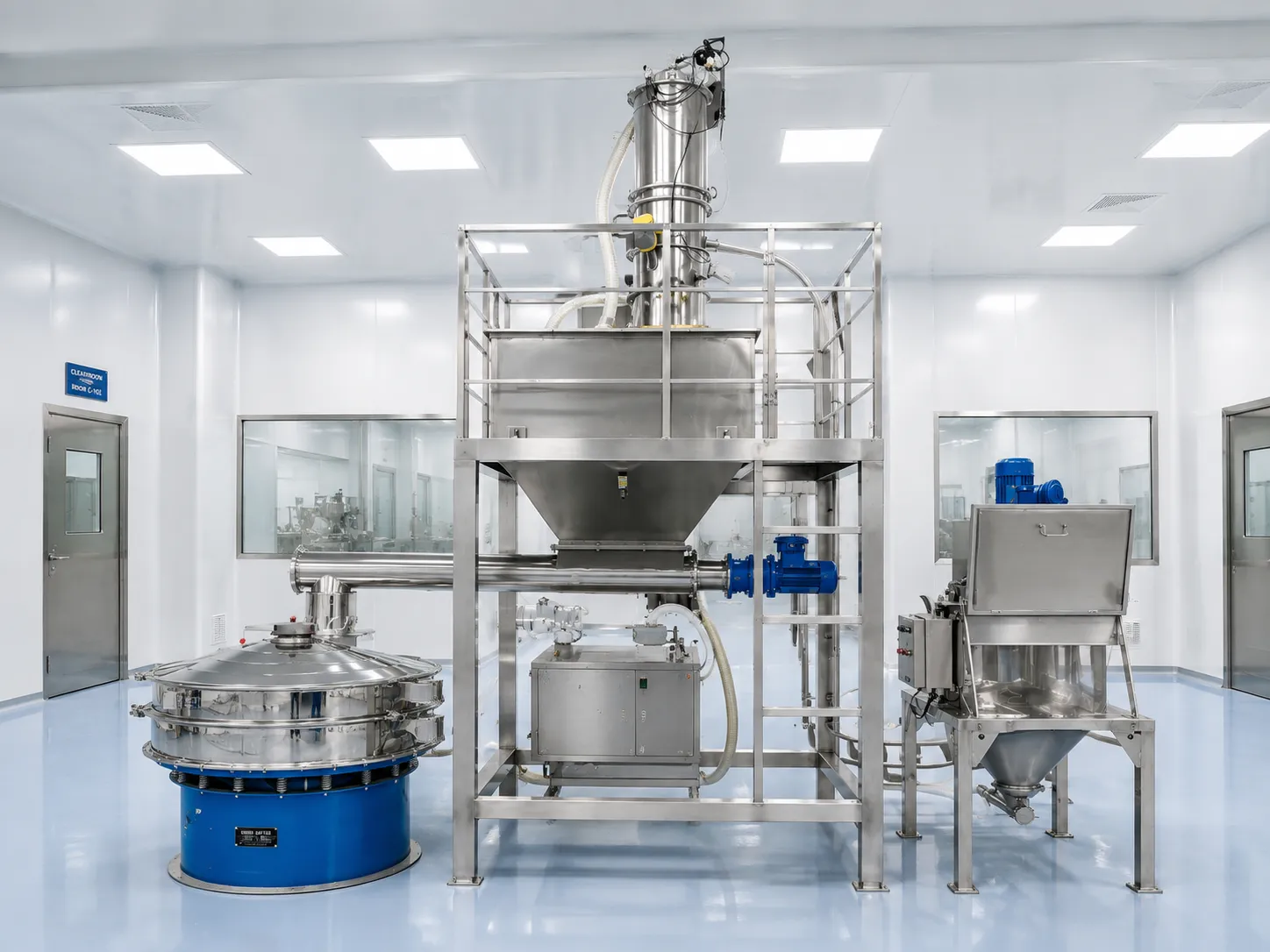
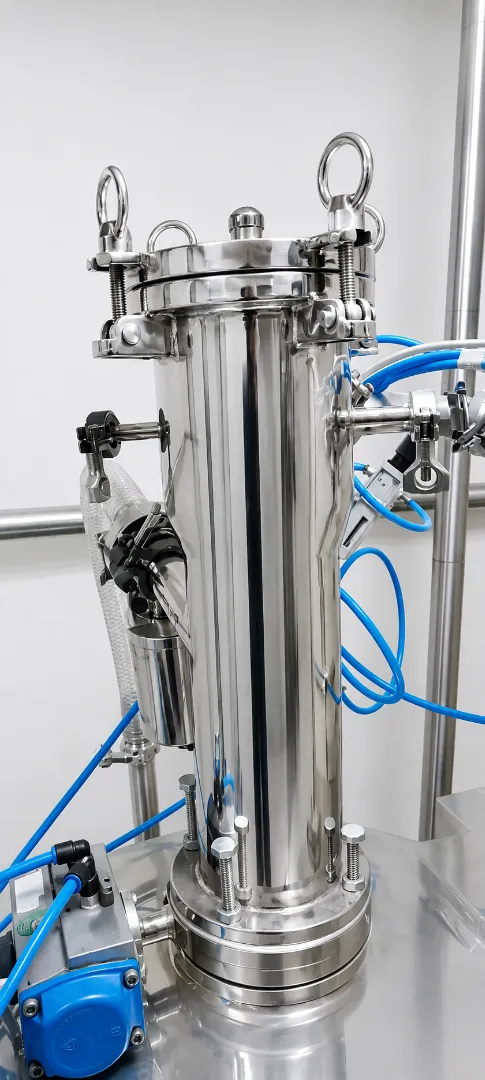
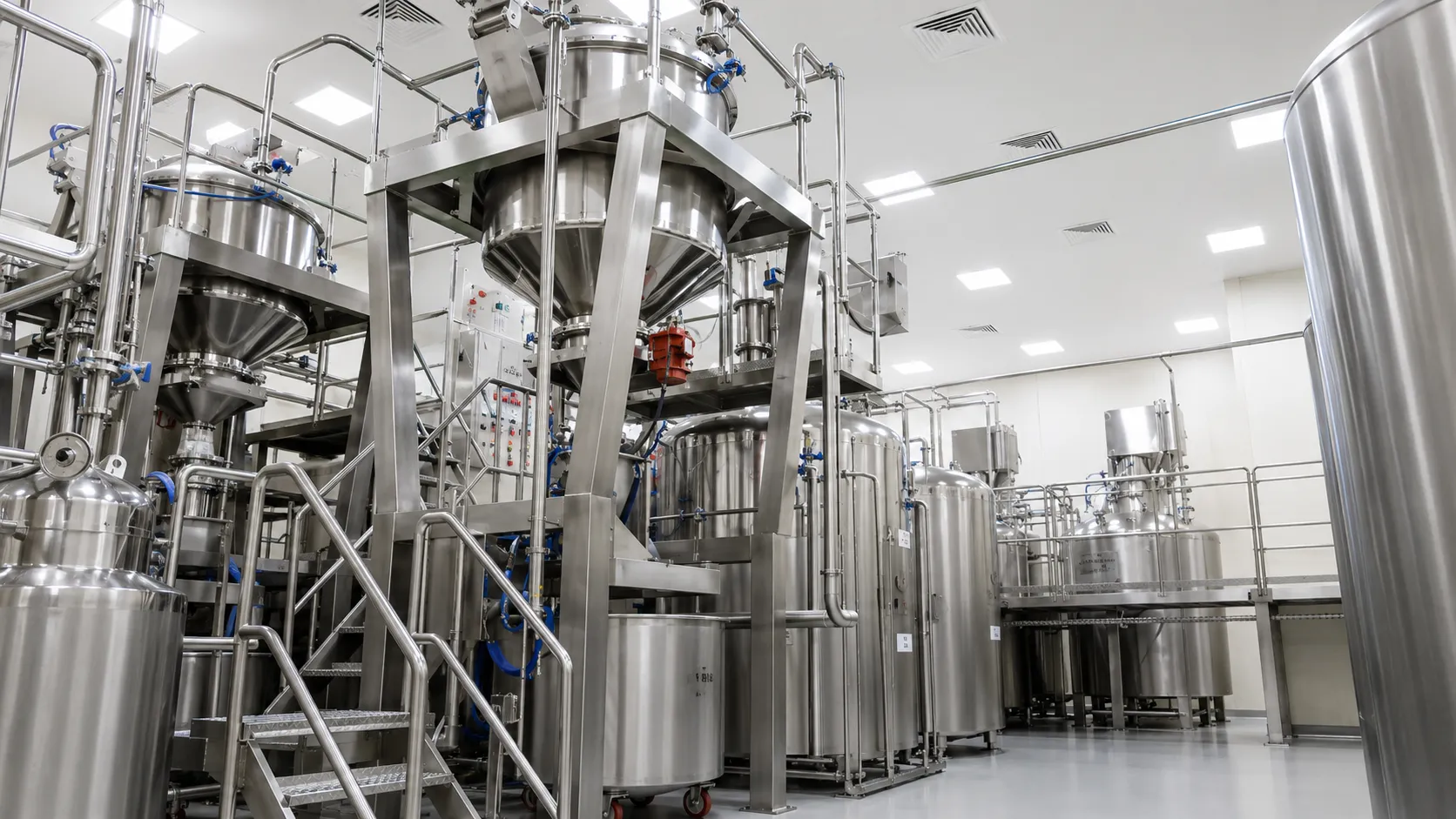
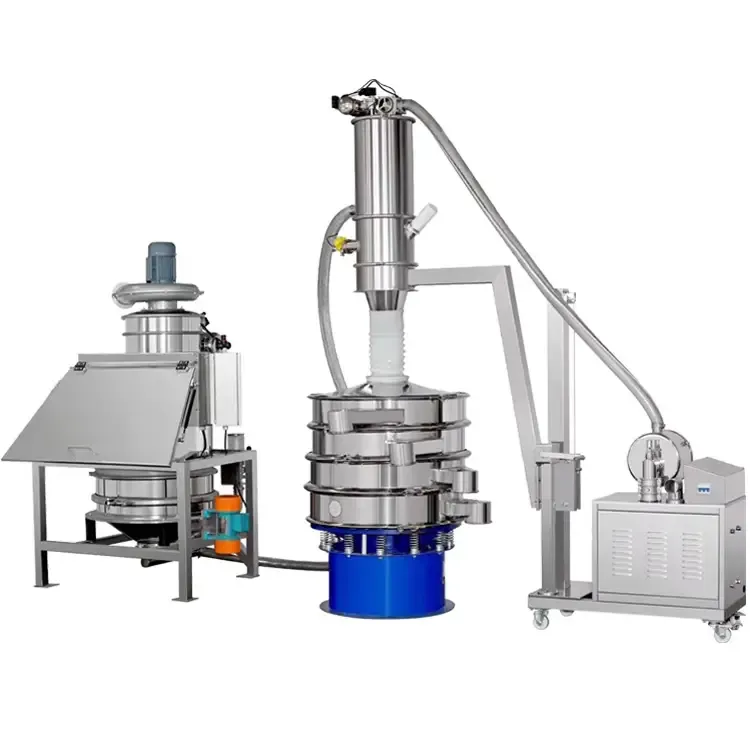
A multi-point central vacuum transfer system uses a single central vacuum unit (roots blower or water-ring vacuum pump, -0.4 to -0.85 bar) connected to multiple pickup and delivery points through a common stainless steel pipeline network — enabling sequential or simultaneous transfer of different powders from up to 20 sources to up to 20 destinations in a pharmaceutical or food production building. Processing 50-10,000 kg/h across transfer distances up to 200 m and floor heights up to 30 m, it replaces all manual powder handling across an entire production floor with a single validated closed-transfer infrastructure.
The central vacuum unit maintains system vacuum (-0.4 to -0.85 bar) continuously; pneumatically actuated source and destination valves are opened by PLC recipe commands to route powder from the selected source to the selected destination through the common pipeline. Each destination has a local filter receiver with timed cycle and pulse-clean filter. Pipeline routing uses long-radius bends (R >= 10x pipe dia) and 45 degree branch entries to minimise pressure drop and particle attrition. The PLC-SCADA system logs all transfer events (source, destination, weight, time, operator ID) for electronic batch record compliance.
Challenges
Product Cross-Contamination in Shared Pipelines
Sequential product transfers share pipeline volume -- residue from previous product contaminates next.
Pressure Drop Balance Across Long Multi-Branch Networks
Unequal branch lengths create different vacuum levels -- near sources overdraw, distant sources starve.
Filter Receiver Synchronisation at Multiple Simultaneous Destinations
Multiple simultaneous transfers to different destinations create competing vacuum demand.
Pipeline CIP Validation in Complex Multi-Floor Network
100 m+ of pipeline with multiple bends and branches requires validated CIP spray coverage at all points.
HPAPI Product Changeover Containment in Shared Pipeline
OEB 4-5 product residue in shared pipeline requires full contained decontamination between campaigns.
Solutions
- Product-Dedicated Pipeline Sections + Compressed Air Purge Between Transfers: Air purge (5-10 s at 2 bar) clears pipeline between sequential products -- cross-contamination <10 ppm.
- Balanced Pipeline Design (Pressure Drop Analysis per Branch, Delta-P +-5%): Hydraulic network calculation balances branch lengths and diameters -- equal vacuum at all pickup points.
- Staggered Transfer Sequencing via PLC Recipe Scheduler: PLC prevents simultaneous competing vacuum draws -- sequences transfers to maintain system vacuum.
- CIP Pig System (Pipeline Cleaning Pig, 2 bar Water Push): SS pig driven by water pressure scrubs all surfaces from any inlet to any outlet -- validated residue removal.
- Single-Use Polyethylene Pipeline Liner for HPAPI Campaigns: PE liner inserted before HPAPI campaign; entire liner removed and disposed after -- zero residue.
Applications
- Pharmaceutical: Building-wide enclosed powder transfer: FBP discharge to milling to blending to compression in one CIP-validated system.
- Nutraceuticals: Multi-product supplement powder routing from bulk bags to blenders, encapsulators, and filling machines.
- Food & Beverage: Multi-ingredient flour, sugar, and flavour powder enclosed routing in bakery, confectionery, or beverage plant.
- Chemical: Multi-floor specialty chemical powder routing from storage to process vessels in enclosed building system.
- Cosmetics: Multi-product mineral pigment and talc routing between sieving, blending, and compact pressing areas.
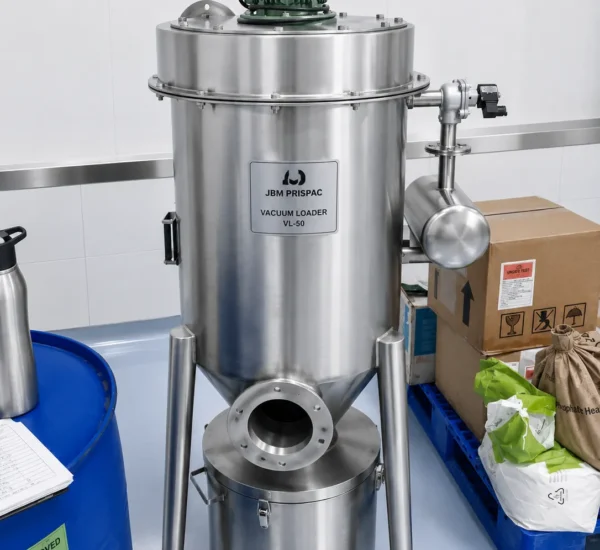
Product Catalogue & Technical Datasheet
| Model | Sources (max) | Destinations (max) | System Capacity (kg/h) | Vacuum Level (bar) | Pipeline Dia (mm) | Max Distance (m) | Max Lift (m) | Vacuum Unit Power (kW) | Control System |
|---|---|---|---|---|---|---|---|---|---|
| CVS-4×4 | 4 | 4 | 200-1,000 | -0.4 to -0.85 | Dia 40-65 | 50 | 15 | 3.0-5.5 | PLC-HMI |
| CVS-8×8 | 8 | 8 | 500-2,000 | -0.4 to -0.85 | Dia 50-80 | 80 | 20 | 5.5-11 | PLC-HMI |
| CVS-12×8 | 12 | 8 | 800-3,000 | -0.4 to -0.85 | Dia 65-100 | 100 | 25 | 11-15 | PLC-HMI+SCADA |
| CVS-16×12 | 16 | 12 | 1,500-5,000 | -0.4 to -0.85 | Dia 80-125 | 150 | 30 | 15-22 | PLC-HMI+SCADA |
| CVS-20×16 | 20 | 16 | 3,000-8,000 | -0.4 to -0.85 | Dia 100-150 | 200 | 35 | 22-37 | DCS+SCADA |
| CVS-20×20 | 20 | 20 | 5,000-10,000 | -0.4 to -0.85 | Dia 125-150 | 200 | 35 | 37-55 | DCS+SCADA |