
Horizontal Oscillating Granulator
A horizontal oscillating granulator uses a horizontal rotor carrying 5–12 flat oscillating bars reciprocating at 20–400 oscillations/min to press granule mass horizontally through a curved bottom screen (0.5–10 mm aperture, woven-wire or punched-plate). Processing 5–3,000 kg/h of wet or dry granules with fines generation below 2%, it is the standard GMP granule sizing device for effervescent tablet production, moisture-sensitive APIs, and fragile granule structures intolerant of rotating impeller shear.
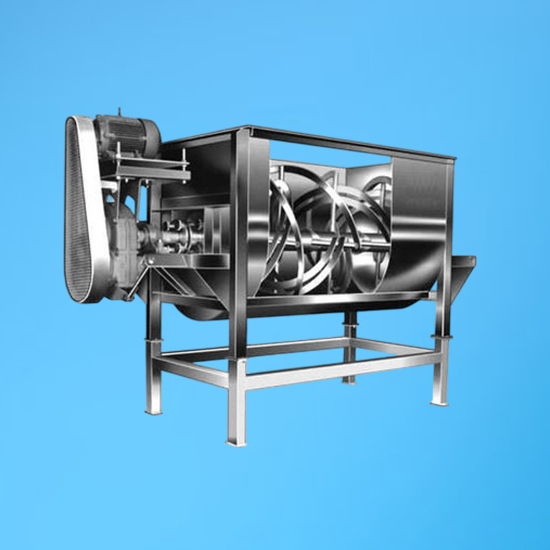
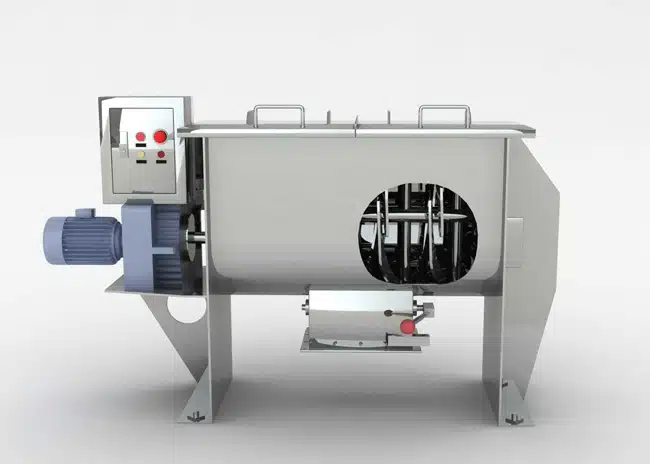
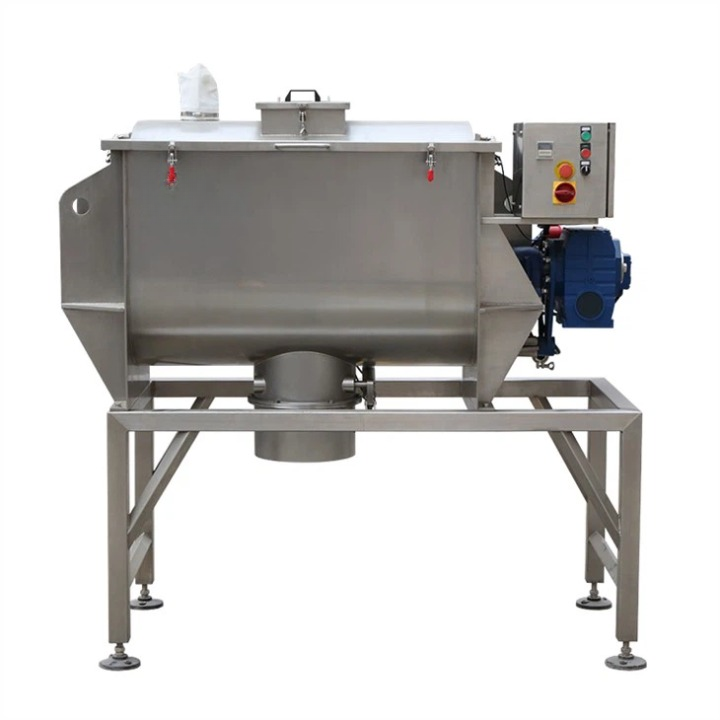
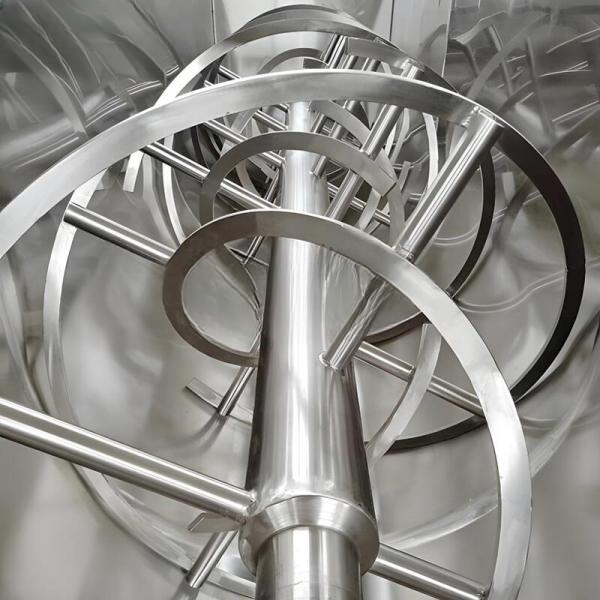
A horizontal oscillating granulator uses a horizontal rotor carrying 5–12 flat oscillating bars reciprocating at 20–400 oscillations/min to press granule mass horizontally through a curved bottom screen (0.5–10 mm aperture, woven-wire or punched-plate). Processing 5–3,000 kg/h of wet or dry granules with fines generation below 2%, it is the standard GMP granule sizing device for effervescent tablet production, moisture-sensitive APIs, and fragile granule structures intolerant of rotating impeller shear.
Granule mass enters the hopper above the horizontal rotor; the 5–12 bars oscillate back and forth — rather than rotating continuously — pressing material through the curved screen aperture in a reciprocating action that minimises shear-induced fracture. The horizontal screen orientation and gravity-assisted discharge deliver product directly into a collection bin below the mill. Screen replacement takes under 10 minutes via tool-free end-plate removal. Oscillation rate and bar-to-screen clearance (0.5–2 mm, micrometer-adjustable) are the primary particle size control variables — independent of each other for precise PSD tuning.
Challenges
Screen Wire Distortion Under High Feed Load
Excess feed volume deflects woven-wire screen apertures — broadens PSD beyond specification.
Screen Blinding with High-Moisture Wet Granules (LOD >20%)
Wet granules pack into screen wire mesh interstices — progressive throughput reduction.
Bar-to-Screen Contact from Insufficient Clearance
Clearance below 0.3 mm causes oscillating bar-to-screen contact — metal contamination risk.
Limited Throughput vs. Rotating Cone Mills
Reciprocating mechanism limits maximum throughput to 3,000 kg/h at large-scale configurations.
Eccentric Bearing Fatigue at Maximum Oscillation Rate
400 oscillations/min at rated load accelerates eccentric bearing wear — 8–12 month replacement.
Solutions
- Heavy-Duty Punched-Plate Screen (SS 316L, 1.5 mm Plate): Rigid plate maintains aperture geometry under full load — replaces deformable woven wire.
- Grater-Type Screen Surface for High-Moisture Granules: Raised grater profile prevents wet granule bridging across screen wires — suitable to LOD 25%.
- Micrometer Bar-to-Screen Gap Adjustment (0.5–2 mm): Precision screw adjustment with dial indicator maintains uniform gap across full screen width.
- Mass-Flow-Controlled Vibratory Feeder (±3% Accuracy): Metered feed prevents screen overloading — sustained throughput within specification.
- Sealed Eccentric Bearing Cartridge with Grease Nipple: Factory-sealed cartridge rated 8 million cycles; grease port enables scheduled maintenance.
Applications
- Pharmaceutical: Effervescent tablet granule sizing, moisture-sensitive API granule deagglomeration, wet granule milling after RMG.
- Nutraceuticals: Vitamin C effervescent granule sizing, probiotic granule deagglomeration, fragile supplement tablet granulation.
- Food & Beverage: Instant beverage granule sizing, sugar crystal deagglomeration, fragile food granule particle size control.
- Chemical: Slow-release fertiliser granule deagglomeration, fragile catalyst support granule sizing.
- Cosmetics: Fragile pressed-powder compact granule sizing, talc and mineral powder granule deagglomeration.
Models & Capacities
| Type 1 — Horizontal Oscillating Granulator: Models & Capacities | ||||||||||
|---|---|---|---|---|---|---|---|---|---|---|
| Model | Scale | Throughput [kg/h] | Oscillation Rate [osc/min] | Screen Aperture [mm] | Bar Count | Fines [%] | Screen Area [cm²] | Motor [kW] | L × W × H [mm] | Weight [kg] |
| HOG-LAB | Lab | 5–20 | 20–400 | 0.5–10 | 5 | <2 | 80 | 0.37–0.55 | 480×350×650 | 42 |
| HOG-PIL | Pilot | 20–80 | 20–400 | 0.5–10 | 7 | <2 | 180 | 0.55–1.1 | 680×480×850 | 85 |
| HOG-200 | Production | 60–200 | 20–350 | 0.5–10 | 7 | <2 | 380 | 1.1–2.2 | 950×650×1,100 | 165 |
| HOG-500 | Production | 150–500 | 20–300 | 0.5–10 | 7 | <2 | 750 | 2.2–4.0 | 1,250×850×1,350 | 290 |
| HOG-1000 | Production | 300–1,000 | 20–250 | 0.5–10 | 9 | <2 | 1,400 | 4.0–7.5 | 1,600×1,050×1,650 | 480 |
| HOG-2000 | Large Prod | 600–2,000 | 20–220 | 0.5–10 | 10 | <2 | 2,400 | 7.5–11 | 2,000×1,250×1,850 | 720 |
| HOG-3000 | Large Prod | 800–3,000 | 20–200 | 0.5–10 | 12 | <2 | 3,200 | 7.5–15 | 2,200×1,400×2,000 | 880 |