
SLES Skid (Sodium Laureth Sulphate Process Skid)
An SLES (Sodium Laureth Sulphate) skid is a purpose-built integrated process skid that receives SLES concentrate (68–70% active matter) delivered by drum, IBC, or bulk tanker and continuously dilutes, heats, homogenises, and conditions it to the process working concentration (25–28% AM) required by shampoo, body wash, and liquid detergent manufacturing lines. A typical skid integrates a barrel emptying or tanker offload pump, a metering pump, a process water supply, a heat exchanger or steam injector, an inline mixer or homogeniser, and online measurement instruments (Brix, viscosity, pH, conductivity) — delivering conditioned SLES to the formulation header at the required specification within ±0.5% AM tolerance.
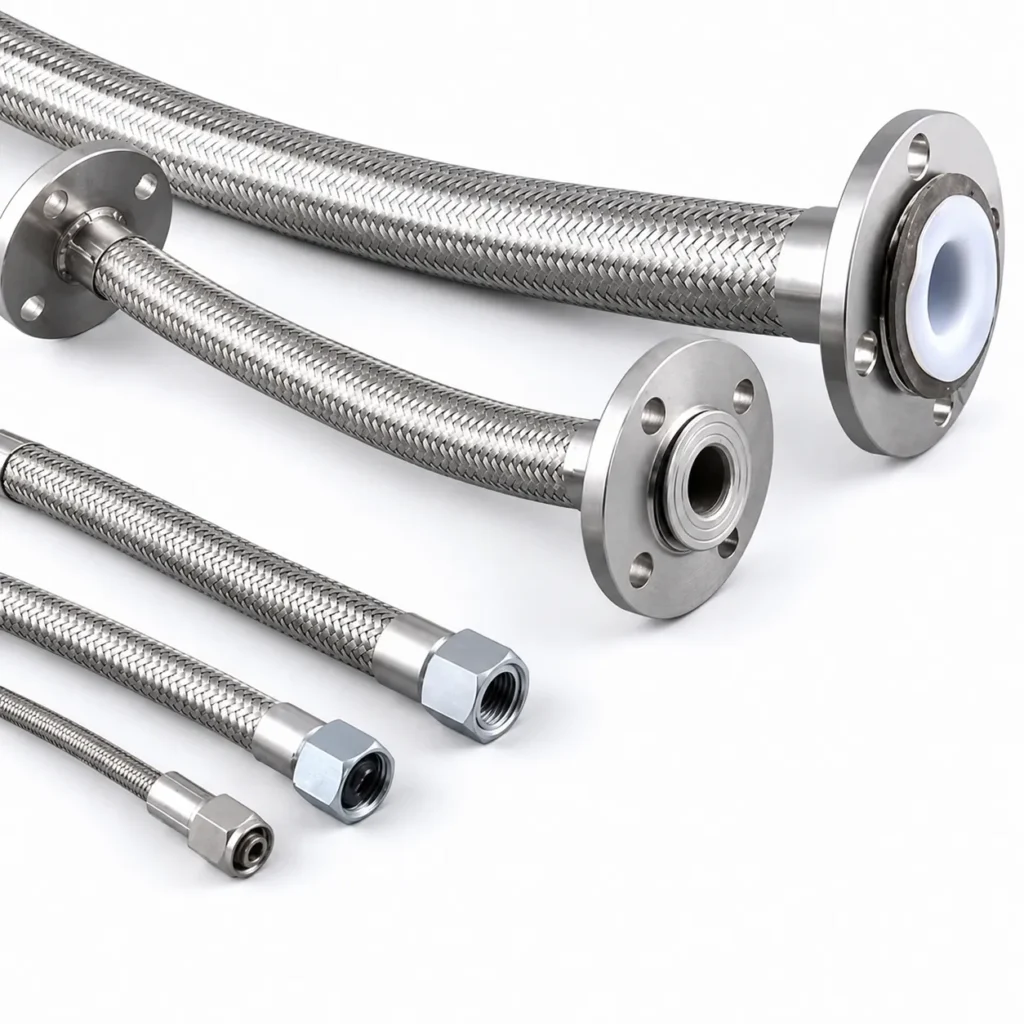
SLES concentrate is metered from the source (drum, IBC, or bulk tank) by a progressive cavity or twin screw pump through a mass flow meter into a continuous inline dilution mixer where process water at a controlled ratio (typically 1.5:1 water:SLES by weight) is injected and blended. The diluted stream passes through a plate heat exchanger or steam injector that heats it to 40–60°C — reducing viscosity from 15,000–50,000 cP (70% AM at 20°C) to 500–2,000 cP (28% AM at 50°C) for manageable pipe flow. An inline Brix or near-infrared (NIR) sensor verifies AM concentration; a PLC-controlled ratio controller trims the water flow rate to maintain the setpoint. Conditioned SLES is delivered to a buffer tank or directly to formulation vessels.
Challenges
SLES Concentrate Gelation at <40°C Blocking Pipes and Pumps
70% SLES gels below 35–40°C — startup after shutdown without pre-heating causes gel blockage in suction lines.
Foam Generation from Shear-Induced Air Entrainment at Dilution Point
Turbulent mixing at the dilution nozzle entrains air into the surfactant — generates persistent foam in the process header.
AM Concentration Drift from Process Water Pressure Variation
Water supply pressure fluctuation changes flow ratio — AM concentration drifts outside ±0.5% tolerance.
Heat Exchanger Fouling from SLES Polymerisation at Hot Surfaces (>80°C)
Local overheating at heat exchanger surface polymerises SLES — forms insoluble cake on plate, reduces U-value.
Viscosity Measurement Accuracy on Non-Newtonian Shear-Thinning SLES
SLES exhibits strong shear-thinning — inline viscometer reading is process-shear-dependent, not absolute.
Solutions
- Trace Heating on All SLES Concentrate Pipelines (40–50°C Self-Regulating): Self-regulating electric trace heating maintains SLES above gel point at all times — including overnight standby.
- Subsurface Dilution Injection (Submerged Nozzle, Liquid-to-Liquid Inline): Water injected below SLES surface level — prevents air entrainment; foam generation <5% of open-mix method.
- Mass Flow Ratio Control (Coriolis Meters on Both Streams, PLC Ratio PID ±0.2%): Independent Coriolis mass flow meters; PLC ratio controller maintains AM setpoint ±0.2% continuously.
- Maximum HX Surface Temperature Limit 60°C (Alarm at 65°C, Steam Valve Shutdown): Surface temperature limit interlock prevents SLES polymerisation on plate surfaces.
- Calibrated Inline NIR or Brix Refractometer (Primary AM Measurement) + Backup Density: Inline NIR measures AM directly; density meter as backup; both trend-monitored by PLC alarm.
Applications
- Personal Care (Shampoo / Body Wash): SLES dilution and conditioning for shampoo, body wash, bubble bath, and liquid soap formulation lines.
- Household Detergent: SLES supply to dishwash liquid, laundry liquid, and multipurpose cleaner formulation vessels.
- Industrial Cleaning: SLES for industrial floor cleaner, vehicle wash, and specialty cleaner formulations.
- Cosmetics: SLES for foam bath, micellar water, and cosmetic cleanser formulation.
- OEM / Contract Manufacturing: Centralised SLES supply skid serving multiple formulation lines in multi-product contract manufacturing sites.
Models & Capacities
SLES Skid — Models & Capacities (Pilot 50 kg/h to Large Production 10,000 kg/h SLES Inlet) | ||||||||||||
Model | Scale | SLES Inlet [kg/h] | SLES Outlet [kg/h at 28% AM] | SLES Feed Pump | AM In [%] | AM Out [%] | Outlet Temp [°C] | Heat Source | Inline Mixer Type | AM Accuracy [±%] | Skid L×W [mm] |
|
SLES-MINI-50 | Lab/Pilot | 20–50 | 60–145 | PC pump | 68–70 | 25–28 | 45–55 | Plate HX (hot water) | Inline static mixer | ±1 | 1,200×800 |
|
SLES-PIL-200 | Pilot | 80–200 | 230–580 | PC pump | 68–70 | 25–28 | 45–55 | Plate HX (hot water) | Inline rotor-stator | ±0.5 | 1,500×900 |
|
SLES-P-500 | Production | 200–500 | 580–1,450 | Twin screw | 68–70 | 25–28 | 45–55 | Plate HX (steam) | Inline rotor-stator | ±0.5 | 2,000×1,200 |
|
SLES-P-1000 | Production | 400–1,000 | 1,150–2,900 | Twin screw | 68–70 | 25–28 | 45–55 | Plate HX (steam) | Inline rotor-stator | ±0.5 | 2,500×1,400 |
|
SLES-P-2000 | Production | 800–2,000 | 2,300–5,800 | Twin screw | 68–70 | 25–28 | 45–55 | Steam injector | Inline rotor-stator | ±0.5 | 3,000×1,600 |
|
SLES-LP-5000 | Large Prod | 2,000–5,000 | 5,800–14,500 | Twin screw×2 | 68–70 | 25–28 | 45–55 | Steam injector | Dual inline R-S | ±0.5 | 4,000×2,000 |
|
SLES-LP-10000 | Large Prod | 5,000–10,000 | 14,500–29,000 | Twin screw×2 | 68–70 | 25–28 | 45–55 | Dedicated steam HX | Dual inline R-S | ±0.3 | 5,000×2,500 |
|