
Single-Screw (Progressive Cavity) Pump
A progressive cavity pump transfers fluid through a series of sealed cavities formed between a single-helix metallic rotor and a double-helix elastomer stator, progressing axially from inlet to outlet. Operating at 10–1,000 RPM across 1–5,000,000 cP at 0.1–120 m³/h and up to 48 bar (multi-stage), it provides pulse-free flow, self-priming to 8 m suction lift, and gentle solids handling up to 50% w/v the universal pump for high-viscosity and abrasive product transfer.
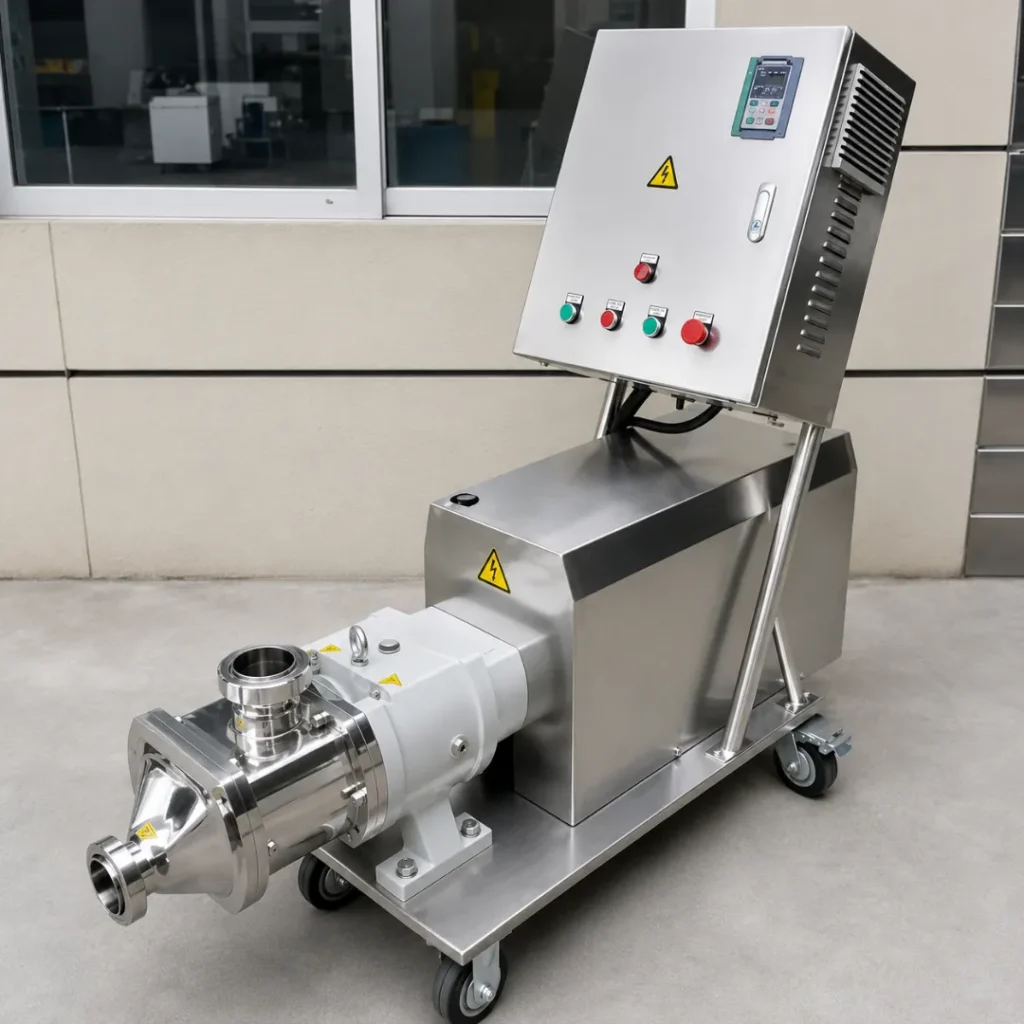
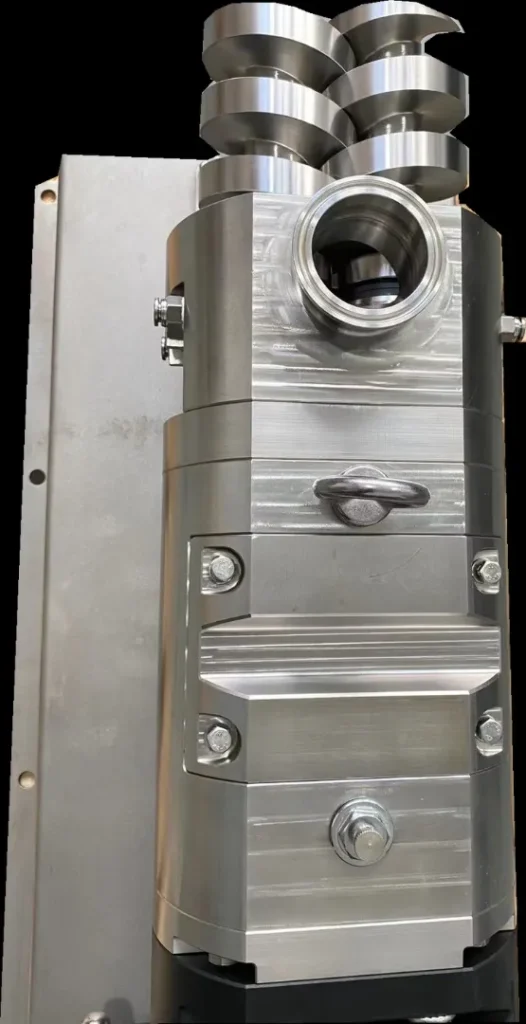
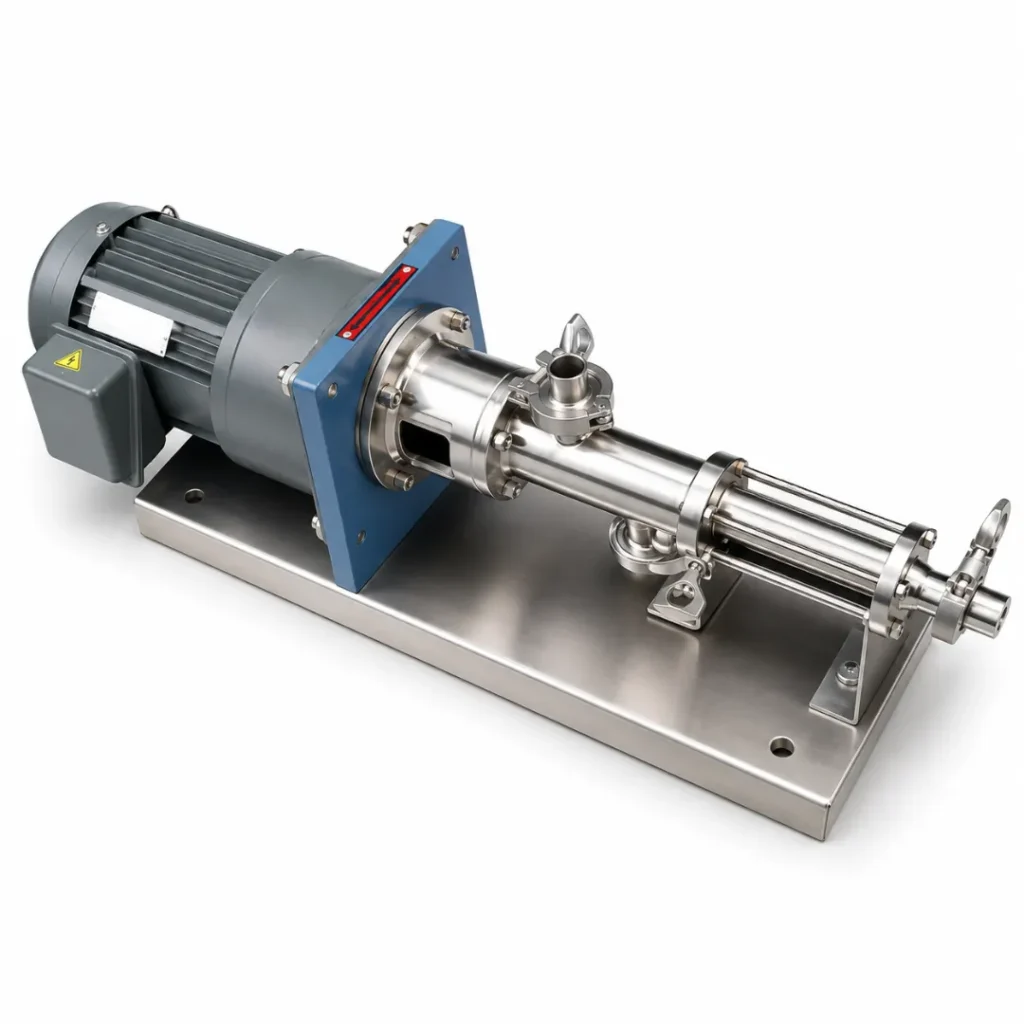
A progressive cavity pump transfers fluid through a series of sealed cavities formed between a single-helix metallic rotor and a double-helix elastomer stator, progressing axially from inlet to outlet. Operating at 10–1,000 RPM across 1–5,000,000 cP at 0.1–120 m³/h and up to 48 bar (multi-stage), it provides pulse-free flow, self-priming to 8 m suction lift, and gentle solids handling up to 50% w/v the universal pump for high-viscosity and abrasive product transfer.
Challenges
Stator Elastomer Swelling from Aggressive Fluids
Chemical incompatibility causes stator volume increase, jamming rotor and causing motor overload.
Dry-Running Causes Rapid Stator Failure
Elastomer stator overheats within seconds of dry operation; requires dry-run protection.
Abrasive Particle Wear on Stator and Rotor
Hard slurries progressively erode stator bore and rotor chrome coating.
Flow Rate Decay as Stator Wears
Increasing stator clearance raises slip; flow rate reduces progressively below setpoint.
Limited High-Speed Operation (>500 RPM)
High rotor eccentricity velocity generates heat; stator elastomer temperature rises above safe limit.
Solutions
- Chemical Compatibility Stator Selection (NBR / EPDM / FKM): Material selected per fluid chemistry; prevents swelling and maintains seal line integrity.
- Dry-Run Protection (Pressure Switch + Thermal Relay): Automatic shutdown within 3 seconds of dry-running detection; protects stator from damage.
- Hard Chrome or Tungsten Carbide Rotor Coating: Doubles rotor life against abrasive ceramic, mineral, and crystalline product slurries.
- VFD Speed Control (10–500 RPM): Low-speed operation reduces rotor eccentricity velocity; extends stator life 2–3×.
- Stator Temperature Sensor: Thermocouple embedded in stator detects heat build-up; triggers speed reduction before damage.
Applications
- Food & Beverage: Tomato paste, fruit pulp, meat paste, thick sauces, mustard, and viscous syrup pumping.
- Pharmaceutical: Tablet granulation wet mass transfer, API slurry, ointment and cream base transfer.
- Wastewater: Sludge and biosolids pumping, filter press feed, digester feed and underflow.
- Chemical: Polymer, resin, adhesive, drilling fluid, and abrasive chemical slurry transfer.
- Cosmetics: Toothpaste, thick cream, gel, and paste transfer in filling and manufacturing lines.
Product Catalogue & Technical Datasheet
Model | Flow Rate (m³/h) | Speed (RPM) | Max Pressure (bar) | Viscosity Max (cP) | Inlet/Outlet Ø (DN) | Stages | Suction Lift (m) | L × W × H (mm) | Weight (kg) |
PCP-001 | 0.05–1 | 10–500 VFD | Up to 6 | 5,000,000 | DN 25 | 1 | Up to 8 | 480×180×250 | 22 |
PCP-004 | 0.2–4 | 10–500 VFD | Up to 6 | 5,000,000 | DN 40 | 1 | Up to 8 | 580×220×290 | 35 |
PCP-012 | 1–12 | 10–400 VFD | Up to 12 | 3,000,000 | DN 65 | 2 | Up to 8 | 820×280×360 | 65 |
PCP-030 | 3–30 | 10–300 VFD | Up to 18 | 2,000,000 | DN 80 | 3 | Up to 8 | 1,100×340×430 | 110 |
PCP-060 | 8–60 | 10–250 VFD | Up to 24 | 1,000,000 | DN 100 | 4 | Up to 8 | 1,400×420×520 | 175 |
PCP-120 | 20–120 | 10–200 VFD | Up to 36 | 500,000 | DN 150 | 6 | Up to 8 | 1,900×540×640 | 280 |
PCP-300 | 60–300 | 10–150 VFD | Up to 48 | 200,000 | DN 200 | 8 | Up to 8 | 2,600×680×780 | 480 |